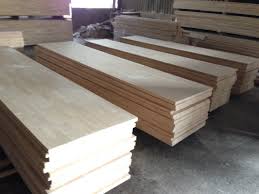
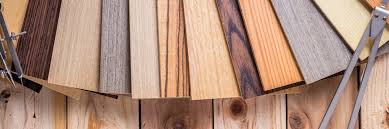
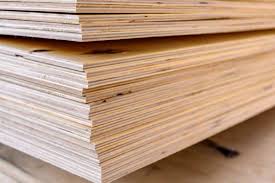
Plywood is an engineered wood product made by bonding together thin layers of wood veneers under heat and pressure using strong adhesives. The grain direction of each layer is typically placed at right angles to the previous one, giving plywood excellent strength, stability, and resistance to warping or cracking. Because of this cross-laminated structure, plywood is widely used in construction, furniture manufacturing, interior design, packaging, marine applications, and general carpentry.
Plywood is one of the most important wood-based panel products in the global timber industry. It offers a balance between strength, flexibility, and cost-effectiveness, making it suitable for both structural and decorative purposes. It is manufactured in different grades, thicknesses, and surface finishes depending on its intended application.
Definition of Plywood
Plywood is a composite wood panel product made by gluing together multiple layers of thin wood veneers, with alternating grain directions, to improve strength, stability, and durability.
Common wood species used in plywood production include:
Pinus radiata Tectona grandis Betula pendula
These veneers are bonded using synthetic resins such as urea-formaldehyde, phenol-formaldehyde, or waterproof adhesives depending on the plywood grade.
Types of Plywood
1. Softwood Plywood
Made from coniferous trees such as pine
Used in construction and structural applications
2. Hardwood Plywood
Produced from hardwood veneers
Used in furniture, flooring, and interior decoration
3. Marine Plywood
Highly water-resistant and durable
Used in boat building and moisture-prone environments
4. Decorative Plywood
Finished with attractive veneer surfaces
Used in interior design and furniture
5. Structural Plywood
Engineered for load-bearing applications in construction
6. Flexible Plywood
Designed for curved surfaces and creative architectural designs
Physical Characteristics of Plywood
Plywood has several key properties that make it highly valuable:
High strength-to-weight ratio
Excellent dimensional stability
Resistance to cracking, shrinking, and warping
Smooth and uniform surface
Available in various thicknesses
Easy to cut, drill, and shape
Its cross-layered structure gives it superior strength compared to solid wood of similar thickness.
Manufacturing Process of Plywood
The production of plywood involves several industrial stages:
1. Log Selection
High-quality logs are selected from softwood or hardwood species.
2. Debarking and Peeling
Logs are stripped and peeled into thin veneer sheets.
3. Drying
Veneers are dried to a controlled moisture level.
4. Gluing
Adhesive is applied between veneer layers.
5. Layer Assembly
Veneers are stacked with alternating grain directions.
6. Hot Pressing
Panels are pressed under heat and pressure to bond layers.
Less likely to bend or crack compared to solid wood.
3. Versatility
Suitable for structural and decorative applications.
4. Cost-Effective
More affordable than solid hardwood in many applications.
5. Large Sheet Sizes
Allows efficient construction and fewer joints.
Economic Importance
Plywood contributes significantly to global industries by:
Supporting construction and housing development
Providing raw materials for furniture manufacturing
Generating employment in wood processing industries
Reducing reliance on solid timber resources
Supporting export and domestic wood panel markets
It is one of the most widely consumed engineered wood products worldwide.
Environmental Considerations
Sustainable plywood production involves:
Use of plantation-grown timber
Efficient utilization of wood resources
Recycling of wood waste materials
Certified forestry sourcing
Reduction of deforestation pressure
Engineered wood like plywood helps maximize timber efficiency.
Storage and Handling Guidelines
To maintain quality:
Store in dry, flat conditions
Avoid exposure to moisture and rain
Prevent bending or stacking unevenly
Keep away from direct sunlight
Handle carefully to avoid edge damage
Proper storage ensures long-term usability.
Quality Control Standards
High-quality plywood must meet:
Bonding strength requirements
Moisture resistance standards
Dimensional accuracy
Surface smoothness and grading
Structural load performance
Environmental and safety certifications
Conclusion
Plywood is a highly versatile engineered wood product valued for its strength, stability, affordability, and wide range of applications. Manufactured from species such as Pinus radiata, Tectona grandis, and Betula pendula, plywood plays a crucial role in construction, furniture production, packaging, and interior design industries.
Its cross-laminated structure provides superior performance compared to solid wood, making it a preferred material in modern building and manufacturing sectors. As demand for efficient and sustainable building materials continues to grow, plywood remains an essential product in global timber and construction markets.
In essence, plywood is not just an engineered panel—it is a strong, reliable, and adaptable wood-based solution that supports modern infrastructure, design, and industrial development worldwide.