Within the global dairy economy, cheese represents the apex of structural value-adding and historical preservation technology. While fresh fluid milk is roughly 87% water and highly vulnerable to immediate spoilage, cheese processing solves this geographic and logistical constraint. By deploying biochemical extraction, enzymatic coagulation, and controlled dehydration, dairy processors transform a highly perishable liquid into a highly dense, nutrient-rich solid matrix.
The industrial manufacturing of cheese is a masterclass in colloid chemistry and food microbiology. It allows milk surpluses to be captured and concentrated into a shelf-stable commodity capable of developing complex flavor and textural characteristics over months or years of aging.
As a global commodity, cheese operates across a diverse market landscape. It spans from high-volume, uniform functional cheeses designed for the quick-service restaurant industry (such as block Mozzarella and Cheddar) to artisanal, Protected Designation of Origin (PDO) varieties that command steep luxury premiums. This versatility makes cheese an indispensable driver of economic stability and food security within the agricultural sector.
Defining Cheese and Commercial Typologies
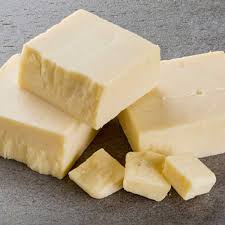
From a regulatory and scientific perspective (governed by Codex Alimentarius and the FDA), cheese is the fresh or matured solid or semi-solid product obtained by coagulating the milk proteins (casein) of fluid dairy through the action of rennet or other suitable coagulating agents, and partially draining the whey serum.
The global cheese trade categorizes thousands of distinct regional varieties into four primary structural classes based on internal moisture levels and manufacturing styles:
Fresh (Unripened) Cheese: High-moisture cheeses ($geq 60%$ water) that are ready for consumption immediately after curd separation. They feature a mild, milky flavor and a short shelf life that requires continuous refrigeration.
Soft to Semi-Soft (Ripened) Cheese: Cheeses with a moisture content between 45% and 55%, often matured from the outside in using surface molds or bacterial washes.
Examples: Brie, Camembert, Havarti, Munster.
Hard (Firm) Cheese: Low-moisture cheeses (35% to 45% water) packed under heavy mechanical pressure into dense blocks or wheels, then aged to develop a firm, sliceable texture.
Very Hard (Grating) Cheese: Ultra-low moisture cheeses ($< 35%$ water) aged for extended periods (typically 12 to 36 months) until the moisture drops significantly, leaving a brittle, crystalline structure.
Examples: Parmigiano-Reggiano, Grana Padano, Pecorino Romano.
Technical Specifications
To manage international trade lines, prevent cross-border pathogenic spread, and guarantee industrial cooking performance, commercial cheese shipments must meet strict biochemical criteria.
Specification Parameter
Targeted Industrial Baseline
Testing / Verification Method
Moisture on a Fat-Free Basis
Cheddar: 34%–39% / Mozzarella: 52%–60%
AOAC Moisture Oven Drying (105°C)
Fat in Dry Matter (FDM)
Minimum $geq 45%$ to $50%$ (Standard Grade)
Gerber / Babcock Volumetric Method
Sodium Chloride (Salt)
1.5% to 2.2% by weight
Volhard Argentometric Titration
Target Product pH
5.1 to 5.4 (Post-press equilibrium baseline)
Direct-Insertion Spear-Tip pH Electrode
Alkaline Phosphatase (ALP)
Negative (Confirms source milk pasteurization)
Fluorometric Enzymatic Cleavage Assay
Escherichia coli
Less than $10 text{ CFU/g}$ (Strict sanitary limit)
Petrifilm / Coliform Count Plate
Listeria monocytogenes
Absent in 25 grams (Absolute Zero Tolerance)
Real-Time PCR Pathogen Screening
Meltability Profile
Grade 3 to 4 minimum (For pizza/shred grades)
Schreiber Test / Modified Lickfeld Method
Storage Temperature
2°C to 4°C (Do not freeze matured hard varieties)
Continuous RFID Transit Loggers
The Biophysical Chemistry of Curd Coagulation
The conversion of liquid milk into a solid cheese curd is an exceptional chemical reaction that hinges on destabilizing the casein micelle structure.
1. The Enzymatic Cleavage of Kappa-Casein
In fluid milk, casein proteins are held in a stable liquid suspension because their outer surfaces are coated in a specialized, hair-like protein molecule called $kappa$-casein (kappa-casein). This molecule carries a strong negative electrical charge and a hydrophilic (water-loving) tail that reaches out into the surrounding water, effectively creating a protective shield that prevents the casein bundles from sticking together.
To break this shield, cheesemakers introduce chymosin (the active enzyme found in traditional or microbial rennet). Chymosin acts like a pair of molecular scissors, specifically targeting and cutting a single amino acid bond (Phenylalanine 105–Methionine 106) along the $kappa$-casein chain.
When this bond is severed, the water-loving, negatively charged tail splits off and floats away into the liquid whey. This leaves behind a modified, highly hydrophobic (water-fearing) protein bundle known as para-$kappa$-casein.
2. The Calcium-Bridged Matrix Cross-Link
With their protective shields destroyed, the para-$kappa$-casein micelles can no longer remain suspended in water. They immediately begin crashing into one another.
$$text{Para-}kappatext{-casein Micelles} + text{Ionic Ca}^{2+} longrightarrow text{Three-Dimensional Hydrophobic Gel Matrix}$$
Using the free calcium ions ($text{Ca}^{2+}$) naturally abundant in the milk as chemical bridges, the hydrophobic proteins rapidly cross-link into a vast, three-dimensional grid. This grid acts like a structural net, contracting continuously to trap milk fat droplets and water inside its walls, transforming the fluid milk into a firm, custard-like coagulum ready for cutting.
Industrial Manufacturing and Aging Flow
Transforming raw agricultural dairy into fully stabilized, retail-ready cheese blocks follows a highly automated mechanical sequence.
1.Milk Standardization and Inoculation:Biological Setup.
Fresh milk is pasteurized and pumped into large horizontal cheese vats held at 30°C to 32°C. Specialized lactic acid starter cultures are introduced to convert milk sugars (lactose) into lactic acid, a step that lowers the pH and prepares the proteins for coagulation.
2.Rennet Injections and Gelation:The Coagulation Lock.
Once the milk hits the target acidity, industrial rennet is precisely mixed into the vat. The milk is left completely still for 30 to 45 minutes while the chymosin enzyme cleaves the $kappa$-casein bonds, locking the liquid into a solid, firm gel sheet.
3.Mechanical Cutting and Cooking:Moisture Expulsion.
Automated wire frames sweep through the vat, slicing the solid gel into millions of tiny, uniform cubes (curds). Slicing increases the surface area, forcing water out of the curd—a process called syneresis. The vat is heated while stirring to shrink the curds and drive out extra whey.
4.Whey Separation and Texturing (Cheddaring):Curd Fusion.
The liquid whey is drained out of the vat, leaving behind a dense bed of warm curds. For Cheddar, the curds are cut into large blocks and stacked on top of one another continuously. This stacking uses gravity to squeeze out remaining moisture and fuses the curds into a smooth, fibrous sheet.
5.Milling, Salting, and Mechanical Pressing:Structural Setting.
The fused curd sheets are run through milling machines that shred them back into small pieces. Coarse salt is added to stop the bacteria from over-acidifying the batch and enhance flavor. The salted curds are packed into hoops and subjected to heavy pneumatic pressure to form solid, dense blocks.
6.Vacuum Sealing and Maturation (Aging):Enzymatic Evolution.
The compressed cheese blocks are removed from their molds, vacuum sealed in gas-barrier films, and transferred to temperature-controlled aging cellars held at 8°C to 12°C. Over months or years, natural enzymes slowly break down the internal fats and proteins, yielding the target flavor notes and a smooth, mature texture.
Biochemical Matrix Transformations During Aging
Once a hard cheese block enters the maturation cellar, it undergoes a silent chemical transformation driven by residual enzymes and starter bacteria. This process, known as proteolysis, is what separates a mild, rubbery young cheese from a sharp, complex aged block.
During proteolysis, enzymes slowly break down the rigid, long-chain casein protein grid into smaller fragments, including peptides and free amino acids.
Texture Softening: The physical cheese matrix loses its elastic, rubbery quality and becomes smoothly meltable, crumbly, or spreadable.
Flavor Amplification: The reaction unlocks an abundance of glutamic acid (natural MSG). In ultra-aged cheeses like Parmigiano or aged Cheddars, this amino acid clusters into crunchy, white tyrosine crystals, giving the cheese its savory, umami flavor depth.
Conclusion
Cheese represents a premier synthesis of biological design and dairy process engineering. By mastering the enzymatic cleavage of kappa-casein and managing moisture removal through syneresis, the dairy sector successfully transforms a short-lived liquid into a highly dense, versatile, and shelf-stable solid commodity.
Through an automated manufacturing chain that pairs precise vat acidification with vacuum-sealed maturation, cheese can be safely stored and traded across international borders without quality loss. As global food systems prioritize protein concentration, structural versatility, and low-waste production models, cheese will remain a primary anchor commodity driving agricultural market values and global food security.