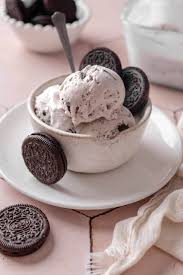
While butter and cheese isolate the lipid and protein phases of dairy respectively, ice cream represents the ultimate integration of all milk components into a highly sophisticated, frozen structural matrix. It is a multi-phase, value-added dairy commodity that serves as a premier anchor of the global frozen dessert market.
The industrial manufacturing of ice cream is one of the most complex branches of food engineering. It requires freezing a liquid mix under intense mechanical agitation while simultaneously injecting air. This process balances milk fats, milk solids-not-fat (MSNF), sucrose, stabilizers, and emulsifiers into a delicate state of physical equilibrium.
By applying precise low-temperature scraping and freezing techniques, processors convert a simple liquid blend into a smooth, scoopable solid. This industrial capability allows commercial dairies to deliver a highly shelf-stable frozen treat that provides an exceptional combination of velvety creaminess, slow melting resistance, and rich flavor release to consumers worldwide.
Defining Ice Cream and Commercial Typologies
From a regulatory standpoint (governed by the FDA, Codex Alimentarius, and European food standards), ice cream is a frozen food product obtained by freezing a pasteurized mix of dairy ingredients, sweeteners, and food-grade functional additives.
To be legally sold as standard ice cream, the product must meet strict composition baselines, typically requiring a minimum of 10% milkfat (reaching up to 16% in premium lines) and a minimum total food solids content of 35% to 40% by weight.
The international frozen dairy market organizes these products into distinct commercial segments based on fat content, air incorporation, and manufacturing styles:
Economy Ice Cream: Formulated right at the legal minimums (10% milkfat) with high air content. It features a light, airy texture and is highly cost-effective for large-volume retail markets.
Premium / Super-Premium Ice Cream: Features high milkfat percentages (12% to 16%) and very low air content. This produces a heavy, dense, and ultra-creamy mouthfeel with slow melting properties.
Soft Serve: Manufactured using a modified formulation that is frozen right at the point of sale inside specialized dispensing machines. It contains less fat (3% to 6%) and is held at a warmer temperature ($-6^circtext{C}$), giving it its signature soft, flowing texture.
Gelato: A traditional Italian-style frozen dessert made with a higher proportion of milk to cream, resulting in lower fat (4% to 8%) but very low air levels. It is served slightly warmer than standard ice cream, delivering an intense flavor impact.
Technical Specifications
To maintain structural integrity during shipping, resist heat shock, and satisfy global food safety parameters, commercial ice cream batches must strictly adhere to specific physical and chemical targets.
Specification Parameter
Targeted Industrial Baseline
Testing / Verification Method
Milkfat Concentration
Standard: 10.0%–12.0% / Premium: 14.0%–16.0%
Babcock / Mojonnier Extraction Test
Milk Solids-Not-Fat (MSNF)
9.0% to 11.5% (Balances texture; prevents sandiness)
Gravimetric Oven Drying Calc
Total Sweetener Solids
12.0% to 16.0% (Sucrose, glucose, corn syrup)
High-Performance Liquid Chromatography
Total Overrun (Air Content)
Economy: 100%–120% / Premium: 20%–50%
Volumetric Displacement Weight Comparison
Standard Plate Count (SPC)
Less than $1.0 times 10^4 text{ CFU/g}$ (Post-pasteurization)
Standard Plate Nutrient Agar Incubation
Salmonella spp.
Absent in 25 grams (Absolute Zero Tolerance)
Real-Time PCR Pathogen Screening
Meltdown Rate Profile
Maximum $leq 2.0text{ g/min}$ loss at 20°C
Gravimetric Mesh Melt Drainage Assay
Hardening Temperature
$-35^circtext{C}$ to $-40^circtext{C}$ core shock tunnel
Inline Thermocouple Electronic Logging
Storage & Transit Temp
Continuous $-18^circtext{C}$ to $-25^circtext{C}$
Sealed Digital RFID Temperature Loggers
The Biophysical Chemistry of the Frozen Matrix
Ice cream is a physical chemistry marvel, existing simultaneously as a solid foam, an emulsion, and a suspension.
Inside a finished scoop of ice cream, four distinct structural phases are locked together in a delicate balance:
1. The Ice Crystal Suspension Phase
When the liquid mix enters the freezer, water molecules freeze out of the solution to form pure ice crystals. These crystals give ice cream its cold, solid structure.
To ensure the product tastes perfectly smooth and creamy on the tongue, these ice crystals must be kept incredibly small—ideally between 20 and 40 microns in diameter. If the crystals grow larger than 50 microns (often caused by temperature fluctuations during transport), they become physically noticeable to the human mouth, resulting in a coarse, grainy, and unpalatable texture.
2. The Air Bubble Foam Phase (Overrun)
Air is injected into the liquid mix during the freezing process. The volume of air added relative to the original liquid volume is known as overrun.
$$text{% Overrun} = frac{text{Weight of Liquid Mix} – text{Weight of Equal Volume Ice Cream}}{text{Weight of Equal Volume Ice Cream}} times 100$$
Air is essential; it acts as a thermal insulator that prevents the ice cream from melting instantly on the plate, while softening the frozen matrix so it can be cleanly scooped straight from the freezer.
3. The Partially Coalesced Fat Emulsion Phase
During dynamic freezing, the high-speed scraping blades apply intense mechanical shear force to the mix. This force shatters the protective membranes surrounding the milkfat droplets, causing them to stick together into an un-raveled, three-dimensional fat network. This partial clumping is critical—the fat network weaves between the injected air bubbles, trapping them in place like scaffolding to prevent the foam from collapsing.
4. The Unfrozen Liquid Serum Phase
Because ice cream contains high levels of dissolved sugars (sucrose and lactose), these sugars naturally lower the freezing point of the remaining water.
Even at standard freezer temperatures of $-18^circtext{C}$, roughly 20% of the water remains liquid, forming a thick, hyper-concentrated sugar syrup. This unfrozen liquid wraps around the ice crystals and air bubbles, acting as a flexible lubricant that allows the solid ice cream to yield smoothly under the pressure of a spoon.
Industrial Manufacturing and Freezing Flow
Manufacturing commercial-grade, stable ice cream requires a continuous sequence of precise thermal blending, aging, dynamic freezing, and blast hardening.
1.Ingredient Blending and Dissolution:Formulation Step.
Liquid dairy components (milk and cream) are pumped into high-shear blending vats. Dry ingredients—including sucrose, skim milk powder, stabilizers (like guar gum), and emulsifiers (like polysorbate 80)—are funneled in and agitated at 60°C to ensure complete dissolution.
2.Batch Pasteurization and Thermal Fixation:Pathogen Elimination.
The complete liquid mix undergoes thermal pasteurization at 69°C for 30 minutes or 80°C for 25 seconds. This process destroys harmful microflora, activates water-binding stabilizers, and unfolds milk proteins to improve the mix’s emulsifying power.
While hot, the mix passes through a two-stage homogenizer (2,500 psi first stage / 500 psi second stage). This intense pressure smashes large fat clumps into uniform, sub-micron droplets, ensuring a silky body and preventing the cream from separating during storage.
4.Mix Cooling and Controlled Aging:Viscosity Build.
The mix is rapidly cooled down to 4°C and transferred into insulated aging tanks for 4 to 24 hours. This extended cold rest allows the liquid milkfats to crystallize completely and gives the stabilizers time to absorb free water, significantly increasing the mix’s thickness and whipping capacity.
The aged mix is pumped into a horizontal Scraped Surface Heat Exchanger (SSHE) running at $-30^circtext{C}$. Internal blades rotate at high speeds, continuously scraping frozen cream off the barrel walls while filtered air is injected. Within 30 seconds, the mix exits at $-5^circtext{C}$ with a soft-serve texture.
6.Inclusions, Packaging, and Blast Hardening:Matrix Lock.
Flavor inclusions (nuts, fruits, chocolate chips) are folded in via an inline fruit feeder. The semi-solid ice cream is packaged into tubs and run through a cryogenic blast-freezing tunnel at $-40^circtext{C}$. This flash-freezing locks the ultra-small ice crystals in place, hardening the product for global shipping.
The Role of Stabilizers and Emulsifiers
Commercial ice cream relies on a precise duo of functional additives to protect its structure from environmental changes during transport:
Emulsifiers (e.g., Mono- and Diglycerides): These molecules intentionally weaken the protein coating around fat droplets before freezing. This allows the droplets to partially clump together during churning, creating the structural network needed to hold the air bubbles in place.
Stabilizers (e.g., Locust Bean Gum, Carrageenan): These hydrocolloids act like microscopic sponges, binding up free water molecules to increase the thickness of the unfrozen liquid phase. By restricting water movement, they prevent ice crystals from migrating and merging into large chunks when the ice cream encounters minor temperature spikes during retail distribution.
Conclusion
Ice cream represents an exceptional integration of dairy science, colloid physics, and cryogenic processing engineering. By mastering partial fat coalescence and controlling ice crystallization through rapid scraping and freezing, the dairy industry successfully transforms a liquid blend into a beautifully balanced, four-phase solid foam.
Through an automated manufacturing pipeline that pairs high-pressure homogenization with rapid blast hardening, ice cream can be safely stored and shipped worldwide without structural breakdown. As global consumers prioritize clean labels, premium texturizing fats, and innovative dairy alternatives, ice cream will remain a primary, highly profitable anchor commodity driving agricultural market values and satisfying global dessert trends.