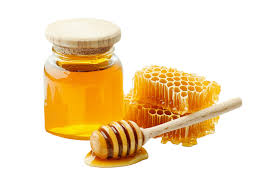
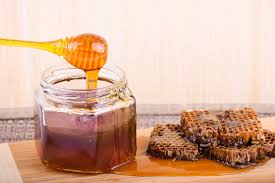
Within the agricultural and nutritional sectors, raw honey represents a highly complex, minimally processed biological fluid produced by honey bees (primarily Apis mellifera). Unlike commercial clear honey—which undergoes heavy thermal pasteurization and ultra-filtration to permanently prevent crystallization—raw honey is defined by its preservation of the honey’s native state. It acts as a dense, hyper-saturated sugar solution that retains its original pollen grains, ambient yeasts, and heat-sensitive enzymes.
The industrial handling and quality validation of raw honey is an advanced branch of food physics and analytical chemistry. Because it cannot be aggressively heated without breaking down its natural compounds, processors must utilize delicate, low-temperature liquefaction and centrifugal straining.
By applying strict testing standards, the honey industry protects this premium commodity from global adulteration, ensuring consumers receive a functional food rich in living enzymes, distinct floral aromatics, and natural antimicrobial properties.
Defining Raw Honey and Botanical Classifications
According to the international standards of the Codex Alimentarius (CXS 12-1981), honey is the natural sweet substance produced by honey bees from the nectar of plants or secretions of living parts of plants. For honey to be ethically and legally traded as raw, it must not be heated during extraction or processing to temperatures high enough to damage its natural enzymes, and it must retain its native pollen spectrum.
The global honey trade classifies raw honey into two primary botanical categories, which directly dictate its flavor profile, mineral content, and how fast it solidifies:
Blossom / Nectar Honey: Produced entirely from the sweet nectars of flowering plants. It is rich in simple sugars and carries specific aromatic profiles tied directly to the source flower (e.g., Acacia, Clover, or Wildflower).
Honeydew Honey: Produced not from flower nectar, but from the sugary excretions of plant-sucking insects (aphids) found on forest trees like pines and oaks. It features a dark, opaque color, a lower level of simple sugars, and high electrical conductivity due to its heavy mineral content.
Technical Specifications
To pass international authenticity audits, dodge food-safety flags for fermentation, and prove it has not been overheated, fresh raw honey must adhere to strict chemical parameters.
Maximum $leq 0.1 text{ g/100g}$ (Retains micro-pollen)
Gravimetric Membrane Filtration
The Biophysical Chemistry of Honey
Honey is a thermodynamic marvel that exists as a hyper-saturated, low-moisture fluid that naturally fights off microbial spoilage.
1. Osmotic Pressure and the Hydrogen Peroxide Lock
Raw honey is incredibly effective at resisting bacteria and mold due to its intense osmotic pressure and its natural chemical shield. With a moisture content below 18%, the hyper-dense sugar solution acts like a molecular sponge, instantly drawing water out of any invading microbe cells via osmosis, causing them to shrivel and die.
Furthermore, when raw honey is slightly diluted, a native bee enzyme called glucose oxidase wakes up and goes to work. It breaks down the local glucose sugars into gluconic acid and hydrogen peroxide ($text{H}_2text{O}_2$). The gluconic acid drops the honey’s pH to a highly acidic range of 3.2 to 4.5, while the continuous release of hydrogen peroxide acts as a clean sanitizer that wipes out pathogens on contact.
2. The Mechanics of Natural Crystallization
Because raw honey is completely unheated and packed with natural sugars, it is inherently unstable as a liquid. Fructose and glucose make up roughly 70% of its mass, dissolved in a tiny volume of water. Over time, the excess glucose naturally separates from the water, locking into solid crystals of glucose monohydrate.
Raw honey crystallizes quickly because it is deliberately left unpasteurized and coarse-strained. The tiny, suspended pollen grains and micro-wax particles left inside act as natural seeds (nucleation sites).
Free glucose molecules easily latch onto these floating pollen grains, spreading out across the jar into a thick, buttery solid. While this crystallization is a definitive sign of real, raw honey, commercial packers must understand its behavior to keep the texture smooth rather than gritty.
Industrial Processing and Processing Flow
Processing raw honey requires a highly delicate, low-heat workflow designed to clean the honey without destroying its fragile enzymes or altering its delicate floral profile.
1.De-Capping and Centrifugal Cold Extraction:Intake Gate.
Beekeepers use heated knives to slice the wax caps off the honeycomb. The frames are loaded into large industrial centrifugal extractors that spin at high speeds, slinging the raw liquid honey out of the cells against the stainless steel walls without applying structural heat.
The extracted raw honey is collected in warming vats. The temperature is strictly capped at 35°C to 40°C—matching the natural temperature of a live beehive. This gentle warmth lowers the honey’s viscosity, making it fluid enough to pump without damaging its heat-sensitive enzymes.
3.Coarse Gravity Straining:Pollen Lock.
The warm, fluid honey is pumped through a series of coarse stainless steel mesh strainers (typically 80 to 100 mesh). This process catches stray bee wings, wood splinters, and large wax chunks while allowing the natural microscopic pollen grains and healthy enzymes to pass safely through into the batch.
4.Vacuum Settling and De-Aeration:Clarification.
The strained honey moves into insulated settling tanks under a mild vacuum. It rests undisturbed for 24 to 48 hours, allowing tiny micro-bubbles of trapped air and fine wax foam to rise naturally to the surface where they can be cleanly skimmed off, giving the honey a bright, clear appearance.
Samples are drawn and run through automated testing machines. Technicians check the Diastase Number and inspect the honey under high-power microscopes (Melissopalynology) to verify the native pollen spectrum, proving the honey is authentic and free from adulteration.
6.Cold Filling and Moisture-Proof Jarring:Sealed Exit.
The validated raw honey is pumped into automated bottling lines, filled into clean glass jars or food-grade squeeze bottles, and tightly sealed with air-tight caps to block out moisture. The jars are stored in dark warehouses at 15°C, ready for global retail shipment.
Detecting Global Adulteration: The Fraud Challenge
Because raw honey commands a premium price on the international market, it is one of the most heavily counterfeited foods in the world. Unscrupulous suppliers frequently blend honey with cheap, industrially manufactured sugar syrups, such as High-Fructose Corn Syrup (HFCS) or inverted cane syrup.
To uncover this fraud and protect the integrity of the market, laboratory technicians analyze the product using two primary weapons:
The Hydroxymethylfurfural (HMF) Watch: HMF is a toxic chemical byproduct that forms when sugars are burned or exposed to heat. Fresh, unheated raw honey should feature an incredibly low HMF level—ideally below 15 mg/kg.If a lab test reveals an HMF reading spiking way past 40 mg/kg alongside a dead Diastase enzyme count (below 8), it proves the honey has been aggressively overheated or cut with cooked industrial sugar syrups.
Stable Isotope Ratio Mass Spectrometry (EA-IRMS): This advanced test analyzes the carbon atoms inside the honey. Corn and sugar cane use a specific photosynthetic pathway ($text{C}_4$) that leaves behind a heavy carbon footprint ($!^{13}text{C}$), whereas the flowering plants visited by bees utilize a different pathway ($text{C}_3$). If IRMS testing uncovers a heavy $!^{13}text{C}$ signature inside the honey’s protein fragments, it exposes the product as a fake syrup blend.
Conclusion
Raw honey represents a beautiful balance of natural insect biochemistry and delicate, low-temperature process engineering. By utilizing gentle warming loops and coarse mesh straining rather than aggressive pasteurization and ultra-filtration, the honey sector successfully preserves a complex matrix of simple sugars, micro-pollen grains, and living enzymes.
Through a strictly monitored testing pipeline that uses HMF profiling and isotope mass spectrometry to catch adulteration, honey processors protect the authenticity of the agricultural supply chain. As modern consumers place a high premium on clean labels, trace botanical origins, and true unadulterated functional foods, advanced raw honey engineering will remain an essential driver of sustainable apiculture and global food integrity.