Rubber Latex – Natural Polymer for Tires, Medical Products, and Industrial Goods
Introduction
Rubber latex is a milky white fluid extracted from the bark of the rubber tree (Hevea brasiliensis). It is the primary raw material for producing natural rubber, which is widely used in tires, gloves, medical equipment, footwear, and numerous industrial products.
Rubber latex is one of the most important industrial agricultural products globally, especially in tropical regions where rubber plantations are widely cultivated.
After processing, latex is coagulated and converted into sheets, blocks, or concentrated forms used in manufacturing.
Product Overview
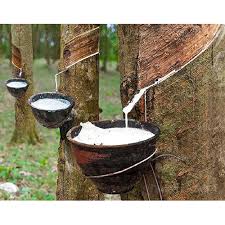
Rubber latex is harvested by tapping rubber trees and collecting the sap. It is then processed into:
Natural rubber sheets
Latex concentrate
Solid rubber blocks
These forms are used in multiple industries including automotive, healthcare, and construction.
Key Visual Overview
6
Product Features
1. Elasticity and Flexibility
High natural elasticity suitable for dynamic applications.
2. Strong Mechanical Properties
Durable and resistant to wear.
3. Water-Resistant Material
Ideal for waterproof products.
4. Renewable Natural Resource
Harvested sustainably from rubber trees.
5. High Industrial Demand
Used across automotive, medical, and manufacturing sectors.
6. Versatile Processing Forms
Can be processed into sheets, blocks, or liquid concentrate.
Tabulated Product Specifications
Parameter
Specification
Product Name
Rubber Latex
Scientific Name Source
Hevea brasiliensis
Product Type
Natural Polymer / Agricultural Latex
Color
Milky white (fresh latex)
Texture
Liquid (fresh), elastic solid (processed)
Main Product
Natural rubber
Solid Content
Varies (in latex concentrate)
Moisture Content
High (fresh latex)
Shelf Life
Short (fresh), longer when processed
Packaging
Drums / tanks / coagulated sheets
Storage Condition
Cool, controlled environment
Main Applications
Tires, gloves, industrial goods
Quality Grade
Industrial / Medical grade
Composition and Properties
Rubber latex contains:
Key Components
Natural rubber (polyisoprene)
Water (major component in fresh latex)
Proteins
Resins
Trace minerals
Key Properties
High elasticity
Tensile strength
Flexibility
Insulation properties
Uses of Rubber Latex
1. Tire Manufacturing
Major use in:
Car tires
Truck tires
Bicycle tires
Aircraft tires
2. Medical Products
Used in:
Surgical gloves
Examination gloves
Catheters
Elastic bandages
3. Industrial Applications
Used in:
Conveyor belts
Rubber hoses
Seals and gaskets
Vibration dampers
4. Consumer Goods
Used in:
Footwear soles
Balloons
Elastic bands
5. Adhesives and Coatings
Used in latex-based glues and protective coatings.
Processing Methods
1. Tapping
Latex is collected by cutting the bark of rubber trees.
2. Collection
Latex is gathered in containers.
3. Preservation
Ammonia or stabilizers are added to prevent coagulation (for liquid latex).
4. Coagulation
Acids are used to solidify latex into rubber.
5. Rolling and Drying
Coagulated rubber is rolled into sheets and dried.
6. Processing
Converted into blocks or specialized rubber forms.
Quality Assurance
Quality control includes:
Dry rubber content testing
Viscosity measurement
Contamination checks
Elasticity testing
Color and impurity inspection
Storage stability monitoring
Packaging and Storage
Packaging Options
Latex drums
Rubber sheet bundles
Bulk containers
Storage Conditions
Cool temperature
Avoid sunlight
Prevent contamination
Proper ventilation
Fresh latex must be processed quickly to avoid spoilage.
Advantages of Rubber Latex
1. High Elasticity
Ideal for flexible and stretchable products.
2. Natural and Renewable
Harvested from rubber trees sustainably.
3. Wide Industrial Use
Used in multiple global industries.
4. Strong Mechanical Strength
Durable and long-lasting material.
5. High Global Demand
Essential for automotive and medical sectors.
Commercial Importance
Rubber latex is a strategic global commodity supporting:
Automotive tire industry
Medical supply chains
Manufacturing industries
Export economies in tropical countries
It is a key raw material in global industrial production.
Conclusion
Rubber latex is a highly valuable natural polymer extracted from rubber trees, forming the foundation of the global natural rubber industry. It is essential for producing tires, medical equipment, industrial goods, and consumer products.
With proper tapping, preservation, and processing, rubber latex becomes a versatile and high-performance material. As global demand for automotive and medical products continues to grow, rubber latex remains a critical agricultural and industrial commodity worldwide.