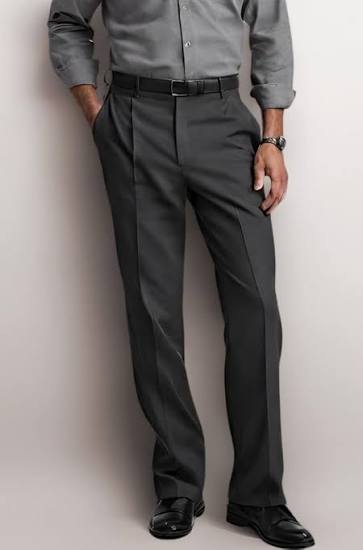
Trousers are a lower-body garment designed to cover the waist down to the ankles, with separate sections for each leg. They are typically made from woven or knitted fabrics and are held at the waist using a waistband, which may include buttons, hooks, zippers, elastic, or drawstrings.
Unlike shorts, trousers provide full leg coverage and are designed for comfort, protection, and style. They are worn by all genders and are one of the most essential clothing items in both formal and casual wardrobes.
Trousers come in a wide variety of styles, cuts, and fabrics, making them suitable for professional wear, casual fashion, sports, and traditional attire.
—
2. INTRODUCTION TO TROUSERS
Trousers have a long history in human clothing and have evolved significantly over time. Early forms of trousers were worn for practical reasons, especially by horse riders and workers who needed mobility and protection.
Over time, trousers became a standard part of global fashion, especially in Western dress codes. Today, they are worn universally across cultures and have become a core element of modern clothing systems.
Modern trousers are designed in many styles, including slim fit, straight fit, relaxed fit, cargo trousers, formal dress trousers, joggers, and high-waist fashion trousers. This variety allows trousers to adapt to different environments such as offices, casual outings, sports activities, and formal events.
Trousers are also an important part of uniforms in schools, military organizations, corporate workplaces, and industrial settings.
—
3. TABULATED SPECIFICATION OF TROUSERS
| SPECIFICATION CATEGORY | DETAILS |
|————————|———|
| Garment Type | Lower-body clothing |
| Structure | Two-leg separated design |
| Fabric Types | Cotton, polyester, wool, denim, blends |
| Waist Closure | Button, hook, zipper, elastic, drawstring |
| Fit Types | Slim fit, regular fit, relaxed fit, skinny, loose |
| Length | Full-length (ankle), cropped, three-quarter |
| Breathability | Medium to high (depends on fabric) |
| Durability | High, especially in denim and polyester blends |
| Stretchability | Low to high (depending on elastane content) |
| Moisture Absorption | High in cotton, low in synthetics |
| Care Instructions | Machine washable or dry clean (fabric dependent) |
| Common Uses | Formal wear, casual wear, uniforms, sportswear |
—
4. TYPES OF TROUSERS
4.1 FORMAL TROUSERS
Formal trousers are designed for office and business wear. They are usually made from wool blends, polyester, or fine cotton and are paired with shirts and blazers.
4.2 CASUAL TROUSERS
Casual trousers are comfortable and versatile, made from cotton or denim, suitable for everyday wear.
4.3 CARGO TROUSERS
Cargo trousers feature multiple pockets and are designed for utility and outdoor activities.
4.4 JOGGERS
Joggers are sporty trousers made from soft, stretchy fabrics with elastic waistbands and cuffs.
4.5 DENIM TROUSERS (JEANS)
Denim trousers are durable and widely used in casual and street fashion due to their strength and style.
4.6 CHINOS
Chinos are lightweight cotton trousers that offer a smart-casual appearance, often used in semi-formal settings.
—
5. MATERIALS USED IN TROUSERS
– Cotton (breathable and comfortable)
– Polyester (durable and wrinkle-resistant)
– Wool (warm and formal)
– Denim (strong and long-lasting)
– Linen (lightweight and suitable for hot weather)
– Elastane/spandex blends (stretch and flexibility)
—
6. MANUFACTURING PROCESS OF TROUSERS
1. Fabric selection based on design purpose
2. Pattern making and sizing
3. Fabric cutting into panels
4. Stitching of legs, waistband, and pockets
5. Attachment of zipper, buttons, and closures
6. Finishing (hemming and pressing)
7. Quality inspection
8. Packaging and distribution
—
7. USES OF TROUSERS
7.1 FORMAL AND OFFICE WEAR
Trousers are essential in corporate environments and formal dress codes.
7.2 CASUAL WEAR
They are commonly worn for daily comfort and fashion styling.
7.3 UNIFORMS
Used in schools, security services, airlines, and industries.
7.4 SPORTS AND OUTDOOR ACTIVITIES
Joggers and cargo trousers are used for physical activities and travel.
7.5 FASHION INDUSTRY
Trousers are a key part of designer collections and streetwear trends.
—
8. ADVANTAGES OF TROUSERS
– Suitable for multiple occasions
– Available in many styles and fabrics
– Comfortable and practical
– Durable and long-lasting
– Provides full leg protection
– Easy to combine with shirts, T-shirts, and jackets
—
9. LIMITATIONS OF TROUSERS
– Some fabrics require ironing
– Formal trousers may restrict movement
– Incorrect sizing can reduce comfort
– Heavy fabrics may feel hot in warm climates
– Certain styles require careful maintenance
—
10. CONCLUSION
Trousers are one of the most important garments in modern clothing, offering a perfect balance between functionality, comfort, and style. Their evolution from practical riding wear to global fashion essential highlights their adaptability and importance.
With countless variations in fabric, design, and fit, trousers serve different needs across formal, casual, industrial, and fashion contexts. Whether used for office wear, daily activities, or specialized work environments, trousers remain a timeless and essential part of human clothing culture.