While cheese focuses on the concentration of milk proteins, butter represents the ultimate extraction of the lipid (fat) phase of dairy. It is a highly valued, energy-dense commodity that serves as a foundational ingredient in international baking, high-end confectionery, and everyday culinary arts across the globe.
Historically manufactured to preserve the fragile fats of seasonal milk surpluses, butter processing has evolved from a labor-intensive farm craft into a highly automated branch of lipid engineering. The modern dairy industry utilizes high-speed centrifugal separators and continuous mechanical churns to isolate milk fat from fluid dairy.
By applying precise thermal conditioning and phase inversion mechanics, processors transform a delicate, water-based liquid into a smooth, solid fat matrix. This industrial capability allows commercial dairies to maximize the value of their cream supplies, providing food manufacturers and retail consumers with a premium fat that delivers unparalleled flaky texture, rich mouthfeel, and deep savory flavor to foods.
Defining Butter and Commercial Typologies
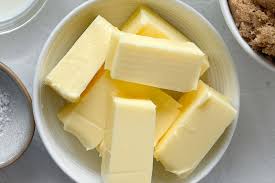
From a regulatory and trade perspective (governed by Codex Alimentarius, the USDA, and the European Food Safety Authority), butter is a fat-rich emulsion derived exclusively from milk or cream.
By law, standard commercial butter must contain a minimum of 80% milkfat (often reaching 82% in European formulations), a maximum of 16% water, and roughly 1.5% to 2.0% milk solids-not-fat (curd).
The international dairy market organizes butter into four primary commercial categories based on fermentation styles and salt additions:
Sweet Cream Butter: Processed from fresh, unfermented pasteurized cream. It features a mild, sweet, and clean milky flavor profile. This is the dominant retail butter format in North America.
Cultured (Lactic) Butter: Cream that is inoculated with specific lactic acid starter cultures (such as Lactococcus lactis subsp. diacetylactis) and allowed to ferment slightly before churning. This fermentation converts milk sugars into organic acids and aromatic compounds, giving the butter a rich, tangy taste and a pronounced savory aroma. It is the preferred standard across continental Europe.
Unsalted Butter: Butter containing zero added sodium chloride. It is highly favored by professional bakers and pastry chefs because it allows them to control the exact salt levels in delicate doughs and batters.
Salted Butter: Butter blended with up to 2% granular food-grade salt during the final working phase. The salt acts as a flavor enhancer and a natural preservative, slowing down bacterial growth and extending retail shelf life.
Technical Specifications
To move smoothly through international trade networks, withstand long-term storage without spoiling, and perform consistently in industrial bakery lines, commercial butter must meet strict physical and chemical parameters.
Association of Official Analytical Chemists (AOAC) 920.116
Curd (Protein & Minerals)
Maximum $leq 2.0%$ total weight
Gravimetric Sediment Centrifugation
Free Fatty Acids (FFA)
Maximum $leq 0.3%$ (Indicates low lipid degradation)
Potassium Hydroxide ($KOH$) Titration
Peroxide Value (PV)
Maximum $leq 0.5 text{ meq O}_2/text{kg}$ fat (Verifies zero rancidity)
Iodometric Titration Assay
Coliform Microflora
Absent / Less than $10 text{ CFU/g}$
Violet Red Bile Agar Incubation
Solid Fat Content (SFC)
30% to 45% solid fat at 10°C / 10% to 15% at 20°C
Pulsed Nuclear Magnetic Resonance (p-NMR)
Salt Distribution Uniformity
100% Homogeneous; zero visible brine pockets
Visual Microscopic Indicator Spray Test
Transit Cold Chain
Frozen: $-18^circtext{C}$ / Chilled Retail: 2°C to 4°C
Continuous Recording RFID Data Loggers
The Biophysical Science of Phase Inversion
The core engineering marvel behind butter manufacturing is a complete physical transformation known as phase inversion.
From an Oil-in-Water to a Water-in-Oil Emulsion
As explored in liquid dairy science, fresh cream is an oil-in-water (O/W) emulsion. In this native liquid state, individual droplets of liquid milk fat are suspended inside a continuous watery serum (the skim milk phase). The fat droplets float freely because they are protected by a native phospholipid-protein membrane that prevents them from clumping together.
During industrial churning, intense mechanical shear force is applied to the cooled cream. This vigorous beating forces air bubbles into the liquid.
The sharp edges of the churning paddles shatter the protective membranes surrounding the fat droplets. This allows the newly exposed, hydrophobic (water-fearing) liquid fats to spill out and clump onto the passing air bubbles.
As churning continues, the bubbles collapse under the pressure, causing the fat particles to lock together into solid, golden grains of butter fat. This action forces the water-based serum out of the mixture as a liquid byproduct called buttermilk.
The final product, solid butter, represents a complete flip into a water-in-oil (W/O) emulsion. In this final stable state, tiny droplets of remaining water and milk solids are permanently trapped within a continuous, solid network of crystallized milk fat.
Industrial Manufacturing and Crystallization Flow
Manufacturing high-performance commercial butter requires a continuous, tightly managed pipeline that controls fat crystal growth.
1.Centrifugal Cream Separation:Intake Gate.
Fresh raw milk is heated to 50°C and fed into high-speed centrifugal separators. The machine spins the fluid dairy to extract heavy cream, standardizing the output to a precise lipid level of 35% to 40% fat before it moves forward.
2.High-Heat Pasteurization:Enzyme Deactivation.
The separated cream undergoes thermal treatment at 95°C for 15 seconds (a higher temperature than fluid milk pasteurization). This intense heat destroys dangerous pathogens and completely deactivates natural lipase enzymes that would otherwise break down the fats and cause rapid spoilage.
3.Crystallization and Thermal Aging:Crystal Engineering.
The hot cream is cooled down and held inside insulated aging vats at 5°C to 8°C for 12 to 15 hours. This extended cold rest allows the liquid fats inside the globules to crystallize into a specific solid structure, a step critical for achieving the correct texture during churning.
4.Continuous Churning and Separation:The Phase Inversion Flip.
The aged cream is pumped into a continuous butter-making machine. High-speed blending paddles strike the liquid, breaking the fat membranes and forcing the fat to clump into golden grains, while pushing out the liquid buttermilk byproduct.
5.Salting and Mechanical Working:Texture Smoothing.
The raw butter grains pass into a vacuum working chamber where they are kneaded between heavy rollers. Fine salt is added here. The intense mechanical squeezing breaks remaining water droplets into microscopic sizes, ensuring a smooth texture and preventing leaky brine spots.
6.Extrusion and Cold Chain Distribution:Solid Packaging.
The finished solid butter is extruded through forming dies into commercial blocks or retail sticks. The portions are wrapped in greaseproof foil wraps that block light and oxygen, then moved to cold storage at 4°C (or $-18^circtext{C}$ for international shipping) to set the fat structure completely.
The Chemistry of Butter Flavor
The highly sought-after flavor and aroma profile of butter is driven by a natural organic compound called diacetyl (2,3-butanedione).
In cultured butters, starter bacteria ferment the natural citric acid present in the milk serum into alpha-acetolactate, which spontaneously oxidizes into diacetyl. This volatile compound is highly aromatic; it vaporizes readily when heated, producing the deeply satisfying, rich, and creamy scent that defines fresh baked goods and sautéed foods.
Conclusion
Butter represents a pinnacle achievement in the management and transformation of agricultural fats. By utilizing centrifugal separation and mastering the mechanics of phase inversion, the dairy industry successfully converts a delicate, liquid oil-in-water emulsion into a highly stable, uniform, and multi-functional water-in-oil solid commodity.
Through an automated manufacturing sequence that carefully controls fat crystallization and seals the final product away from oxygen and light, butter can be stored and shipped across international borders with minimal risk of spoilage. As global food manufacturing lines place high value on clean labels, natural fats, and superior baking performance, butter remains a primary anchor commodity driving agricultural market values and supporting global culinary traditions.