Within the global livestock and intensive agricultural sectors, poultry feed represents the single largest operational cost—accounting for roughly 60% to 70% of total poultry production expenses. Modern poultry farming relies heavily on highly optimized, data-driven nutrition. Unlike traditional yard feeding, commercial broiler (meat) and layer (egg) production requires precise chemical formulations tailored to match the birds’ exact genetic potential, age, and environmental conditions.
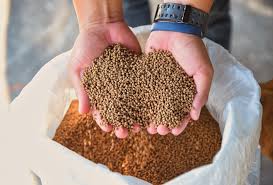
The industrial manufacturing of poultry feed is a masterclass in bio-resource engineering. It transforms coarse raw grains, oilseed meals, and synthetic micro-ingredients into highly digestible, biosecure pellets or crumbles.
By designing feeds around exact amino acid profiles and utilizing advanced enzyme tech, the animal feed industry maximizes the efficiency of meat and egg production. This high-efficiency system allows the global agricultural sector to satisfy the rising demand for affordable, high-quality animal protein while minimizing feed waste and reducing environmental impacts.
Defining Poultry Feed and Feeding Regimens
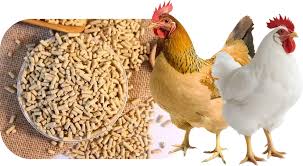
From an industrial and veterinary perspective, poultry feed is a complete, scientifically balanced diet formulated to provide 100% of the daily energy, amino acids, vitamins, and minerals required by domesticated avians (primarily chickens, Gallus gallus domesticus).
Because an animal’s digestive system changes rapidly as it grows, commercial feeding programs are strictly divided into phased regimens to optimize growth efficiency:
1. Broiler (Meat Production) Phased Regimen
Starter Feed (Days 0 to 14): A high-protein crumble (typically 22% to 24% crude protein) designed to stimulate early gut development and support rapid immune and bone growth in newly hatched chicks.
Grower Feed (Days 15 to 28): A nutrient-dense pellet focused on building skeletal muscle and meat volume, slightly lowering protein (20% to 21%) while boosting energy content.
Finisher Feed (Day 29 to Harvest): A high-energy, lower-protein pellet (18% to 19%) designed to maximize final weight gain and fat distribution efficiently before processing.
2. Layer (Egg Production) Phased Regimen
Pullet Developer Feed: Formulated for juvenile female chickens to promote steady, controlled skeletal growth without inducing premature obesity.
Layer Phase 1 / Peak Production Feed: Formulated with an immense mineral load—specifically targeting 3.5% to 4.5% calcium—to support continuous eggshell formation without depleting the bird’s structural bone calcium reserves.
Technical Specifications
To pass quality control audits, maintain physical stability in automated factory feeders, and comply with international biosecurity laws, commercial poultry feed batches must hit strict structural and chemical baselines.
Specification Parameter
Targeted Industrial Standard
Testing / Verification Method
Moisture Content
Maximum $leq 12.0%$ (Prevents bin mold growth)
AOAC 930.15 Force-Air Oven Drying
Pellet Durability Index (PDI)
Minimum $geq 90%$ to $95%$ (Resists crumbling)
Holmen / Pfost Tumbling Box Tester
Crude Protein Baseline
Broiler Starter: 22%–24% / Layer: 16%–18%
Kjeldahl Nitrogen Combustion Analysis
Metabolizable Energy (ME)
2,900 to 3,200 kcal/kg (Varies by phase)
Bomb Calorimetry Estimation Models
Calcium-to-Phosphorus Ratio
Broilers: 2:1 / Layers: Up to 10:1 (For shell build)
Inductively Coupled Plasma (ICP-OES)
Salmonella enterica
Negative / Zero Tolerance in 25g
Real-Time PCR Pathogen Assay Enrichment
Aflatoxin B1 Mycotoxins
Maximum $leq 20 text{ ppb}$ (Strict safety limit)
High-Performance Liquid Chromatography
Conditioning Temperature
80°C to 85°C core exposure (Pasteurization gate)
Inline Digital Thermal Probes
The Nutritional Matrix and Feed Formulation
Commercial poultry feeds are formulated using specialized linear programming software to balance macronutrients at the lowest possible ingredient cost.
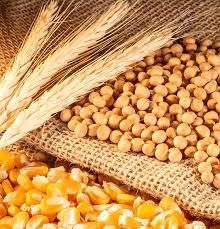
The bulk of poultry feed consists of starchy cereal grains—predominantly yellow corn, wheat, or sorghum. These grains supply the core carbohydrates needed to power the bird’s metabolism, body heat regulation, and fat development.
2. The Protein Complex (20% to 35% of Mass)
Because avians require specific building blocks to manufacture muscle and egg whites, feed relies on high-quality protein meals, primarily dehulled soybean meal.
Rather than just tracking total crude protein, modern nutritionists focus on the Ideal Amino Acid Profile. They match feed levels exactly to the bird’s genetic needs by adding pure, synthetic amino acids—specifically L-methionine and L-lysine—ensuring zero protein is wasted.
3. Exo-Enzymes and Nutrient Unlocking
Poultry cannot naturally digest certain complex molecules found in plant walls, such as phytic acid, which locks away vital phosphorus. To solve this, industrial feeds are supplemented with specialized enzymes, most notably phytase.
Phytase cuts the chemical bonds of phytic acid, unlocking free phosphorus inside the bird’s digestive tract. This addition dramatically improves bone strength while cutting down on environmental phosphorus pollution in poultry manure.
Industrial Manufacturing and Pelleting Flow
Transforming raw agricultural grains into uniform, biosecure pellets requires a continuous mechanical engineering sequence.
1.Raw Material Reception and Cleaning:Intake Gate.
Bulk ingredients (corn and soybean meal) are unloaded from railcars or trucks, passed through high-capacity magnetic separators to catch stray metal fragments, and run through vibrating screens to remove dust and stones.
2.Hammer-Mill Grinding:Sizing Phase.
The cleaned grains are funneled into heavy industrial hammer mills. Rapidly spinning steel beaters shatter the grains against internal screens, reducing the particle size to a uniform grind (typically 600 to 900 microns) to maximize surface area for later digestion.
3.Batch Weighing and Micro-Mixing:Precision Blend.
The ground grains are dropped into high-capacity twin-shaft paddle mixers. Micro-ingredients—including synthetic amino acids, vitamins, limestone, and phytase enzymes—are precisely weighed and blended into the grain mass to achieve a completely uniform mix within 2 to 3 minutes.
4.Steam Conditioning and Pasteurization:Sanitation Lock.
The dry feed mix enters a steam conditioner where it is blasted with hot, pressurized steam. This brings the feed to 80°C to 85°C and adds 14% moisture, gelatinizing the starches to act as a natural glue while acting as a pasteurization step to destroy dangerous pathogens like Salmonella.
5.Pellet Extrusion:Mechanical Forming.
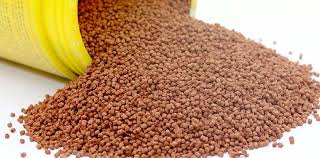
The hot, moist mash is immediately fed into a pellet mill. Heavy steel rollers press the feed through a spinning ring die under immense mechanical pressure, extruding solid, compacted feed strands that are cut into uniform pellet lengths by adjustable knives.
6.Counter-Flow Cooling and Crumbling:Structure Lock.
The warm, soft pellets pass into a counter-flow cooler where ambient air is drawn upward through the bed. Within minutes, the feed cools to within 5°C of room temperature, hardening the pellets to maximize durability. For young chicks, the hardened pellets are run through corrugated rollers to crack them into small crumbles.
Quality Control and Biosecurity Safeguards
Because poultry feed travels through large-scale distribution networks, it can act as a vehicle for disease if quality control slips.
Mycotoxin Management: Grains stored in warm, humid conditions are highly vulnerable to molds that excrete toxic compounds called mycotoxins (like aflatoxin). If consumed, these toxins can cause liver failure and destroy a flock’s immune system. To prevent this, commercial mills mix specialized mycotoxin binders (such as bentonite clays) directly into the feed to trap toxins in the gut, allowing them to pass safely out of the bird without causing harm.
Pellet Durability Maintenance: If pellets crumble back into a dusty powder during transit, birds will refuse to eat it, leading to feed waste and dropped growth weights. Mills run regular gravimetric tumbling tests to ensure the pellets are durable enough to survive automated farm augers intact.
Conclusion
Poultry feed represents a pinnacle achievement in animal nutrition and process engineering. By utilizing precision hammer milling, steam conditioning, and targeted enzyme supplementation, the feed industry successfully converts raw agricultural grains into highly digestible, biosecure pellets.
Through an automated manufacturing sequence that pasteurizes feed to eliminate pathogens and balances exact amino acid profiles, commercial mills support high-yield, sustainable meat and egg production worldwide. As modern livestock farming continues to prioritize environmental efficiency, reduced carbon footprints, and strict biosecurity, advanced poultry feed engineering will remain a primary anchor driving international agricultural development and global food security.