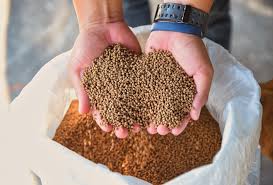
Within the global aquaculture sector, fish feed (commercially referred to as aquafeed) represents the primary driver of production efficiency and operational viability, accounting for roughly 50% to 60% of total fish farming expenses. Modern aquaculture has emerged as the fastest-growing food production sector in the world. To sustain this intensive growth, the industry relies on highly sophisticated, data-driven nutrition that satisfies the unique metabolic requirements of diverse aquatic species.
The manufacturing of industrial aquafeed is one of the most complex branches of feed engineering. Unlike terrestrial livestock feed, which simply sits in a dry trough, fish feed must operate dynamically within a three-dimensional water column.
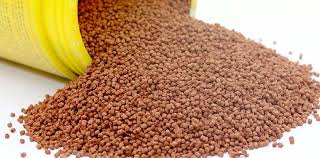
By applying advanced thermal extrusion technologies, feed processors can manipulate the physical behavior of pellets—precisely controlling whether they float, sink slowly, or drop rapidly to the seafloor. This engineering precision ensures that different species—from surface-feeding tilapia to bottom-dwelling shrimp—can feed naturally, minimizing nutrient leaching and protecting fragile aquatic environments from pollution.
Defining Fish Feed and Functional Modalities
From an industrial and veterinary perspective, aquafeed is a nutrient-dense, highly water-stable diet formulated to provide 100% of the daily metabolic energy, amino acids, fatty acids, vitamins, and minerals required by farmed fish and crustaceans.
Because aquaculture encompasses thousands of different species with completely separate feeding styles and digestive tracks, commercial aquafeeds are strictly engineered into three physical modalities:
1. Floating Pellets (Low-Density Aquafeed)
Target Species: Surface and upper-water column feeders, including Tilapia, Carp, and Rainbow Trout.
Engineering Design: These pellets feature a highly expanded, porous internal structure with trapped air pockets. Floating pellets allow fish farmers to visually monitor feeding behavior, prevent overfeeding, and ensure no uneaten food drops to the bottom to decay.
2. Slow-Sinking Pellets (Medium-Density Aquafeed)
Target Species: Mid-water pelagic species, most notably Atlantic Salmon and Marine Sea Bass/Sea Bream.
Engineering Design: These pellets are manufactured with precise density adjustments to sink through the water column at a controlled velocity, matching the active swimming and striking speed of predatory fish.
3. Sinking Pellets and Crumbles (High-Density Aquafeed)
Target Species: Bottom-dwelling demersal species and crustaceans, including Shrimp, Prawns, Flatfish, and Catfish.
Engineering Design: These pellets are dense, compacted, and heavily bound. They sink immediately to the substrate and are designed with high water stability, allowing them to remain intact for hours without dissolving while shrimp slowly chew them.
Technical Specifications
To maintain structural integrity under water, limit nitrogen leaching, and satisfy global biosecurity benchmarks, commercial aquafeed batches must hit strict physical and chemical baselines.
Specification Parameter
Targeted Industrial Standard
Testing / Verification Method
Water Stability Index
Minimum $geq 90%$ to $95%$ intact after 2 hours
Standard Water Shaker Basin Filtration
Floatability Profile
$geq 90%$ pellets floating for 30 minutes (Floating grade)
Maximum $leq 8.0%$ to $10.0%$ (Extends dry shelf life)
AOAC 930.15 Forced-Air Oven Drying
Fine Particle / Dust Mass
Maximum $leq 1.0%$ of total batch weight
Particle Size Sieve Shaker Analysis
Extrusion Core Temp
120°C to 140°C under high pressure
Deep-Barrel Electronic Thermocouple Logs
The Nutritional Matrix and Marine Sustainability
Aquafeed formulations require an exceptionally dense nutrient profile, particularly for carnivorous marine species that demand high protein and fat levels.
Historically, aquafeed relied entirely on marine fishmeal sourced from wild-caught forage fish to satisfy the high amino acid requirements of farmed species. Today, to protect ocean ecosystems, modern formulations utilize a sustainable blend of plant proteins (soy protein concentrates, wheat gluten) and emerging alternatives, including insect meals (Black Soldier Fly larvae) and single-cell bacterial proteins.
2. Essential Fatty Acids ($omega$-3 Long Chains)
Carnivorous marine fish require specific long-chain polyunsaturated fatty acids—specifically EPA and DHA—to maintain cellular health and build premium-grade fillet oils. Aquafeed blenders use fish oil alongside sustainable, clean marine algal oils to supply these vital omega-3 fatty acids without increasing pressure on wild ocean fisheries.
3. Carbohydrate Binders and Starch Gelatinization
Unlike land animals, fish have a limited capacity to digest complex carbohydrates. However, ingredients like wheat flour or corn starch are vital additions to the mix (typically 10% to 20%). During extrusion cooking, these starches undergo complete thermal gelatinization, acting as a strong structural glue that holds the pellet together and prevents it from melting into mush the moment it touches water.
The Chemical Engineering of Aquafeed Extrusion
The precise physical behavior of fish feed is determined by high-temperature, high-pressure twin-screw extrusion cooking.
[Raw Ingredient Mash]
        │
        ▼
[Twin-Screw Extruder Barrel] ──► (High Shear + Steam + High Pressure Injection)
        │
        ▼
[Extrusion Through Die Plate] ──► (Sudden Pressure Drop ➔ Flashes Water to Steam)
        │
        ▼
[Physical Pellet Expansion] ──► Traps Microscopic Air Voids (Floating Density)
High-Shear Cooking: The raw ingredient mix is fed into a sealed extruder barrel containing twin interlocking screws. As the screws rotate, they apply intense mechanical shear, friction, and direct steam injection, heating the feed to 120°C–140°C under immense pressure. This changes the mix into a hot, flowing, plasticized dough.
The Flash Expansion Vent: At the end of the barrel, the hot dough is forced through microscopic holes in a steel die plate into normal room pressure. This sudden, violent drop in pressure causes the super-heated water inside the dough to instantly flash into steam.
Density Targeting: The expanding steam puffs up the dough, creating millions of microscopic internal air voids before rotating knives slice it into pellets.
To manufacture floating feed, the pellets are allowed to expand fully, dropping their density below that of water ($< 1.0 text{ g/cm}^3$).
To manufacture sinking feed, the extruder is attached to a specialized vacuum conditioning chamber that controls the steam release, keeping the pellet dense, heavy, and compact ($> 1.0 text{ g/cm}^3$).
Industrial Manufacturing and Vacuum Coating Flow
Manufacturing high-performance aquafeed requires a continuous mechanical sequence, utilizing vacuum technology to inject high concentrations of liquid fats deep into the core of the pellets.
1.Raw Material Reception and Ultra-Fine Grinding:Intake Gate.
Bulk protein meals and grains are received, cleaned of debris via magnets, and routed into advanced hammer mills or pulverizers. The ingredients are ground to an ultra-fine particle size (typically below 250 microns), which is critical for ensuring a smooth extrusion dough and maximizing water stability.
2.Precision Blending and Pre-Conditioning:Matrix Uniformity.
The fine powders are thoroughly blended with micro-nutrients, vitamins, and carotenoids (like astaxanthin for salmon pinking). The mix moves into a pre-conditioner where steam and water are mixed in for 2 to 3 minutes, hydrating the starches and warming the mash to 90°C.
The warm mash enters the twin-screw extruder. Intense mechanical shear and thermal energy cook the proteins and gelatinize the starches. The dough is extruded through a die plate, flashing off steam to create the targeted expanded floating or dense sinking pellet shapes.
The soft, moist pellets are cleanly transferred into a multi-pass fluid-bed or belt dryer. Hot air (110°C to 130°C) passes through the shifting bed, safely dropping the internal moisture down to a stable 8% to prevent mold growth during storage.
5.Vacuum Core Fat Coating:Lipid Infusion.
The warm, dry, porous pellets enter an industrial vacuum coater. A deep vacuum is pulled, sucking the air right out of the pellet’s micro-voids. Warm fish oil or algal oil is sprayed onto the batch, and when air pressure is restored, the atmospheric push forces the oil deep into the center of the pellet, enabling high fat levels (up to 35%) without leaving a greasy, leaking surface.
6.Counter-Flow Cooling and Bulk Packaging:Cold Chain Finish.
The oil-coated pellets pass into a counter-flow cooler to drop their temperature back to room level, locking the fats inside the structure. The finished aquafeed is gently screened to remove fines, packed into large bulk bags or heavy poly-lined sacks, and shipped to commercial fish farms globally.
Conclusion
Fish feed manufacturing represents an exceptional integration of marine biochemistry and advanced extrusion engineering. By utilizing high-shear twin-screw extruders and vacuum lipid coating, the aquafeed industry successfully crafts water-stable, dense pellets designed to match the specific biological needs and feeding habits of diverse aquatic species.
Through an automated manufacturing sequence that carefully manages starch gelatinization for water stability and replaces wild fishmeal with sustainable alternatives, commercial mills support high-yield, environmentally sound aquaculture worldwide. As global food chains prioritize ocean preservation, efficient feed conversion, and reduced carbon footprints, advanced fish feed engineering will remain a primary anchor driving international aquaculture development and global food security.