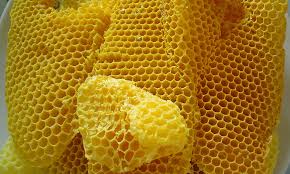
Within the global biochemical, pharmaceutical, and consumer product manufacturing sectors, beeswax (Cera alba or Cera flava) represents a versatile, lipid-based structural matrix synthesized biologically by honey bees (primarily Apis mellifera). Worker bees excrete this natural wax through four pairs of specialized abdominal subepidermal glands. They consume roughly 6 to 8 kilograms of honey to metabolically synthesize just one kilogram of raw wax, using it to construct the precise, load-bearing hexagonal comb cells required for honey storage and brood rearing.
The industrial processing and purification of beeswax is an advanced discipline of oleochemical engineering. Because raw wax collected directly from apiaries contains trapped hive impurities—such as propolis, larval cocoons, and honey sugars—it must undergo precise thermal rendering, chemical adsorption, and micron-membrane filtration.
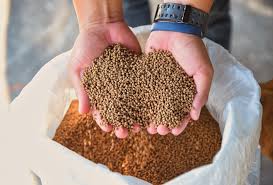
By manipulating its physical states without scorching its delicate esters, refiners convert raw wax cakes into highly consistent, bio-compatible pellets or slabs. This structural stabilization allows the cosmetic, pharmaceutical, and food-packaging markets to exploit its exceptional emulsifying, water-proofing, and non-toxic properties safely.
Defining Beeswax Grades and Classifications
From a chemical and regulatory perspective, industrial refiners categorize beeswax based on the intensity of its purification and the specific market it is formatted to serve. The global supply chain organizes beeswax into three operational classifications:
Characteristics: Minimally processed wax that undergoes basic water-bath melting and coarse screen filtration to strip out large hive debris.
Applications: Retains a deep golden hue and strong honey aroma; perfect for high-end candle making, leather waterproofers, and industrial wood polishes.
2. Refined Yellow Beeswax (Cera Flava)
Characteristics: Pure, unbleached wax treated via step-up industrial filtration and acid-wash clarification to eliminate fine particulates, pollen fractions, and lingering sugars.
Applications: Extensively used as a natural thickener and glazing agent in the food industry (coded as E901 or cleared under FDA GRAS regulation 21 CFR 184.1973).
3. Refined White Beeswax (Cera Alba)
Characteristics: Manufactured by subjecting refined yellow beeswax to carbon adsorption beds or earth-clay bleaching matrices. This physical extraction pulls out the yellow carotenoids and honey odors without altering the underlying wax esters.
Applications: Highly valued in the pharmaceutical and personal care industries for creating color-neutral, scent-free bases for lipsticks, cosmetic creams, and ointment salves.
Technical Specifications
To clear strict international pharmacopoeia standards (such as Ph.Eur. and USP-NF) and expose illegal adulteration with cheap petroleum-derived paraffin, commercial beeswax must hit strict chemical baselines.
Analytical Parameter
Targeted Regulatory Baseline
Verification Methodology
Melting Point Range
61°C to 66°C (Extremely sharp thermal window)
ASTM D938 / Ph.Eur Drop Point Method
Acid Value
17 to 24 mg KOH/g (Measures free fatty acids)
Direct Potentiometric Acid-Base Titration
Saponification Value
87 to 104 mg KOH/g (Verifies total lipid links)
Boiling Ethanolic Potassium Hydroxide Assay
Ester Value
70 to 80 (Calculated: Saponification $-$ Acid Value)
Mathematical Deduction Model
Relative Density
0.958 to 0.960 $text{g/cm}^3$ at 20°C
Pycnometer Volumetric Mass Displacement
Peroxide Value
Maximum $leq 5.0$ (Indicates oxidative freshness)
Acetic Acid-Chloroform Iodometric Titration
Paraffin / Ceresin Fraud
Complete Absence (Clear liquid at $leq 65^circtext{C}$)
Ethanolic KOH Reflux Saponification Test
Heavy Metals (Pb, As)
Maximum $leq 3 text{ ppm}$
Inductively Coupled Plasma Mass Spec (ICP-MS)
The Chemical Matrix and Functional Physics
Beeswax is not a single chemical molecule; it is a highly complex, solid lipid solution consisting of roughly 300 distinct organic compounds.
                    ┌──► Alkyl Esters (70% to 75%: Predominantly Myricyl Palmitate)
                    ├──► Free Fatty Acids (12% to 14%: Cerotic Acid chains)
[Beeswax Matrix] ───┼──► Hydrocarbons (12% to 16%: Odd-numbered straight C27-C33 chains)
                    └──► Free Fatty Alcohols (1% to 2%: Long-chain structural units)
1. The Ester Foundation and Emulsification Mechanics
The structural backbone of beeswax consists of high-molecular-weight alkyl esters, dominated by myricyl palmitate.
When cosmetic formulators combine molten beeswax with an aqueous phase and a mild alkali agent (such as borax/sodium borate), the alkali reacts cleanly with the free fatty acids (like cerotic acid) present natively in the wax. This interaction creates a minor volume of soap in situ, which works alongside the heavy alkyl esters to bind water and oils together. The result is a stable, creamy water-in-oil (W/O) emulsion that locks in skin moisture without clogging pores.
2. Viscosity and Rheology Modification
Beeswax features a highly unique physical behavior: it is brittle and solid at room temperature, becomes highly pliable and plasticized at 35°C (matching internal beehive and human skin temperatures), and drops into a low-viscosity liquid above 62°C. This behavior makes it an exceptional rheology modifier. When blended into lip balms or skin salves, it provides structural firmness in the tube, yet glides effortlessly across skin cells upon contact with body heat.
Industrial Manufacturing and Carbon Refinement Flow
Transforming raw apiary comb scraps into uniform, bleached, and decontaminated industrial wax pellets requires a careful, closed thermal loop.
1.Raw Comb Melting and Hydraulic Pressing:Intake Gate.
Raw cappings and broken brood combs are loaded into insulated stainless steel tanks filled with soft rainwater or distilled water. Steam coils heat the tank to 80°C, melting the wax so it floats cleanly to the top while heavy hive debris sinks into a waste layer known as slumgum.
2.Chemical Digestion and Phosphoric Stabilization:Acid Wash.
The separated liquid wax is drawn off the top and treated with a mild (35% to 45%) phosphoric acid solution ($0.1%$ by weight). This chemical wash breaks down trace mineral complexes and metallic contaminants that could otherwise cause discoloration or trigger rancidity.
3.Vacuum Carbon Adsorption and Bleaching:Color Strip.
To manufacture white wax (Cera alba), the liquid moves into a vacuum bleaching reactor held at 85°C. A customized blend of activated carbon and fuller’s earth (bentonite clay) is blended into the oil. Under a deep vacuum, these porous particles adsorb the yellow pollen pigments and honey smells.
The slurry is forced through an industrial multi-chamber filter press lined with micron-membrane cloth. The liquid wax passes smoothly through the sheets, while the clay, carbon particles, and trapped micro-particulates remain locked inside the filter cake.
5.Rotary Drum Pelletization:Forming Gate.
The brilliant clear liquid wax is pumped onto a water-cooled, rotating stainless steel drum pelletizer (pastillator). Small drops of hot wax are metered onto the moving cold steel belt, solidifying instantly into uniform, free-flowing, 4mm circular pellets.
6.Quality Assurance Screening and Box Packaging:Sealed Exit.
The cooled pellets are screened through a vibrating sieve to remove any deformed particles, sample-tested via gas chromatography to verify pure ester profiles, and packed into poly-lined cardboard boxes for international shipment to cosmetic and pharma factories.
Combating Global Adulteration: The Paraffin Challenge
Because pure beeswax is expensive to harvest and process, it is highly prone to global supply chain fraud. The most common form of adulteration involves blending pure beeswax with cheap paraffin wax or stearic acid derived from petroleum or palm oil.
To expose this fraud and protect ingredient integrity, laboratory technicians use specialized analytical methods:
The Saponification Cloud Point Assay: Pure beeswax saponifies completely when boiled with ethanolic potassium hydroxide ($KOH$). If the resulting liquid solution is cooled and remains completely transparent at or below 65°C, the wax is pure. If the solution turns cloudy or forms white flakes, it proves the batch was cut with un-saponifiable petroleum paraffin.
Gas Chromatography-Mass Spectrometry (GC-MS): GC-MS analysis maps the carbon chain lengths of the wax sample. Pure beeswax displays a unique, highly organized fingerprint of odd-numbered hydrocarbons ($text{C}_{27}$ to $text{C}_{33}$) alongside dominant monoesters. The appearance of an artificial surge of even-numbered hydrocarbons instantly exposes the presence of industrial petroleum fillers.
Conclusion
Beeswax processing represents a highly successful marriage of insect bio-synthesis and advanced chemical refining. By combining gentle, indirect steam melting loops with vacuum carbon adsorption and automated drum pastillation, refiners safely convert raw hive materials into highly predictable, ultra-pure chemical sheets and pellets.
Through a strictly monitored production network that filters out micro-debris and screens for heavy metals and paraffin fraud, processing plants deliver a premium, sustainable raw material. As international personal care and pharmaceutical markets place an increasingly high value on natural, non-toxic, and bio-compatible ingredients, advanced beeswax engineering remains a critical anchor driving product safety and global cosmetic innovation.