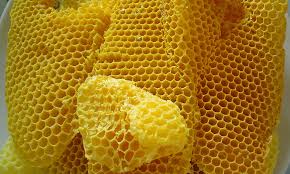
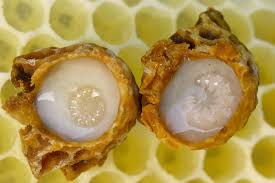
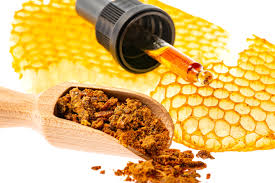
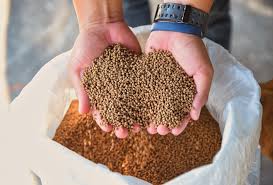
Within the global apicultural, pharmacological, and functional food sectors, propolis (commonly referred to as bee glue) represents a highly specialized, bioactive resinous matrix collected and synthesized by honey bees (primarily Apis mellifera). Worker bees harvest lipophilic exudates, gums, and resins from the buds, bark, and leaves of specific flora—most notably poplars, birches, and conifers. Back inside the hive, the bees combine these raw plant resins with their own salivary enzymes ($beta$-glucosidase), beeswax fractions, and pollen to generate a dense, sticky sealant.
The industrial extraction and purification of propolis is an advanced branch of phytochemical and bioprocess engineering. In its raw form, propolis contains trapped hive debris, wood fragments, and a high concentration of insoluble beeswax that dilutes its therapeutic properties.
By applying precise solvent extraction, sub-zero dewaxing, and vacuum evaporation, refiners isolate the highly prized bioactive compounds. This processing capability allows the pharmaceutical, oral health, and nutraceutical industries to utilize its potent antimicrobial, antioxidant, and anti-inflammatory properties in standardized, bio-available applications.
Defining Propolis Typologies and Commercial Formats
Raw propolis is an exceptionally complex material whose chemical profile shifts dramatically based on the geographic flora surrounding the apiary. The international trade network recognizes three primary commercial typologies:
                               ┌──► Poplar (Brown) Propolis (Europe/Asia; rich in flavonoids like chrysin)
[Geographic Raw Propolis] ─────┼──► Green Propolis (Brazil; *Baccharis dracunculifolia*; rich in Artepillin C)
                               └──► Red Propolis (Brazil/Caribbean; *Dalbergia ecastaphyllum*; rich in isoflavonoids)
Poplar / Temperate Propolis (Brown Propolis): The traditional variety produced across Europe, North America, and temperate Asia. It is sourced primarily from the resinous buds of Populus species and is highly rich in flavonoids, chalcones, and phenolic acids (such as chrysin and caffeic acid phenethyl ester).
Brazilian Green Propolis: A highly premium variety sourced from the alecrim-do-campo shrub (Baccharis dracunculifolia) in Minas Gerais, Brazil. It possesses a distinct greenish hue and is globally prized for its high concentration of Artepillin C, a prenylated cinnamic acid derivative with profound immune-modulating properties.
Red Propolis: A rare variety collected along the coastal mangroves of Northeast Brazil from the resin of Dalbergia ecastaphyllum. It features a deep red color and is characterized by a unique profile of isoflavonoids (such as formononetin and medicarpin).
Technical Specifications
To meet strict global pharmacopoeia and nutraceutical standards, commercial batches of purified propolis extract must adhere to precise chemical and biological baselines.
Analytical Parameter
Targeted Industrial Baseline
Verification Methodology
Total Polyphenols
Minimum $geq 25.0%$ to $30.0%$ by weight
Folin-Ciocalteu Spectrophotometry
Total Flavonoids
Minimum $geq 8.0%$ to $10.0%$ by weight
Aluminum Chloride ($AlCl_3$) Colorimetry
Beeswax Content
Maximum $leq 5.0%$ (Purified dry extract)
Hot Ethanol/Petroleum Ether Solubility
Resins & Balsams
50% to 70% by weight
Gravimetric Soluble Phase Calc
Lead ($text{Pb}$) Contamination
Maximum $leq 2.0 text{ ppm}$
Inductively Coupled Plasma Mass Spec (ICP-MS)
Arsenic ($text{As}$) Contamination
Maximum $leq 0.5 text{ ppm}$
Inductively Coupled Plasma Mass Spec (ICP-MS)
Residual Ethanol
Maximum $leq 0.5%$ (For dried powder grades)
Gas Chromatography Headspace (GC-HS)
Standard Plate Count (SPC)
Less than $1,000 text{ CFU/g}$
Standard Plate Nutrient Agar Incubation
The Biophysical Chemistry of Extraction
Raw propolis cannot be utilized directly in consumer applications because its therapeutic components are trapped inside an insoluble resin and wax matrix. The core engineering goal of propolis processing is Solid-Liquid Extraction (Maceration).
1. Solvent Optimization (The Ethanol Hydro-Alcoholic Mix)
Pure water is an ineffective solvent for propolis because the active polyphenols and flavonoids are highly lipophilic (fat-soluble). Conversely, absolute 100% ethanol dissolves excess beeswax, which complicates downstream purification.
Industrial refiners optimize the extraction by using a 70% to 80% ethanol-in-water solution. This specific hydro-alcoholic ratio breaks the resinous bonds, perfectly dissolving the therapeutic polyphenols while leaving the heavy, undesirable wax fractions un-solubilized.
2. Winterization and Dewaxing Kinetics
Even with an optimized solvent, minor wax fractions inevitably dissolve into warm ethanol. To strip these out, the crude liquid extract must undergo winterization.
The fluid is chilled down to $-20^circtext{C}$ to $-30^circtext{C}$ and held for 24 hours. Because beeswax has a high melting point and low solubility in cold ethanol, dropping the temperature forces the dissolved wax molecules to rapidly crystallize out of the liquid solution. The fluid is run through a cold micron-membrane filter press, capturing the crystallized wax while leaving a crystal-clear, ultra-pure propolis tincture.
Industrial Manufacturing and Vacuum Evaporation Flow
Manufacturing standardized, premium propolis powder or concentrated liquid extract requires a multi-stage phytochemical separation sequence.
1.Raw Propolis Cryogenic Milling:Intake Gate.
Raw propolis scrapings are received from apiaries and verified for heavy metal safety. Because raw propolis is incredibly sticky at room temperature, it is flash-frozen to $-20^circtext{C}$, turning it brittle. It is run through cryogenic hammer mills, shattering it into a coarse powder to maximize its extraction surface area.
2.Hydro-Ethanolic Hydro-Maceration:Solvent Mix.
The propolis powder is funneled into insulated stainless steel reactors filled with a 70% food-grade ethanol solvent. The slurry is continuously agitated at 40°C for 7 to 10 days, allowing the active flavonoids and cinnamic acids to dissolve completely into the liquid phase.
3.Cryogenic Winterization and Dewaxing:Wax Removal.
The crude liquid extract is pumped into cooling crystallization vats and chilled to $-25^circtext{C}$ for 24 hours. This deep freeze causes remaining beeswax molecules to crash out as solid crystals, which are cleanly separated by forcing the fluid through a pressurized plate filter press.
4.Falling-Film Vacuum Evaporation:Thermal Cut.
The clarified dewaxed tincture enters a falling-film vacuum evaporator. By drawing a deep vacuum, the boiling point is dropped to just 45°C. The ethanol solvent is flashed off rapidly and recycled, leaving behind a thick, honey-like resin concentrate without scorching the heat-sensitive polyphenols.
5.Spray Drying and Carrier Blending:Solid Forming.
To manufacture a dry powder, the sticky resin concentrate is blended with a food-grade carrier (such as maltodextrin or silica) and pumped into a spray dryer. The mix is atomized into a stream of warm air, instantly drying the particles into a free-flowing, non-sticky propolis powder.
6.Analytical Standardization and Aseptic Packaging:Sealed Exit.
Samples are drawn and analyzed via High-Performance Liquid Chromatography (HPLC) to verify exact flavonoid and polyphenol levels. The standardized propolis powder is funneled into aluminum foil-laminated barrier sacks, heat-sealed under a nitrogen blanket, and boxed for global distribution.
Conclusion
Propolis processing represents an exceptional application of solid-liquid extraction kinetics and cryogenic purification within the functional food sector. By combining targeted hydro-ethanolic solvent ratios with deep sub-zero winterization and low-temperature vacuum evaporation, refiners successfully isolate a clean, highly concentrated matrix of therapeutic polyphenols and flavonoids.
Through an automated manufacturing sequence that carefully strips out insoluble beeswax and controls heat exposure to prevent biochemical breakdown, processing plants deliver a highly standardized, premium ingredient. As global pharmaceutical and personal care markets place an increasingly high premium on natural, clinically validated antimicrobial and anti-inflammatory compounds, advanced propolis engineering remains a critical anchor driving product efficacy and natural health innovation.