The Oceanic Jewel: An Industrial Profile of Snapper
Introduction
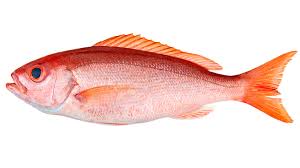
In the world of commercial fisheries, snapper (family Lutjanidae) represents a bridge between high-volume global commodity trade and the premium, artisanal seafood market. Known for their vibrant coloration, diverse species range—including the iconic Red Snapper—and firm, succulent white meat, these fish are among the most sought-after marine species in both the fresh-market and fine-dining sectors. Unlike the high-speed, schooling pelagic fish like mackerel or tuna, snapper are primarily reef-associated or demersal predators, occupying tropical and subtropical shelf environments worldwide.
The industrialization of snapper is defined by precision handling. Because these fish are often harvested in smaller quantities and held in high regard for their aesthetic and gustatory quality, the focus of the supply chain is on “cold-chain perfection.” From the moment they are hooked or netted, the industrial goal is to maintain the visual clarity of the eyes, the bright pigmentation of the skin, and the structural integrity of the flesh. This profile explores the technical specifications, the rigorous industrial handling protocols, and the essential culinary roles that snapper plays in the international food economy.
Defining the Product
Snapper are biologically distinguished by their spiny fins, large mouths, and sharp canine-like teeth, which reflect their role as active reef predators. Commercially, the product is valued for its mild, slightly sweet flavor and a firm texture that holds its form under almost any cooking method, making it a favorite for both home chefs and professional restaurateurs.
The commercial market processes snapper into four primary industrial formats:
Fresh Whole Round (On Ice): The premium format. In markets close to the harvest site, snapper is shipped whole on crushed, flake ice. The visual condition—clear eyes and bright red gills—is the primary driver of its price in auction markets.
Skin-On Fillets: A highly popular retail format. The skin, which often retains the species’ characteristic pink or red hue, is left on the fillet for presentation, while the scales are removed via industrial-grade scaling drums.
Skinless Fillets (IQF): Individually Quick Frozen (IQF) fillets are the standard for global export. These are precision-trimmed to ensure the absence of bones and are blast-frozen to lock in the “fresh” quality, allowing them to be transported across oceans without loss of cellular integrity.
Value-Added Loins: Extracted from the thickest part of the fillet, these portions are standardized by weight and shape, catering to the airline and high-end restaurant industries that require consistent cook-times and plating presentation.
Industrial Specification Matrix
Snapper quality is governed by the maintenance of cellular structure and color. Unlike oily fish that degrade through rancidity, snapper degrades through tissue softening and pigment loss.
Specification Parameter
Targeted Industrial Baseline
Verification Methodology
Moisture Content
$75.0% – 78.0%$
Forced-Air Oven Drying
Crude Protein
Minimum $19.0% – 22.0%$
Kjeldahl Nitrogen Assay
Total Lipid (Fat)
$1.0% – 3.0%$ (Lean grade)
Soxhlet Lipid Extraction
Color Score (Lab)*
High Chroma (Bright Red/Pink)
Digital Chroma-meter Analysis
Total Volatile Base (TVB)
< 25 mg N/100g (Freshness lock)
Conway Micro-Diffusion Analysis
Histamine Levels
< 20 ppm (Safety marker)
ELISA / HPLC Screening
Freezing Point
$-1.8^circtext{C}$ to $-2.2^circtext{C}$
Thermocouple Profiling
Storage Temperature
$leq -25^circtext{C}$ (Deep-freeze storage)
Continuous Data Logging
Industrial Applications and Food Systems
The snapper’s firm texture and mild flavor make it a “universal” culinary fish, serving roles that are distinct from both oily fish and softer whitefish.
Fine-Dining Culinary Standard: Snapper is a cornerstone of global upscale cuisine. Because the flesh is firm and does not easily flake, it is the preferred choice for sophisticated preparations, including pan-searing, whole-roasting, and use in complex sauces where the fish must retain its structural form.
The “Premium” Retail Segment: In retail aisles, snapper commands a price premium compared to tilapia or catfish. It is marketed as a “clean” and “natural” protein, often attracting health-conscious consumers who prioritize high-quality protein with low fat and minimal processing.
Institutional Innovation: High-end airline catering frequently selects snapper fillets for long-haul business-class meals. The fish’s ability to withstand re-heating without becoming mushy or dry is a critical industrial advantage in the foodservice sector.
The Global Sushi/Sashimi Trade: While tuna dominates this market, certain snapper species (such as Tai or Japanese Sea Bream) are highly prized in sushi for their delicate, translucent flesh and slight “crunch” when prepared with the skin on (a technique called matsukawa-zukuri).
The Engineering of “Fresh-Frozen” Quality
The industrial challenge with snapper is preserving the fish’s vibrant, reddish-pink color. Oxidation is the enemy of snapper quality, leading to a dulling of the skin and a graying of the meat.
Precision Blast-Freezing:
To ensure a fillet tastes as fresh as a local catch, processors utilize tunnel blast-freezers. By forcing air at $-40^circtext{C}$ across the fillets at high velocity, the water within the fish’s cells is frozen into microscopic crystals instantly. This prevents the formation of large, jagged ice crystals that would otherwise puncture the cellular walls of the meat and cause moisture loss (drip loss) upon thawing.
Modified Atmosphere Packaging (MAP):
For fresh retail formats, the industry utilizes MAP. The snapper is packed in an atmosphere where oxygen is replaced with a precise mixture of nitrogen and carbon dioxide. This oxygen-deprived environment inhibits the growth of aerobic bacteria and prevents the oxidation of the skin pigments, allowing the fish to maintain its vibrant color for 7–10 days post-processing.
Sustainability and The Reef-Managed Future
Snapper fisheries are often localized and highly vulnerable to over-harvesting. Consequently, the industry is transitioning toward more rigorous management frameworks.
Sonar and Acoustic Mapping: To avoid over-targeting specific reef locations, industrial snapper vessels now use advanced 3D sonar mapping. This allows captains to identify the specific depth and biomass density of the snapper schools, ensuring that harvests are concentrated only where the population is healthy and abundant.
Hook-and-Line Certification: Much of the commercial snapper catch is still harvested via hook-and-line, which is inherently more selective than net-based fishing. The industry is moving toward “Vessel Monitoring Systems” (VMS), where every boat’s location is recorded by satellite, allowing regulatory authorities to ensure fishing is occurring only in authorized, sustainable zones.
Traceability and DNA Testing: Because of the high market price, snapper is a frequent victim of “species substitution”—where cheaper fish are mislabeled as premium snapper. To combat this, the industry is adopting DNA-barcoding technology. At the processing facility, a small tissue sample is analyzed to verify the exact species, creating a digital “passport” for the fish that follows it from the pier to the dinner plate.
Conclusion
Snapper is the oceanic jewel of the seafood industry. It represents a refined balance between the raw vitality of wild-caught reef life and the technical precision of modern industrial food systems. While it may not match the massive volumes of sardine or tuna harvests, it provides a quality and consistency that the premium retail and foodservice markets rely upon for high-end menu development.
The industrial journey of snapper—from the reef to the automated scaling drum and the final vacuum-seal—is a testament to the importance of the cold chain. As the world’s appetite for high-quality, sustainable seafood grows, the snapper industry is positioned to play a leading role. By embracing data-driven stock management, advanced cryo-freezing techniques, and radical traceability, the snapper sector ensures that this beautiful, succulent fish remains a mainstay of global gastronomy, providing a clean, high-density protein source that continues to delight and nourish consumers worldwide.