Fast delivery within 72 Hours

Cartons

Contact Supplier

Supplier: orangegoose559
Phone: +120135785656
Email: solilaj668@fisedo.com
Address: 3449 Homestead Rd Fargo, 67506 United States
Visit Supplier Store
Report Abuse

Description

Cartons – Detailed Product Description

Introduction

Cartons are lightweight, versatile, and cost-effective packaging containers widely used for storing, protecting, and transporting goods across various industries. They are commonly made from paperboard or corrugated fiberboard and are designed to provide structural support, branding surfaces, and product protection.

Cartons play a crucial role in modern packaging systems, especially in retail, food and beverage, pharmaceuticals, cosmetics, electronics, and e-commerce industries. Their popularity is driven by their ability to combine functionality, affordability, and environmental sustainability.

Depending on their design and material strength, cartons can be used for both primary packaging (direct product contact) and secondary packaging (outer protection during transport).


Definition of Cartons

Cartons are packaging containers made from paperboard or lightweight corrugated material, designed to enclose, protect, and present products for storage, display, and transportation.

The raw materials used in carton production are derived from wood-based fibers such as:

Pinus radiata
Eucalyptus globulus
Pinus sylvestris

These species are widely used due to their long cellulose fibers, which provide strength and smooth paperboard quality.


Types of Cartons

1. Folding Cartons

  • Made from paperboard and folded into shape
  • Used for cereals, cosmetics, and pharmaceuticals

2. Rigid Cartons

  • Strong, non-collapsible boxes
  • Used for luxury goods and gift packaging

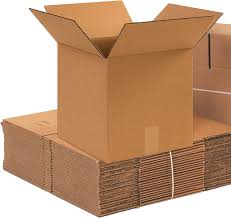
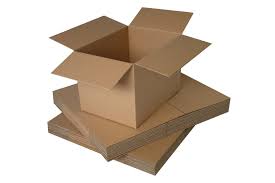
3. Corrugated Cartons

  • Made from fluted corrugated fiberboard
  • Used for shipping and heavy-duty packaging

4. Tuck-End Cartons

  • Flaps tuck into the box for closure
  • Common in retail packaging

5. Window Cartons

  • Transparent section to display products
  • Used for food and retail items

6. Die-Cut Cartons

  • Custom-shaped cartons for specific products
  • Widely used in branding and marketing

Physical Characteristics of Cartons

Cartons typically feature:

  • Lightweight structure
  • Smooth printable surfaces
  • Foldable or rigid design depending on type
  • Moderate to high strength (depending on material)
  • Excellent branding and labeling capability
  • Recyclable and biodegradable composition
  • Variety of shapes and sizes

These characteristics make cartons suitable for both protection and product presentation.


Manufacturing Process of Cartons

The production of cartons involves several key stages:

1. Pulp Processing

Wood fibers are converted into paper pulp using mechanical or chemical processes.

2. Paperboard Formation

Pulp is pressed and dried into sheets of paperboard.

3. Coating and Finishing

Paperboard may be coated for smoothness, gloss, or moisture resistance.

4. Printing

Branding, product information, and designs are printed on sheets.

5. Die-Cutting

Sheets are cut into specific carton shapes using precision tools.

6. Folding and Scoring

Creases are added to allow easy folding into box shapes.

7. Gluing and Assembly

Cartons are glued or assembled into final form or shipped flat.

8. Quality Inspection

Finished cartons are checked for strength, print quality, and accuracy.


Tabulated Specification of Cartons

Specification Details
Product Name Cartons
Common Raw Materials Pinus radiata, Eucalyptus globulus, Pinus sylvestris
Product Type Paperboard packaging container
Structure Folding paperboard or corrugated fiberboard
Surface Finish Matte, glossy, laminated, or printed
Strength Light to medium (varies by type)
Weight Lightweight
Recyclability Fully recyclable
Moisture Resistance Moderate (can be enhanced with coating)
Main Applications Retail, food packaging, pharmaceuticals, e-commerce
Storage Conditions Dry, cool, and moisture-free environment
Packaging Format Flat-packed or pre-assembled cartons
Traceability Paper production and supply chain records

Uses of Cartons

Cartons are widely used in multiple industries:


1. Food and Beverage Industry

  • Cereal boxes
  • Milk and juice packaging
  • Snack containers

2. Pharmaceutical Industry

  • Medicine packaging
  • Tablet and capsule boxes
  • Health product cartons

3. Cosmetics Industry

  • Perfume boxes
  • Cream and lotion packaging
  • Beauty product packaging

4. Retail and Consumer Goods

  • Electronics packaging
  • Household goods packaging
  • Gift boxes

5. E-Commerce and Logistics

  • Product shipping cartons
  • Protective secondary packaging

6. Industrial Use

  • Lightweight component packaging
  • Spare parts storage

Advantages of Cartons

1. Lightweight and Easy to Handle

Reduces transportation costs and handling effort.

2. Cost-Effective

Affordable packaging solution for mass production.

3. Eco-Friendly

Biodegradable and recyclable material.

4. High Customization

Easily printed and shaped for branding purposes.

5. Good Product Protection

Provides adequate protection for light to medium-weight goods.

6. Space Efficient

Can be folded flat for storage and transport.


Economic Importance

Cartons contribute significantly to global industries by:

  • Supporting retail and consumer goods markets
  • Driving growth in packaging and printing industries
  • Creating employment in manufacturing and logistics
  • Enabling global e-commerce expansion
  • Reducing packaging costs for businesses

They are a vital part of modern supply chains.


Environmental Considerations

Cartons are environmentally friendly because:

  • They are made from renewable wood-based fibers
  • They are fully recyclable and reusable
  • They biodegrade naturally
  • They reduce reliance on plastic packaging
  • They support sustainable packaging systems

Responsible sourcing improves environmental performance further.


Storage and Handling Guidelines

To maintain quality:

  • Store in dry, well-ventilated areas
  • Avoid exposure to moisture and humidity
  • Keep away from direct sunlight for long periods
  • Stack properly to prevent deformation
  • Handle carefully to avoid bending or tearing

Proper storage ensures durability and usability.


Quality Control Standards

High-quality cartons must meet:

  • Folding strength and durability tests
  • Print quality and color accuracy standards
  • Dimensional precision requirements
  • Moisture resistance checks
  • Compression and stacking strength tests
  • Material safety compliance

Conclusion

Cartons are essential packaging materials widely used across industries for storage, branding, and product protection. Made from renewable wood-based fibers sourced from trees such as Pinus radiata, Eucalyptus globulus, and Pinus sylvestris, they offer a balance of strength, affordability, and environmental sustainability.

From food packaging to pharmaceuticals, cosmetics, retail, and e-commerce, cartons provide a reliable and efficient solution for modern packaging needs. As global industries move toward eco-friendly alternatives, cartons continue to play a key role in sustainable packaging systems.

In essence, cartons are not just packaging containers—they are essential tools that support branding, protection, and efficient distribution in the global economy.