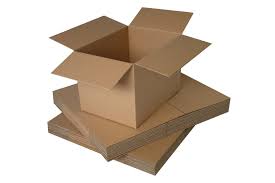
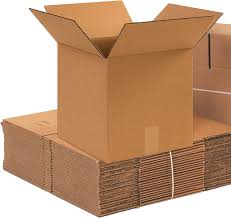
Corrugated boxes are strong, lightweight, and versatile packaging containers made from corrugated fiberboard. They are widely used in shipping, storage, and product protection across industries such as e-commerce, food processing, agriculture, electronics, manufacturing, and retail distribution.
These boxes are designed to protect goods during handling, transport, and storage by absorbing shock, resisting compression, and preventing damage. Their structure makes them one of the most reliable and cost-effective packaging solutions in global logistics.
Corrugated boxes are especially important in modern supply chains due to the rapid growth of online shopping and international trade, where safe and efficient packaging is essential.
Definition of Corrugated Boxes
Corrugated boxes are packaging containers made from corrugated fiberboard, consisting of a fluted corrugated sheet sandwiched between one or more flat linerboards to provide strength, rigidity, and cushioning.
The paper materials used in their production are often derived from strong pulp sources such as:
Corrugated boxes are widely used across industries:
1. E-Commerce and Retail
Product shipping and delivery
Packaging for online orders
2. Food and Beverage Industry
Packaged food storage
Beverage transport cartons
3. Agriculture Sector
Fruit and vegetable packaging
Export of fresh produce
4. Electronics Industry
Safe packaging of gadgets and devices
Shock protection during transport
5. Manufacturing and Industrial Goods
Machine parts packaging
Export of industrial equipment
6. Logistics and Warehousing
Storage and stacking of goods
Bulk transport packaging
Advantages of Corrugated Boxes
1. High Strength-to-Weight Ratio
Strong protection while remaining lightweight.
2. Cost-Effective
Affordable packaging solution for large-scale use.
3. Eco-Friendly
Biodegradable and fully recyclable.
4. Customizable
Can be designed in different sizes, shapes, and prints.
5. Excellent Protection
Absorbs shock and reduces product damage.
6. Easy Handling
Lightweight and easy to transport or store flat.
Economic Importance
Corrugated boxes play a major role in global trade and industry by:
Supporting e-commerce growth and logistics systems
Driving demand in paper manufacturing industries
Creating employment in packaging and printing sectors
Reducing product damage and transportation losses
Promoting sustainable packaging alternatives
They are a backbone of modern packaging and distribution networks.
Environmental Considerations
Corrugated boxes are environmentally friendly because:
They are made from renewable wood-based fibers
They are fully recyclable and reusable
They biodegrade naturally
They reduce dependence on plastic packaging
They support circular economy systems
Responsible sourcing of raw materials enhances sustainability.
Storage and Handling Guidelines
To maintain quality:
Store in dry, moisture-free environments
Avoid exposure to rain or humidity
Keep stacked in stable positions to prevent collapse
Protect from direct sunlight for long durations
Handle carefully to avoid crushing or bending
Proper handling ensures structural integrity.
Quality Control Standards
High-quality corrugated boxes must meet:
Compression strength standards
Burst resistance requirements
Edge crush test (ECT) performance
Moisture resistance checks
Dimensional accuracy verification
Printing and finishing quality standards
Conclusion
Corrugated boxes are essential packaging solutions used globally for safe storage, transport, and delivery of goods. Manufactured from strong fiber-based materials derived from trees such as Pinus radiata, Eucalyptus globulus, and Pinus sylvestris, they offer durability, flexibility, and environmental sustainability.
From e-commerce deliveries to industrial exports, corrugated boxes provide reliable protection while supporting efficient logistics and supply chain systems. As global demand for eco-friendly packaging continues to rise, corrugated boxes remain one of the most important and widely used packaging materials.
In essence, corrugated boxes are not just containers—they are a critical component of modern trade, ensuring safe, efficient, and sustainable movement of goods worldwide.