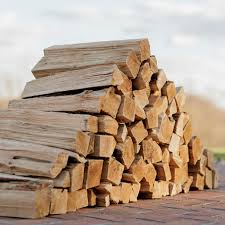
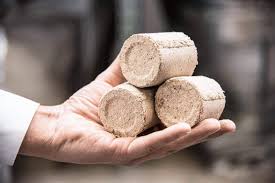
Briquettes are compressed solid fuel blocks made from biomass materials such as sawdust, agricultural residues, wood waste, coconut shells, and other organic by-products. They are designed to serve as a cleaner, more efficient, and more uniform alternative to traditional firewood and loose biomass fuels.
Briquettes are widely used for cooking, heating, industrial boilers, and small-scale power generation. Their uniform shape, high energy density, and low moisture content make them an increasingly popular renewable energy solution in both domestic and commercial markets.
Definition of Briquettes
Briquettes are dense, compact fuel blocks produced by compressing biomass materials under high pressure, often without chemical additives, to create a solid fuel with high combustion efficiency.
Common raw materials include plant-based residues from sources such as:
Eucalyptus globulus Pinus radiata Cocos nucifera
These materials provide fibrous biomass that binds well under pressure and produces high-energy fuel.
Types of Briquettes
1. Biomass Briquettes
Made from agricultural waste and wood residues
Used for general heating and cooking
2. Wood Briquettes
Produced from sawdust and wood shavings
High calorific value and clean burning
3. Coconut Shell Briquettes
Made from coconut shells
Very dense with long burning time and low ash
4. Charcoal Briquettes
Made from carbonized biomass or charcoal powder
Used for BBQ, grilling, and industrial heating
5. Agricultural Briquettes
Made from crop residues like husks, stalks, and shells
Common in rural energy systems
Physical Characteristics of Briquettes
Briquettes typically feature:
Uniform block, cylindrical, or pillow shape
High density and compact structure
Low moisture content (usually below 10%)
High calorific value (efficient heat output)
Low smoke and ash production
Easy handling and storage
Consistent size for controlled combustion
These properties make them more efficient than loose biomass fuels.
Manufacturing Process of Briquettes
The production of briquettes involves several key stages:
1. Raw Material Collection
Biomass waste such as sawdust, husks, or coconut shells is collected.
2. Drying
Moisture content is reduced to improve compression quality.
3. Crushing or Grinding
Materials are broken into fine particles for uniformity.
4. Mixing
Optional binders (natural lignin or starch) may be added depending on material type.
5. Compression (Briquetting)
Material is pressed under high pressure using mechanical or hydraulic machines.
6. Cooling
Fresh briquettes are cooled to harden and stabilize structure.
7. Packaging
Finished briquettes are packed in bags or bulk containers for distribution.
Used in textile, food processing, and manufacturing industries
Provides steady heat output
3. Power Generation
Used in biomass power plants
Co-firing with coal in energy systems
4. Commercial Heating
Hotels, bakeries, and restaurants
Space heating and cooking applications
5. Agricultural Applications
Crop drying systems
Greenhouse heating
6. Export and Energy Markets
Increasingly traded as renewable solid fuel
High demand in energy-importing countries
Advantages of Briquettes
1. High Energy Efficiency
Burns longer and more consistently than firewood.
2. Eco-Friendly
Made from renewable waste materials.
3. Low Smoke and Pollution
Cleaner combustion compared to raw biomass.
4. Easy Storage and Transport
Uniform shape allows efficient stacking and handling.
5. Cost-Effective
Utilizes low-cost agricultural and wood waste.
6. Reduced Deforestation Pressure
Decreases dependence on natural firewood.
Economic Importance
Briquettes contribute significantly to economies by:
Creating value from agricultural and forestry waste
Supporting rural employment and small industries
Reducing energy costs for households and businesses
Expanding renewable energy markets
Supporting export trade in biomass fuels
They are an important part of the global green energy economy.
Environmental Considerations
Briquettes are environmentally beneficial because:
They use waste materials that would otherwise be discarded
They reduce deforestation from firewood harvesting
They produce lower emissions than raw wood
They support circular economy systems
They can contribute to carbon-neutral energy systems
Proper production techniques improve sustainability further.
Storage and Handling Guidelines
To maintain quality:
Store in dry, moisture-free environments
Avoid direct contact with water
Keep in ventilated storage areas
Use sealed packaging for long-term storage
Prevent crushing or excessive pressure on stacked bags
Proper storage ensures maximum burning efficiency.
Quality Control Standards
High-quality briquettes must meet:
Low moisture content standards
High density and structural integrity
Uniform size and shape
High calorific value
Low ash content
Clean and steady combustion performance
Conclusion
Briquettes are a modern renewable fuel made from compressed biomass materials such as sawdust, crop residues, and coconut shells from sources like Eucalyptus globulus, Pinus radiata, and Cocos nucifera. They provide a clean, efficient, and sustainable alternative to traditional firewood and charcoal.
From household cooking and industrial boilers to power generation and export markets, briquettes play a key role in modern renewable energy systems. Their ability to convert waste into valuable fuel makes them an important solution for both energy security and environmental sustainability.
In essence, briquettes are not just fuel blocks—they are a practical innovation that transforms biomass waste into reliable, efficient, and eco-friendly energy.