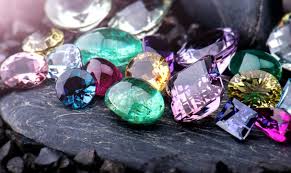
Jewelry-grade minerals are naturally occurring minerals that meet the quality standards required for use in fine jewelry and decorative ornaments. These minerals are selected based on their beauty, clarity, durability, color, and ability to be cut and polished into attractive gemstones.
Unlike industrial minerals, jewelry-grade minerals are valued primarily for their aesthetic and ornamental properties. They form the foundation of the global gemstone and luxury jewelry industry.
Definition of Jewelry-Grade Minerals
Jewelry-grade minerals are mineral specimens that possess sufficient transparency, color quality, hardness, and structural integrity to be fashioned into gemstones suitable for jewelry applications.
They are typically mined from geological formations rich in crystalline minerals and then processed through cutting and polishing to enhance their brilliance and appeal.
Common sources include minerals from pegmatites, metamorphic rocks, and hydrothermal veins.
Examples of Jewelry-Grade Minerals
1. Quartz Family
Amethyst (purple quartz)
Citrine (yellow quartz)
Smoky quartz
2. Corundum Group
Ruby (red corundum)
Sapphire (blue and other colors)
3. Beryl Group
Emerald (green beryl)
Aquamarine (blue beryl)
4. Feldspar Group
Moonstone
Labradorite
5. Garnet Group
Almandine garnet
Pyrope garnet
6. Carbon-Based Minerals
Diamond (pure carbon crystal)
Physical Characteristics of Jewelry-Grade Minerals
Jewelry-grade minerals typically exhibit:
High visual clarity or attractive color patterns
Adequate hardness for daily wear
Resistance to scratching and abrasion
Strong light reflection (luster or brilliance)
Crystal structure suitable for cutting and polishing
Natural inclusions that may enhance uniqueness
Stability under normal environmental conditions
These properties determine their suitability for gemstone use.
Formation of Jewelry-Grade Minerals
Jewelry-grade minerals form through geological processes over millions of years:
1. Magmatic Processes
Crystallization from molten magma
Example: diamonds, garnets
2. Metamorphic Processes
Formation under heat and pressure
Example: ruby, sapphire
3. Hydrothermal Processes
Mineral deposition from hot fluids in rock cracks
Example: emerald, quartz varieties
4. Sedimentary Processes
Formation through deposition and compression
Example: opal, some agates
Processing of Jewelry-Grade Minerals
1. Mining and Extraction
Minerals are extracted from underground or alluvial deposits.
2. Sorting and Grading
Stones are evaluated based on color, clarity, size, and hardness.
3. Cutting and Faceting
Rough stones are shaped to maximize brilliance and beauty.
4. Polishing
Surfaces are refined to enhance luster and transparency.
5. Heat Treatment (Optional)
Some minerals are heat-treated to improve color or clarity.
6. Certification
Gemological labs certify authenticity and quality.
7. Jewelry Setting
Finished stones are mounted into rings, necklaces, and ornaments.
Astrology and spiritual practices in some cultures
5. Industrial Applications (select minerals)
Diamonds used in cutting, drilling, and polishing tools
Advantages of Jewelry-Grade Minerals
1. High Aesthetic Value
Unique colors and brilliance enhance visual appeal.
2. Durability
Many minerals are strong enough for daily wear.
3. Rarity
Some stones are extremely rare and highly valuable.
4. Investment Potential
High-quality gemstones can increase in market value.
5. Versatility
Used in jewelry, decoration, and industrial tools.
Economic Importance
Jewelry-grade minerals contribute significantly to global economies by:
Supporting gemstone mining industries
Driving international jewelry markets
Creating employment in cutting and polishing sectors
Generating export revenue for producing countries
Supporting luxury goods and fashion industries
They are a key component of the global gemstone trade.
Environmental Considerations
Mining jewelry-grade minerals may impact the environment through:
Land excavation and habitat disruption
Water usage and contamination risks
Energy consumption in mining and processing
However, improvements include:
Responsible mining certifications
Ethical sourcing initiatives
Growth of lab-created gemstones reducing mining pressure
Land rehabilitation programs
Storage and Handling Guidelines
To preserve quality:
Store separately to prevent scratching
Use padded or velvet-lined containers
Avoid exposure to harsh chemicals
Keep away from extreme heat or sunlight
Handle with care during setting or transport
Quality Control Standards
Jewelry-grade minerals are evaluated based on:
Color intensity and uniformity
Clarity and inclusion level
Cut precision and symmetry
Hardness and durability
Carat weight and proportions
Certification from gemological institutes
Conclusion
Jewelry-grade minerals are natural or synthetic mineral materials that meet the strict quality requirements for gemstone use in jewelry and ornamentation. They include well-known mineral groups such as quartz, corundum, beryl, garnet, and diamond, each valued for its beauty, durability, and rarity.
Formed through complex geological processes, these minerals are mined, refined, and expertly cut into gemstones used across global luxury markets.
In essence, jewelry-grade minerals are not just raw earth materials—they are the foundation of the gemstone industry, transforming natural mineral formations into symbols of beauty, wealth, and craftsmanship.