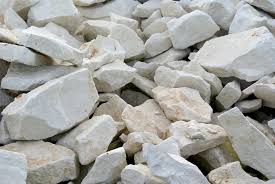
Limestone is a sedimentary rock composed primarily of calcium carbonate (CaCO₃). It is one of the most widely used natural resources in the world due to its abundance, versatility, and importance in construction, agriculture, and industrial manufacturing.
Formed over millions of years from the accumulation of marine organisms such as shells and coral, limestone plays a key role in building materials, cement production, soil conditioning, and chemical industries.
Definition of Limestone
Limestone is a naturally occurring sedimentary rock mainly made of calcium carbonate, often formed from biological debris such as shells, coral, algae, and marine skeletons compacted over geological time.
It is typically extracted from quarry deposits found in sedimentary rock formations.
Types of Limestone
1. Chalk Limestone
Soft, white, and porous
Used in agriculture and writing chalk production
2. Coquina
Composed of shell fragments
Lightweight and porous
3. Fossiliferous Limestone
Contains visible fossil remains
Common in construction and decorative stone
4. Travertine
Formed in mineral springs
Used in flooring and architecture
5. Dolomitic Limestone
Contains magnesium carbonate (CaMg(CO₃)₂)
Used in steel and construction industries
Physical and Chemical Characteristics of Limestone
Limestone typically features:
Light gray, white, or tan color
Hard but workable stone texture
High calcium carbonate content (CaCO₃)
Reacts with acids (effervescence with hydrochloric acid)
Moderate hardness on the Mohs scale (3–4)
Porous or compact depending on type
Soluble in weak acids over time
Formation of Limestone
Limestone forms through natural geological processes:
1. Biological Formation
Accumulation of shells and marine organisms
Compression over millions of years
2. Chemical Precipitation
Calcium carbonate precipitates from water
Common in caves and hot springs
3. Evaporative Processes
Formation in shallow, evaporating marine environments
Extraction and Processing of Limestone
1. Quarrying
Limestone is extracted from open-pit quarries using blasting and mechanical excavation.
2. Crushing
Large rocks are broken into smaller sizes.
3. Grinding
Material is ground into powder for industrial use.
4. Screening
Particles are sorted by size.
5. Calcination (for lime production)
Limestone is heated to produce quicklime (CaO).
6. Packaging
Processed limestone is packed for industrial or agricultural use.
Tabulated Specification of Limestone
Specification
Details
Product Name
Limestone
Chemical Composition
Calcium carbonate (CaCO₃)
Rock Type
Sedimentary rock
Color
White, gray, beige
Hardness
3–4 (Mohs scale)
Density
Medium to high
Reactivity
Reacts with acids (effervescence)
Porosity
Low to moderate
Main Applications
Cement, construction, agriculture, industry
Storage Conditions
Dry environment
Processing Methods
Crushing, grinding, calcination
Uses of Limestone
1. Construction Industry
Production of cement and concrete
Building stone and aggregates
2. Agriculture
Soil pH correction (liming)
Improves crop productivity
3. Industrial Manufacturing
Steel production (flux material)
Glass manufacturing
Paper production
4. Chemical Industry
Production of lime and calcium compounds
Water treatment processes
5. Environmental Applications
Flue gas desulfurization in power plants
Wastewater treatment
Advantages of Limestone
1. Abundant and Widely Available
Found in many regions globally.
2. Versatile Material
Used across multiple industries.
3. Cost-Effective
Relatively inexpensive to extract and process.
4. Durable Construction Material
Provides strength in building applications.
5. Important Agricultural Input
Improves soil fertility and crop yield.
Economic Importance
Limestone contributes significantly to economies by:
Supporting construction and infrastructure development
Supplying raw materials for cement and steel industries
Creating mining and processing jobs
Supporting agricultural productivity
Driving export revenues in mineral-rich countries
It is one of the most economically important industrial minerals worldwide.
Environmental Considerations
Limestone extraction and use may involve:
Land disturbance from quarrying
Dust and noise pollution
Energy use in processing
However, environmental benefits include:
Use in pollution control systems
Water treatment and purification
Soil improvement in agriculture
Rehabilitation of quarry sites helps reduce long-term impacts.
Storage and Handling Guidelines
To maintain quality:
Store in dry conditions to prevent moisture absorption
Avoid contamination with soil or organic materials
Keep separate grades for industrial use
Handle safely during crushing and transport
Use proper dust control measures
Quality Control Standards
High-quality limestone is assessed by:
Calcium carbonate purity level
Particle size distribution
Moisture content
Chemical composition consistency
Suitability for specific industrial applications
Conclusion
Limestone is a highly versatile sedimentary rock composed mainly of calcium carbonate, widely used in construction, agriculture, and industrial manufacturing. Formed through natural biological and chemical processes over millions of years, it remains a critical raw material in global infrastructure and production systems.
From cement production and steel manufacturing to soil conditioning and environmental treatment, limestone plays a vital role in supporting modern economies and sustainable development.
In essence, limestone is not just a rock—it is a foundational industrial resource that supports construction, agriculture, and countless essential industries worldwide.