Construction Aggregates – Detailed Product Description
Introduction
Construction aggregates are granular materials used in construction to produce concrete, mortar, asphalt, and road bases. They are one of the most widely used raw materials in the building industry, forming the structural backbone of modern infrastructure such as roads, bridges, buildings, and dams.
Aggregates are typically sourced from natural deposits or recycled construction materials.
Definition of Construction Aggregates
Construction aggregates are inert granular materials such as sand, gravel, crushed stone, and recycled concrete that are used with cement, bitumen, or lime to form composite construction materials.
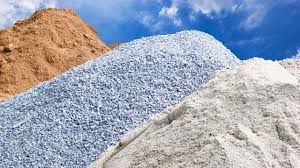
A common high-strength crushed stone material used in construction is: Crushed Stone Aggregate
Types of Construction Aggregates
1. Fine Aggregates
Includes sand and finely crushed materials
Used in mortar, plaster, and fine concrete work
2. Coarse Aggregates
Larger particles like gravel and crushed stone
Used in concrete and road base layers
3. Natural Aggregates
Sourced directly from rivers, quarries, and pits
Includes river sand and natural gravel
4. Crushed Stone Aggregates
Produced by mechanically crushing rocks
Angular shape improves bonding strength
5. Recycled Aggregates
Made from crushed concrete or demolition waste
Environmentally friendly alternative
Physical and Mechanical Characteristics of Aggregates
Construction aggregates typically have:
High compressive strength
Hard and durable structure
Angular or rounded particle shapes
Low water absorption (depending on type)
Good bonding with cement paste
Resistance to weathering and abrasion
Varying sizes from fine sand to large gravel
Production and Processing of Aggregates
1. Quarrying
Natural rock is extracted from quarries or riverbeds.
2. Crushing
Large rocks are broken into smaller pieces.
3. Screening
Materials are sorted by size.
4. Washing
Removes dust, clay, and impurities.
5. Grading
Aggregates are separated into specific size ranges.
Tabulated Specification of Construction Aggregates
Specification
Details
Product Name
Construction Aggregates
Main Types
Sand, gravel, crushed stone, recycled aggregates
Source
Natural deposits and recycled materials
Shape
Angular or rounded
Strength
High compressive strength
Water Absorption
Low to moderate
Main Applications
Concrete, asphalt, road base, foundations
Processing Methods
Quarrying, crushing, screening, washing
Uses of Construction Aggregates
1. Concrete Production
Mixed with cement and water
Used in buildings, bridges, and foundations
2. Road Construction
Base and sub-base layers
Asphalt production
3. Railway Ballast
Stabilizes railway tracks
4. Drainage Systems
Used in filtration and water flow systems
5. Building Foundations
Provides structural stability
Advantages of Construction Aggregates
1. High Strength
Improves durability of concrete and roads.
2. Cost-Effective
Readily available and affordable.
3. Versatile
Used in nearly all construction projects.
4. Long-Lasting
Provides structural stability over time.
5. Environmentally Reusable
Recycled aggregates reduce waste.
Economic Importance
Construction aggregates are essential because they:
Support global infrastructure development
Drive the construction and real estate sectors
Create quarrying, mining, and transport jobs
Enable road and urban development
Represent one of the highest-volume construction materials worldwide
They are considered the foundation of modern construction materials.
Environmental Considerations
Aggregate extraction and use involve:
Land disturbance from quarrying
Dust and noise pollution
Riverbed ecosystem disruption (for sand mining)
Sustainability measures include:
Use of recycled aggregates
Controlled quarrying practices
River protection regulations
Alternative construction materials
Storage and Handling Guidelines
To maintain quality:
Store in clean, segregated stockpiles
Prevent contamination with soil or organic matter
Keep different sizes separated
Avoid excessive moisture or dust accumulation
Use proper grading systems
Conclusion
Construction aggregates are essential raw materials made up of sand, gravel, crushed stone, and recycled materials. The most commonly used form, crushed stone aggregate Crushed Stone Aggregate, provides strength and stability to concrete and infrastructure projects.
From roads and bridges to buildings and drainage systems, aggregates form the foundation of all modern construction activities.
In essence, construction aggregates are not just loose stones—they are the core building blocks of infrastructure, enabling durability, strength, and long-lasting development worldwide.