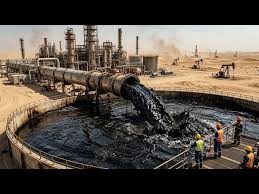
Crude oil is a naturally occurring fossil fuel found in underground reservoirs. It is one of the most important global energy resources and the primary raw material used to produce fuels such as petrol, diesel, jet fuel, kerosene, and various petrochemical products.
Crude oil plays a central role in transportation, industry, power generation, and manufacturing economies worldwide.
Definition of Crude Oil
Crude oil is a liquid mixture of hydrocarbons (compounds made of hydrogen and carbon) formed from ancient organic matter over millions of years under heat and pressure beneath the Earth’s surface.
A key component group found in crude oil is: Hydrocarbons
Types of Crude Oil
1. Light Crude Oil
Low density and low viscosity
Produces more gasoline and diesel
Easier to refine
2. Heavy Crude Oil
Thick and high viscosity
Produces more bitumen and fuel oil
More difficult to refine
3. Sweet Crude Oil
Low sulfur content
Cleaner and less corrosive
Higher market value
4. Sour Crude Oil
High sulfur content
Requires more refining
Produces more pollution if untreated
Physical and Chemical Characteristics of Crude Oil
Crude oil typically has:
Dark brown, black, or greenish color
Strong characteristic odor
Viscous liquid consistency
Insoluble in water
Flammable nature
Mixture of hydrocarbons of different chain lengths
Variable density depending on type
Formation of Crude Oil
Crude oil forms through natural geological processes:
1. Accumulation of Organic Matter
Dead marine organisms settle on ocean floors.
2. Burial and Compression
Sediments cover the organic material over time.
3. Heat and Pressure
High temperature and pressure transform organic matter into hydrocarbons.
4. Migration and Trapping
Oil moves into porous rock formations and is trapped beneath impermeable layers.
Extraction of Crude Oil
1. Exploration
Geological surveys and seismic studies locate oil reserves.
2. Drilling
Wells are drilled into underground reservoirs.
3. Production
Oil is pumped to the surface using natural pressure or mechanical systems.
4. Transportation
Crude oil is transported via pipelines, tankers, or trucks.
Refining of Crude Oil
Crude oil is processed in refineries through:
1. Distillation
Separates oil into different fractions based on boiling points.
2. Conversion
Heavy hydrocarbons are broken into lighter products.
3. Treatment
Impurities such as sulfur are removed.
4. Blending
Final products are mixed to meet market standards.
Used to produce many different fuels and chemicals.
3. Global Availability
Major trading commodity worldwide.
4. Essential Industrial Input
Supports transportation and manufacturing sectors.
Economic Importance
Crude oil is one of the most valuable commodities because it:
Powers global transportation systems
Drives industrial production and trade
Generates major national revenues for producing countries
Supports petrochemical industries
Influences global energy markets and geopolitics
It is a cornerstone of the modern global economy.
Environmental Considerations
Crude oil extraction and use involve:
Greenhouse gas emissions
Oil spills and marine pollution risks
Air pollution from combustion
Ecosystem disruption during drilling
Mitigation measures include:
Cleaner fuel technologies
Oil spill response systems
Renewable energy transition
Emission control regulations
Storage and Handling Guidelines
To ensure safety:
Store in sealed, pressure-controlled tanks
Keep away from heat and ignition sources
Use proper pipeline and tanker systems
Prevent leaks and environmental contamination
Follow strict safety regulations
Conclusion
Crude oil is a vital fossil fuel composed mainly of hydrocarbons and serves as the foundation of modern energy and petrochemical industries. It is refined into fuels, lubricants, and chemical products that power transportation, industry, and global trade.
From gasoline and diesel to plastics and bitumen, crude oil influences nearly every aspect of modern life.
In essence, crude oil is not just a raw material—it is a strategic global energy resource that drives industrial development, transportation, and economic growth worldwide.