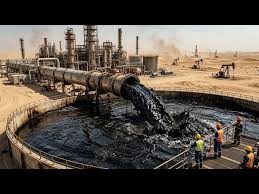
Diesel is a liquid fuel derived from crude oil and widely used in transportation, industrial machinery, agriculture, and power generation. It is known for its high energy efficiency, durability, and ability to power heavy-duty engines.
Diesel plays a critical role in global logistics, construction, farming, and electricity production.
Definition of Diesel
Diesel is a petroleum-based fuel obtained during the refining of crude oil through fractional distillation. It is composed mainly of hydrocarbons with longer carbon chains than gasoline, making it denser and more energy-rich.
A key component group in diesel fuel is: Hydrocarbons
Crude oil is heated and separated into components based on boiling points.
2. Hydroprocessing
Removes sulfur and impurities to produce cleaner fuel.
3. Blending
Additives are mixed to improve performance and reduce emissions.
Engine Use Principle
Diesel engines work by:
Compressing air to high pressure
Injecting diesel fuel into hot compressed air
Igniting fuel through compression heat (no spark plug required)
This results in high efficiency and torque output.
Main Uses of Diesel
1. Transportation
Trucks and heavy-duty vehicles
Buses and delivery vehicles
Trains and locomotives
2. Construction and Mining
Excavators, bulldozers, and loaders
Heavy machinery operations
3. Agriculture
Tractors and irrigation pumps
Harvesting equipment
4. Power Generation
Diesel generators for electricity backup
Remote area power supply
5. Marine Industry
Cargo ships and fishing vessels
Tabulated Specification of Diesel
Specification
Details
Product Name
Diesel Fuel
Source
Crude oil refining
Composition
Hydrocarbons (C10–C20 range)
State
Liquid
Color
Amber to light brown
Energy Content
High
Volatility
Low
Solubility
Insoluble in water
Main Applications
Transport, machinery, power generation
Advantages of Diesel
1. High Fuel Efficiency
Produces more energy per liter than gasoline.
2. Strong Engine Torque
Ideal for heavy-duty vehicles and machinery.
3. Durable Performance
Diesel engines last longer under heavy load.
4. Widely Available
Produced globally in large quantities.
5. Cost-Effective for Heavy Work
Efficient for long-distance and industrial use.
Economic Importance
Diesel is essential because it:
Powers global transportation and logistics
Supports construction and infrastructure projects
Drives agricultural productivity
Enables electricity generation in off-grid areas
Supports global trade and supply chains
It is one of the most important commercial fuels worldwide.
Environmental Considerations
Diesel use has environmental impacts:
Carbon dioxide emissions
Nitrogen oxides (NOx) and particulate matter pollution
Contribution to climate change
Mitigation measures include:
Ultra-low sulfur diesel (ULSD)
Cleaner engine technologies
Biodiesel blending
Emission control systems (filters and catalysts)
Storage and Handling Guidelines
To ensure safety and quality:
Store in sealed, non-reactive tanks
Keep away from heat and flames
Avoid water contamination
Use proper fuel filtration systems
Follow fire safety regulations
Conclusion
Diesel is a highly efficient petroleum-based fuel produced from crude oil and widely used across transportation, agriculture, construction, and power generation industries. Its high energy density and reliability make it essential for heavy-duty applications.
From trucks and tractors to generators and ships, diesel powers much of the world’s industrial and logistical systems.
In essence, diesel is not just a fuel—it is a critical energy source that supports global movement, production, and economic activity.