Within the global agricultural and animal husbandry industries, livestock feed represents the single largest operational inputs, managing the conversion of raw plant biomass into highly bioavailable milk, meat, and fiber. Modern livestock production is divided into distinct nutritional strategies tailored to the fundamentally different digestive systems of ruminants (cattle, sheep, goats) and monogastrics (swine, poultry).
The industrial manufacturing of livestock feed bridges agronomy, biochemistry, and process engineering. It optimizes raw agricultural byproducts, cereal grains, and synthetic micro-nutrients to satisfy the precise life-stage requirements of herd animals worldwide. This high-efficiency system allows the global agricultural sector to maximize food security while managing environmental impacts like nitrogen and methane emissions.
Defining Livestock Feed and Feed Categories
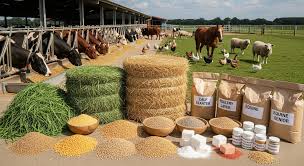
From an industrial and veterinary perspective, livestock feed is categorized by its structural and nutrient density. Because animals have varied digestive capacities, raw materials are split into three core families:
High-fiber feeds ($geq 18%$ crude fiber) that form the foundational baseline for ruminant nutrition.
Examples: Pasture grass, alfalfa hay, and corn silage—maize crops that are chopped wet and packed tightly without oxygen to trigger a natural lactic acid fermentation that preserves the green forage for year-round feeding.
2. Energy and Protein Concentrates
Low-fiber, highly digestible nutrient sources ($< 18%$ crude fiber) utilized to boost production yields in high-output dairy herds, feedlot beef cattle, and swine.
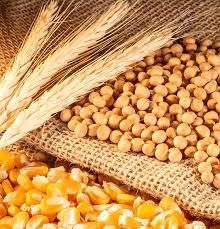
Examples: Yellow dent corn, sorghum, barley, soybean meal (the premier source of amino acids), and canola meal.
3. Co-Products and Agri-Waste Upcycling
One of the greatest economic strengths of the livestock feed industry is its capacity to upcycle non-human-edible industrial byproducts into premium animal feed.
Examples:Distillers Dried Grains with Solubles (DDGS) from ethanol plants, sugar beet pulp, citrus pulp, and wheat middlings from flour mills.
Technical Specifications
To guarantee uniform herd growth, maintain physical integrity in commercial storage silos, and comply with international biosecurity standards, commercial livestock feed must adhere to strict baseline parameters.
Specification Parameter
Targeted Industrial Standard
Testing / Verification Method
Moisture Content
Maximum $leq 12.0%$ to $13.5%$ (Blocks bin mold)
AOAC 930.15 Forced-Air Oven Drying
Pellet Durability Index
Minimum $geq 90%$ (Resists auger crumbling)
Holmen / Pfost Tumbling Box Tester
Acid Detergent Fiber (ADF)
18% to 25% (Ruminant baseline for gut motility)
Ankom Filter Bag Fiber Analyzer
Crude Protein Range
Swine Starter: 20%–22% / Dairy Beef: 12%–14%
Kjeldahl Nitrogen Combustion Assay
Aflatoxin Mycotoxins
Maximum $leq 20 text{ ppb}$ (Strict livestock ceiling)
High-Performance Liquid Chromatography
Calcium-to-Phosphorus
Balanced 1.2:1 to 2:1 ratio (Prevents calculi)
Inductively Coupled Plasma (ICP-OES)
Conditioning Temp
80°C to 85°C (Swine/Poultry pasteurization gate)
Inline Digital Thermal Probes
The Biophysical Science of Digestion
Livestock feed engineering must be tailored to the specific stomach anatomy of the target animal class.
1. Ruminant Nutrition: Feeding the Microflora
Cattle, sheep, and goats possess a specialized four-compartment stomach anchored by the rumen, a massive, 150-liter fermentation vat. Ruminants cannot directly digest the tough cellulose walls of grasses; instead, they rely on a symbiotic relationship with billions of internal anaerobic bacteria, protozoa, and fungi.
The microbes break down the plant fiber into Volatile Fatty Acids (VFAs), which are absorbed through the rumen wall into the bloodstream, supplying up to 70% of the animal’s total net energy.
When configuring feed for dairy or beef cattle, nutritionists use Total Mixed Rations (TMR). This method blends roughages, grains, and minerals into a completely uniform mix so the animal cannot selectively sort through the food, maintaining a stable rumen pH and preventing a dangerous drop into metabolic acidosis.
Pigs possess a single, simple stomach highly similar to the human digestive tract. They cannot digest heavy fibrous roughages and require highly concentrated, low-fiber diets based on corn and soybean meal.
Swine feed engineering focuses on the Ideal Protein Concept, ensuring that synthetic amino acids (L-lysine, L-threonine, DL-methionine) are added in exact ratios matching the pig’s genetic growth stage, preventing excess nitrogen from being wasted and excreted into the environment.
Industrial Manufacturing and Milling Flow
Transforming raw agricultural grains and byproducts into uniform commercial feed pellets or textured crumbles follows a strict industrial sequence.
1.Raw Material Reception and Cleaning:Intake Gate.
Bulk cereal grains, oilseed meals, and co-products are unloaded from trucks or hopper cars. The ingredients pass through high-capacity scalpers to sift out stones and stalks, while powerful rare-earth plate magnets extract stray tramp metal pieces.
2.Hammer-Mill Grinding:Sizing Phase.
The cleaned grains are funneled into heavy industrial hammer mills. Rapidly spinning steel beaters shatter the grains against internal screens, reducing the particle size to a uniform grind—typically 600 to 700 microns for swine to maximize absorption, or coarser for beef cattle.
3.Batching and Twin-Shaft Mixing:Precision Blend.
The ground ingredients are moved into computer-controlled batching scales. Micro-ingredients—including synthetic amino acids, vitamin packs, trace minerals, and mycotoxin binders—are added via a micro-dosing system into a twin-shaft paddle mixer, achieving full uniformity in 120 seconds.
4.Steam Conditioning and Gelatinization:Sanitation Lock.
For pelleted feeds (like swine starter or beef concentrates), the dry mash enters a steam conditioner. Pressurized steam heats the mash to 80°C–85°C and adds 14% moisture, gelatinizing raw starches to act as a natural glue while pasteurizing the feed to eliminate pathogens like Salmonella.
5.Ring-Die Pellet Extrusion:Mechanical Forming.
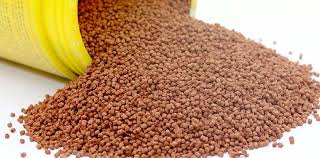
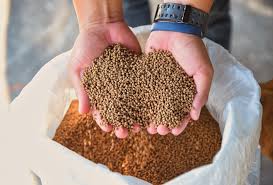
The hot, conditioned mash is immediately routed into a pellet mill. Heavy steel rollers press the feed through a spinning ring die under immense mechanical pressure, extruding compacted feed strands that are sliced into uniform lengths by adjustable cutting knives.
6.Counter-Flow Cooling and Bulk Loadout:Structure Lock.
The warm, pliable pellets pass into a counter-flow cooler. Ambient air drawn upward through the shifting bed drops the feed’s temperature to within 5°C of room level within minutes, hardening the pellets to maximize durability. The finished feed is screened to remove dust, stored in bulk silos, or packed into multi-wall sacks for distribution.
Conclusion
Livestock feed manufacturing represents a primary pillar of global animal protein production. By matching process engineering—like precision hammer milling, steam conditioning, and total mixed ration blending—to the unique biological requirements of ruminants and monogastrics, the feed industry successfully secures high-yield meat, milk, and egg output.
Through an automated manufacturing sequence that optimizes agricultural co-products and ensures strict pathogen pasteurization, commercial feed mills safely maximize herd performance while minimizing environmental waste. As modern livestock farming continues to prioritize animal welfare, lower feed conversion ratios, and reduced environmental footprints, advanced livestock feed engineering will remain a primary anchor driving international agricultural development and global food security.