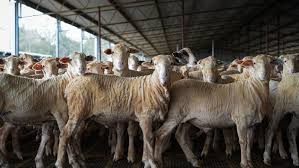
While beef and pork frequently dominate Western industrial meat production, goat meat stands as the most widely consumed red meat across the globe. It serves as a premier, foundational protein anchor across Asia, Africa, the Middle East, and the Caribbean. For thousands of years, goats (Capra hircus) have been utilized for their meat, which features an exceptional capacity to thrive on marginal rangelands where other livestock species would struggle to survive.
In the modern agricultural economy, fresh goat meat addresses unique consumer demographics and nutritional trends. As public focus shifts toward lean, heart-healthy proteins, conventional high-fat red meats face steady market scrutiny. Goat meat provides a powerful industrial solution.
By offering a highly dense matrix of bioavailable iron and protein with significantly less saturated fat than beef, pork, or lamb, it satisfies the requirements of health-conscious demographics. Furthermore, because its production remains tightly interwoven with traditional cultural and religious culinary methods, goat meat represents a stable, high-margin agricultural commodity operating across expansive international trade routes.
Defining Goat Meat
Commercially and culinarily, goat meat refers to the edible skeletal muscle tissue, fat, and edible offal derived from domesticated caprine livestock.
Unlike other livestock categories that share uniform terminology, goat meat is traded and defined internationally using distinct regional classifications based on the physiological maturity of the animal:
Cabrito: Meat harvested from very young, milk-fed kids (typically 4 to 8 weeks of age). It is highly prized in Latin American and Mediterranean cuisines for its ultra-tender texture, pale pink coloration, and delicate flavor profile.
Chevon: The international commercial term for meat derived from prime, young goats (usually between 4 and 12 months of age). This is the global retail standard, balancing optimal carcass muscle yield with tender tissue qualities.
Mutton / Goat Mutton: In specific South Asian markets (such as India and Pakistan), the word mutton is commonly utilized to describe mature goat meat rather than sheep meat. This older stock features a deep dark-red color, dense muscular fibers, and an intense, gamey aroma.
The core industrial objectives of processing and distributing goat meat are:
Moisture Retention Management: Managing cold-chain parameters carefully to protect the meat from drying out, as goat carcasses feature very thin fat cover.
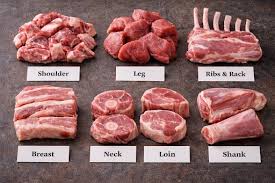
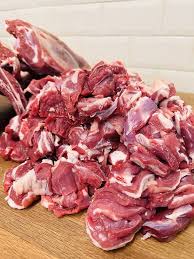
Anatomical Processing Yields: Slicing bone-in or boneless configurations cleanly into standardized retail cuts to accommodate distinct traditional slow-cooking methods.
Technical Specifications
For wholesale meat importers, supermarket procurement managers, and food safety inspection agencies, goat meat must adhere to precise processing and chemical standards. The table below represents the commercial benchmark for a premium shipment of frozen, bone-in chevon caracasses.
Specification Parameter
Targeted Standard Baseline
Testing / Compliance Method
Species Verification
100% Caprine (Capra hircus)
Histological / DNA PCR Verification
Carcass Chilling State
Core temperature reached 0°C to 4°C within 24 hours
Deep-Muscle Penetration Probe
Total Saturated Fat
Maximum 2.5% to 3.5% total tissue mass
Soxhlet Fat Extraction Analysis
Moisture Content
74% to 76% by weight
AOAC Official Method 950.46
Ultimate pH Range
5.8 to 6.2 (Naturally higher baseline than beef)
Digital Calibration pH Spear
Carcass Conformation Score
Grade A / Choice (High muscle-to-bone ratio)
Visual USDA / International Muscling Scale
Total Aerobic Plate Count
Less than $1.0 times 10^4 text{ CFU/g}$
Culture Plate Isolation & Counting
Salmonella enterica
Absent in 25 grams (Zero Tolerance)
Real-Time PCR Assay Enrichment
Storage Temperature
Chilled: 0°C to 2°C / Frozen: $-18^circtext{C}$ or lower
Continuous RFID Transit Data Loggers
Drip Loss Tolerance
Maximum 4.0% total volume upon thawing
Gravimetric Purge Test
Comprehensive Functional Uses
The distinct chemical composition and cultural significance of goat meat make it a versatile asset across both traditional culinary platforms and modern functional food processing.
1. Traditional and Cultural Slow-Cooking Systems
Because goat meat features a lean, highly stable muscle structure, it behaves exceptionally well under long, wet thermal processing conditions.
Optimal Gelatin Hydrolysis: The muscle tissue of mature goats contains robust collagen networks. When subjected to slow, low-temperature braising (such as in Jamaican goat curry, Mexican birria, or Indian mutton curries), this tough collagen slowly melts into gelatin. This transformation creates a thick, luxurious sauce base while leaving the meat incredibly tender and juicy.
Flavor Absorption Capacity: Lean chevon muscle possesses an excellent ability to absorb heavy spice matrices, marinades, and acidic elements without turning mushy, making it the preferred red meat for highly seasoned international dishes.
2. High-Performance and Therapeutic Nutrition Retail
The unique biochemical profile of goat meat has made it a valuable item in modern retail spaces focused on functional health and fitness diets.
Low-Cholesterol Lean Diets: Chevon contains roughly 40% less saturated fat than chicken (without skin) and more than 50% less saturated fat than conventional beef. This positioning allows gourmet retail butchers to market the protein directly to cardiovascular patients and fitness enthusiasts tracking lean macronutrient limits.
Hypoallergenic Pet Food Matrices: In the premium veterinary care sector, goat meat is increasingly utilized as a “novel protein” source inside specialized dog and cat foods designed for animals suffering from severe dietary allergies to common proteins like chicken, beef, or soy.
The Biophysical Science of Lean Caprine Muscle
To properly process, cook, and distribute goat meat at an industrial scale, we must look closely at its physical and chemical properties, which differ significantly from bovine muscle.
The Missing Subcutaneous Fat Layer
Unlike sheep and cattle, which are genetically programmed to store fat right beneath their skin (subcutaneous fat), goats store the vast majority of their fat internally around their organs (intermuscular and visceral fat).
This lack of an outer fat blanket leaves the raw goat carcass vulnerable during commercial slaughter. When a naked carcass enters a cold blast-chiller, the muscle fibers can contract too fast in response to the sudden cold—a defect known as cold shortening. This reaction permanently locks the muscle proteins in a state of extreme tension, rendering the meat incredibly tough.
To prevent this quality drop, modern tanners and processing plants use a technique called electrical stimulation on the warm carcass. This step applies an electric current to deplete the muscles’ energy reserves ($ATP$), forcing them to relax completely before chilling, ensuring optimal tenderness.
Myoglobin and Iron Chemistry
Goat meat features a rich dark-red hue due to its high concentration of myoglobin, the iron-binding protein responsible for transporting oxygen within active muscle tissues.
From a nutritional standpoint, this translates into an abundance of bioavailable heme iron, which is absorbed much more efficiently by the human digestive system than plant-based non-heme iron. This high-iron profile makes goat meat an excellent dietary tool for managing iron-deficiency anemia in vulnerable consumer populations.
Industrial Processing and Packaging Flow
Transforming live caprine assets into safe, uniform retail meat portions follows a strict, highly regulated manufacturing pipeline.
1.Antemortem Inspection and Lairage:Biosecurity Clearance.
Live goats are received at the processing facility and rested for 12 to 24 hours with access to clean water. Government veterinarians check every animal to ensure they are free from systemic diseases, visual abscesses, or physical injuries prior to harvest.
2.Humane Harvest and Electrical Stimulation:Tenderness Safeguard.
The animals are humanely stunned, exsanguinated (bled), and automatically hoisted onto an overhead rail system. The warm carcass immediately undergoes high-voltage electrical stimulation to deplete internal muscle glycogen levels, preventing cold shortening and ensuring a tender bite.
3.Evisceration and Carcass Washing:Hygienic Dress.
The hide, head, and hooves are cleanly detached, and the internal visceral organs are removed for separate inspection. The dressed carcass is washed with a food-grade organic acid spray (such as lactic acid) to eliminate any invisible surface bacteria.
4.Controlled Blast Chilling:Structural Setting.
The clean carcasses move into blast-chilling tunnels where the temperature is carefully stepped down to between 0°C and 4°C over 24 hours. This controlled drop stabilizes the meat’s ultimate pH and prepares the muscle tissue for uniform butchering.
5.Fabrication and Band-Saw Slicing:Portion Engineering.
The chilled carcasses are moved into fabrication rooms held at 10°C. Because goat meat is traditionally cooked bone-in, the carcass is cut into wholesale sections (shoulder, leg, loin, and ribs) using heavy-duty industrial band saws, sorting the pieces into precise portion weights.
6.MAP and Flash Freezing Options:Oxidation Defense.
The cut meat fractions are packed using Modified Atmosphere Packaging (MAP) flushed with 80% Nitrogen and 20% Carbon Dioxide to lock in freshness. For long-term international export, the portions are run through cryogenic spiral freezers down to $-18^circtext{C}$ before final casing.
Conclusion
Goat meat represents a premier, underutilized asset within Western industrial frameworks, despite its position as a dominant global protein anchor. By delivering an ultra-lean, high-iron, and low-saturated-fat red meat option, it answers the growing consumer demand for healthy, sustainable nutrition choices.
Through a highly controlled manufacturing process that utilizes electrical stimulation to manage the thin fat profile of the carcasses, the meat industry can reliably deliver uniform, tender, and pathogen-free caprine cuts. As global food distribution chains become more diverse and health-conscious consumer segments continue to expand, goat meat will continue to cement its status as a highly profitable, sustainable commodity driving international agricultural development and cross-cultural food security.