
Fast delivery within 72 Hours

Mutton
Contact Supplier
Supplier: beautifulkoala471Phone: +085986757
Email: tomeno6169@epaynine.com
Address: 6149 Charles St
Visit Supplier Store

Black Friday Blowout!
Description
Introduction
The global livestock and meat processing sectors rely on distinct animal maturity classifications to optimize herd management, value-added food production, and international trade lines. Within the small ruminant market, mutton stands as a robust, highly flavorful red meat commodity that represents the apex of physiological maturity in sheep (Ovis aries).
Historically and culturally, mutton has served as a foundational source of high-density protein across Europe, the Middle East, South Asia, and Oceania. In the modern agricultural economy, raw meat processing presents distinct operational challenges; fresh lamb muscle is highly delicate and commands steep premium pricing, whereas older breeding stock yields heavier carcasses with variable fat cover and intense flavor profiles. Mutton addresses these commercial variables.
By utilizing animals that have completed their optimal wool-clip or reproductive lifecycles, livestock producers capture residual capital value from their herds. Through precise aging techniques, strategic fabrication, and targeted culinary application, meat processors convert these heavy, mature carcasses into an indispensable resource for both traditional culinary markets and industrial food manufacturing systems.
Defining Mutton
To maintain strict food-labeling integrity and prevent trade friction, mutton must be precisely defined based on the physiological development of the animal. Commercially and scientifically, mutton refers to the edible skeletal muscle tissue, fat, and offal derived from a domesticated sheep that has advanced past its youth and reached full structural maturity.
The sheep meat commodity timeline is universally divided into three distinct biological and commercial categories:
-
Lamb: Meat derived from a young sheep of either sex that is typically under 12 months of age and exhibits zero permanent incisor teeth. Culinarily, lamb is characterized by its pale pink color, tender texture, mild flavor, and highly flexible myofibrillar structure.
-
Hogget: The transitional stage representing a juvenile sheep between 1 to 2 years of age, displaying exactly one to two permanent incisors. Hogget balances the tenderness of lamb with the deeper color and emerging rich flavor of mature mutton.
-
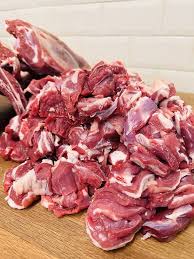
Mutton: Meat harvested from a fully mature female (ewe) or castrated male (wether) sheep that is typically over 24 months of age and displays three or more permanent incisors (up to a full mouth of eight permanent teeth). Mutton features a deep, dark brick-red color, firm and dense muscle fiber bundles, a thicker layer of creamy-white subcutaneous fat, and an abundance of rich, gamey volatile flavor compounds.
Note on Regional Definitions: In specific South Asian countries (such as India, Pakistan, and Bangladesh), the term “mutton” has traditionally been applied interchangeably to describe both mature sheep meat and goat meat (chevon). However, in international commodity trading, custom codes, and regulatory frameworks (such as USDA, EFSA, and AUS-MEAT), mutton refers exclusively to mature ovine skeletal muscle.
Technical Specifications
For wholesale meat brokers, international import-export compliance agents, and industrial food formulators, mutton shipments must adhere to rigid technical parameters to verify chemical soundness and biosecurity. The table below outlines the standard quality baseline for a commercial consignment of bone-in frozen mutton carcasses.
| Specification Parameter | Targeted Standard Baseline | Testing / Compliance Method |
| Species Verification | 100% Ovine (Ovis aries) | DNA PCR Assay / Histological Screening |
| Maturity Validation | $geq 3$ Permanent Incisors present at harvest | Visual Dental Inspection at Slaughterline |
| Fat Character Profile | Firm, creamy-white color; no yellow oiling | Visual Color & Firmness Grading Scale |
| Carcass Ultimate pH | 5.5 to 5.8 (Post-rigor equilibrium state) | Direct-Insertion Digital pH Probe |
| Moisture Content | 68% to 71% by weight (Lower than fresh lamb) | AOAC Official Method 950.46 |
| Crude Saturated Fat | 18% to 26% (Varies by carcass fat score) | Soxhlet Lipid Extraction Analysis |
| Total Aerobic Plate Count | Less than $5.0 times 10^4 text{ CFU/g}$ | Standard Culture Agar Plate Incubation |
| Listeria monocytogenes | Absent / Zero Tolerance | USDA-FSIS Pathogen Modeling Protocol |
| Internal Storage Temp | $-18^circtext{C}$ ($0^circtext{F}$) or lower for frozen transit | Continuous Electronic Temp Data Loggers |
| Packaging Configuration | Heavy-duty poly lining within a stockinette warp | Visual Physical Integrity Verification |
Comprehensive Functional Uses
The distinct flavor profile, dense fiber arrangement, and high structural stability of mutton make it an excellent choice for targeted culinary applications and large-scale industrial meat processing.
1. Traditional Slow-Braising and Pit-Roasting Culinary Platforms
Because mutton contains mature, highly cross-linked collagen fibers and an abundance of internal fat, it performs exceptionally well under extended thermal processing conditions.
-
Gelatin Hydrolysis in Wet Cooking: The connective tissues of mature sheep are tough and resistant to fast cooking. However, when subjected to low-and-slow simmering, braising, or stewing (such as in Irish stew, Lancashire hotpot, or Middle Eastern tagines), this dense collagen slowly breaks down into gelatin. This process naturally thickens the cooking liquids while transforming the firm meat into ultra-tender, succulent morsels.
-
Barbecue and Pit-Roasting Stability: In regional American food cultures (such as Western Kentucky barbecue) and traditional tribal pit-cooking systems, mutton is the premier meat choice. The thick, mature fat cap bastes the muscle continuously during 12 to 24 hours of slow hickory smoking, preventing the protein from drying out while absorbing deep smoke profiles.
2. High-Volume Industrial Food Formulation and Component Supply
Food manufacturers utilize lean mutton fractions as a cost-effective, high-flavor ingredient inside complex multi-element food items.
-
Savory Flavor Intensifiers: Mutton fat and lean trimmings contain high levels of volatile branched-chain fatty acids. When ground into commercial sausage formulations, meat pies, or canned stews, small percentages of mutton enhance the rich, meaty flavor profile of the entire batch, reducing the need for synthetic flavor additives.
-
Dehydrated Pet Food Components: In premium veterinary nutrition, mutton serves as an excellent source of highly digestible protein and zinc for dogs and cats. Its rich flavor improves palatability in kibble mixes without requiring artificial coatings.
The Biophysical Science of Mature Ovine Meat
The distinct eating and processing qualities of mutton are governed by the laws of organic chemistry and animal development.
Volatile Branched-Chain Fatty Acids (BCFAs)
The characteristic “mutton flavor” that separates it from mild lamb or neutral beef is driven primarily by specific lipid compounds: 4-methyloctanoic and 4-methylnonanoic acids.
As sheep mature, these branched-chain fatty acids accumulate within their fat cells. When mutton is heated during cooking, these lipids melt and vaporize, releasing a sharp, deeply savory, and slightly gamey aroma. While some unaccustomed consumers find this aroma strong, it is highly sought after in international cuisines where meat is expected to provide a robust flavor presence alongside complex spices.
The Melting Point of Mutton Fat
Mutton fat features a significantly higher melting point than beef, pork, or poultry fat, typically solidifying between 40°C and 45°C (104°F to 113°F).
Because this temperature is higher than the natural internal temperature of the human mouth (37°C), cooled mutton fat can leave a distinct coating or waxy feeling on the palate. Culinarily, this physical property dictates that mutton dishes must always be served piping hot, or paired with acidic elements (such as citrus, vinegar, or fermented yogurt marinades) that chemically break down the fat film during consumption.
Industrial Processing and Fabrication Flow
Transforming mature ovine livestock into safe, uniform, and commercially viable meat units requires a structured manufacturing sequence inside specialized processing facilities.
Mature sheep are received at the facility and rested in covered pens for 12 to 24 hours with free access to water. State inspectors evaluate the animals to confirm their health, verify teeth maturity classifications, and ensure they are fit for the food supply chain.
The animals are humanely stunned, bled, and hoisted onto an automated processing rail. The warm carcasses are immediately treated with low-voltage electrical stimulation, which accelerates glycolysis and drops the internal pH safely to prevent muscle tightening during cooling.
The heavy wool fleece is mechanically detached using specialized upward-pulling hide strippers to avoid touching the underlying meat. The internal organs are removed for separate inspection, and the carcass is washed with a hot, food-grade antimicrobial lactic acid spray.
The dressed carcasses move into refrigeration rooms running at 0°C to 2°C with high air circulation. They are held here for 24 to 48 hours until the core temperature drops below 4°C, which sets the fat cap and allows the muscle proteins to age and soften naturally.
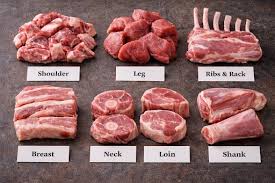
The conditioned carcasses move into production rooms held at 10°C. Saws slice the mutton into wholesale cuts: shoulder, leg, loin, and breast. Workers trim excess external fat down to customer specifications and sort the pieces into bone-in or boneless configurations.
The fabricated portions are vacuum packed or wrapped in breathable cotton stockinette bags to protect the fat layer. They pass into cryogenic blast-freezing tunnels operating at $-40^circtext{C}$ to lock the meat’s temperature down to $-18^circtext{C}$, preparing the boxes for international ocean container shipping.
Value Retention and Quality Control
Because mutton features high concentrations of lipids and iron-rich myoglobin, it is more vulnerable to rancidity and discoloration than younger meats if storage conditions fluctuate.
-
Oxidative Rancidity Control: If mutton fat is exposed to oxygen and light for extended periods, the unsaturated fatty acids break down into aldehydes and ketones, which create unpalatable off-flavors. To prevent this lipid oxidation, commercial processors use high-barrier packaging films that block light and seal out oxygen completely.
-
Cold-Chain Discipline: During international shipping, the temperature inside refrigerated ocean containers must be kept at a steady $-18^circtext{C}$ or lower. Any temperature changes can cause moisture to migrate within the package, leading to surface dehydration (freezer burn) and damaging the value of the meat.
Conclusion
Mutton represents an exceptional example of value recovery and chemical efficiency within the global livestock economy. By transforming mature animals that have finished their primary farming lifecycles into a highly nutrient-dense red meat, the agricultural sector maximizes production efficiency while reducing environmental waste.
Through a highly controlled manufacturing process that utilizes electrical stimulation to tenderize the dense muscle structures and advanced cold chain packaging to safeguard the rich fat layer, mutton can be reliably delivered across international borders. With its robust flavor profile, exceptional slow-cooking stability, and value as an industrial food ingredient, mutton remains an essential, practical commodity that anchors global food traditions and supports sustainable livestock commerce.