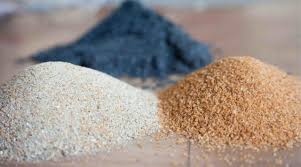
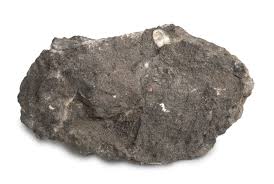
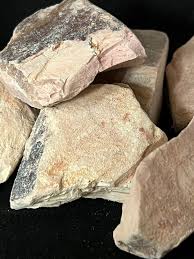
Kaolin is a naturally occurring clay mineral widely used in ceramics, paper production, cosmetics, pharmaceuticals, and industrial applications. It is known for its fine particle size, white color, softness, and chemical stability.
Also called “china clay,” kaolin is one of the most important industrial clays due to its versatility and purity. It plays a key role in manufacturing porcelain, coated paper, paints, rubber, and skincare products.
Definition of Kaolin
Kaolin is a soft, white clay mineral composed mainly of the mineral kaolinite, with the chemical formula Al₂Si₂O₅(OH)₄.
It is formed through the weathering of aluminum-rich silicate rocks such as feldspar and is typically found in sedimentary deposits or weathered granite formations.
Types of Kaolin
1. Hydrated Kaolin (Raw Kaolin)
Naturally occurring, unprocessed clay
Contains moisture and impurities
Used in agriculture and basic industrial applications
2. Calcined Kaolin
Heat-treated kaolin with improved brightness and hardness
Used in paper, paints, and plastics
3. Washed Kaolin
Purified to remove impurities like iron and sand
High brightness and fine particle size
4. Airfloat Kaolin
Dry processed kaolin powder
Used in rubber, paints, and adhesives
5. Industrial Grade Kaolin
Tailored for ceramics, cement, and construction uses
Physical and Chemical Characteristics of Kaolin
Kaolin is characterized by:
White or off-white color
Very fine, soft powder texture
Low hardness (Mohs ~2–2.5)
Chemically inert and stable
High brightness and opacity
Non-toxic and odorless
Low shrink-swell capacity
Good plasticity when mixed with water
Formation of Kaolin
Kaolin forms through natural geological weathering:
1. Weathering of Feldspar-Rich Rocks
Granite and other rocks break down due to chemical weathering.
2. Hydrolysis Process
Feldspar reacts with water and carbon dioxide, forming kaolinite clay.
3. Transport and Deposition
Fine particles are carried and deposited in sedimentary basins.
4. Concentration
Over time, pure kaolin layers accumulate in large deposits.
Extraction and Processing of Kaolin
1. Mining
Kaolin is extracted from open-pit mines.
2. Blunging
Clay is mixed with water to create a slurry.
3. Screening
Removes coarse particles and impurities.
4. Centrifuging
Separates fine kaolin particles from sand and heavy minerals.
5. Bleaching (Optional)
Improves brightness by removing iron stains.
6. Drying
Water is removed to produce powder or lumps.
7. Grinding and Packaging
Final product is milled and packed for industrial use.
Tabulated Specification of Kaolin
Specification
Details
Product Name
Kaolin (China Clay)
Chemical Formula
Al₂Si₂O₅(OH)₄
Mineral Group
Clay mineral (phyllosilicate)
Color
White to off-white
Texture
Fine, soft powder
Hardness
Low (Mohs ~2–2.5)
Plasticity
Moderate (when wet)
Brightness
High (especially refined grades)
pH Stability
Neutral to slightly acidic/alkaline stable
Main Applications
Ceramics, paper, paint, cosmetics, rubber
Storage Conditions
Dry, moisture-free environment
Uses of Kaolin
1. Ceramics Industry
Porcelain and fine china production
Tiles, sanitary ware, and pottery
2. Paper Industry
Coating and filling agent
Improves brightness, smoothness, and print quality
3. Paints and Coatings
Acts as extender and filler
Improves opacity and texture
4. Cosmetics and Skincare
Face masks, powders, and soaps
Absorbs oil and impurities
5. Pharmaceuticals
Used in tablets as a binding and coating agent
6. Rubber and Plastics
Reinforces strength and durability
7. Agriculture
Soil conditioning and pest control applications
Advantages of Kaolin
1. High Purity and Brightness
Ideal for premium industrial applications.
2. Chemically Stable
Does not react easily with other substances.
3. Non-Toxic and Safe
Suitable for cosmetics and pharmaceuticals.
4. Versatile Applications
Used across multiple industries.
5. Fine Particle Size
Enhances smoothness and product quality.
Economic Importance
Kaolin contributes significantly to global economies by:
Supporting ceramics and construction industries
Driving paper manufacturing markets
Providing raw material for cosmetics and pharmaceuticals
Creating mining and processing jobs
Supporting export trade in industrial minerals
It is an essential industrial mineral in global manufacturing supply chains.
Environmental Considerations
Kaolin mining and processing may involve:
Land disturbance from open-pit mining
Water usage during processing
Waste slurry management challenges
However, environmental benefits include:
Use in eco-friendly products
Recyclable and non-toxic nature
Rehabilitation of mined areas
Reduced environmental impact compared to synthetic additives
Storage and Handling Guidelines
To maintain quality:
Store in dry, moisture-free environments
Keep sealed to prevent contamination
Avoid exposure to humidity
Handle carefully to prevent dust dispersion
Separate grades for different industrial uses
Quality Control Standards
High-quality kaolin is evaluated based on:
Brightness and whiteness level
Particle size distribution
Iron and impurity content
Moisture level
Plasticity and viscosity performance
Suitability for end-use industries
Conclusion
Kaolin is a versatile and highly valuable clay mineral composed mainly of kaolinite, widely used in ceramics, paper, cosmetics, paints, and industrial manufacturing. Formed through the natural weathering of feldspar-rich rocks, it is one of the most important industrial minerals in the world.
From fine porcelain and glossy paper to skincare products and pharmaceuticals, kaolin plays a crucial role in improving product quality and performance across many industries.
In essence, kaolin is not just clay—it is a foundational industrial material that supports modern manufacturing, beauty products, and everyday consumer goods.