
Fast delivery within 72 Hours

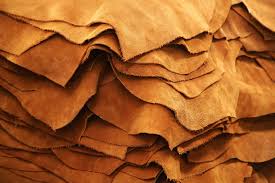
Leather hides
Contact Supplier
Supplier: brownelephant908Phone: +877542565
Email: sepeye8603@fisedo.com
Address: 1165 Avenue Vauban
Visit Supplier Store

Black Friday Blowout!
Description
Introduction
The global leather industry represents one of humanity’s oldest and most enduring manufacturing sectors, transforming an organic, highly perishable byproduct of the meat and dairy industries into an indispensable material for luxury fashion, automotive engineering, heavy-duty footwear, and interior architecture. At the absolute core of this massive manufacturing ecosystem is the raw agricultural material: leather hides.
Every year, millions of square feet of raw animal hides—primarily bovine—are generated globally. Left untreated, these hides decompose within days, rendering them completely useless and presenting a severe environmental disposal challenge. The modern tanning and finishing sectors solve this problem. Through a sequence of complex biochemical reactions and advanced mechanical engineering, raw hides are stabilized against microbial breakdown. This conversion process yields a robust, flexible, and chemically stable material that resists water, friction, heat, and structural wear while retaining its natural breathability and luxurious sensory characteristics.
From the pristine, unblemished hides selected for the steering wheels of premium electric vehicles to the rugged, heavily oil-tanned leathers engineered for industrial work boots, leather hides are a vital industrial commodity. They bridge the gap between agrarian animal husbandry and high-value consumer design.
Defining Leather Hides
To evaluate this industrial material accurately, we must establish a clear technical definition. Commercially and scientifically, a leather hide refers to the entire skin or integumentary covering of a large domesticated animal (such as a cow, steer, bull, or water buffalo) that has undergone chemical tanning to permanently alter its collagen fiber matrix.
It is crucial to differentiate a hide from a skin. In global trade:
-
Hides are derived exclusively from large, mature animals (bovine, equine) and yield thick, heavy leather suitable for upholstery, footwear soles, and structural goods.
-
Skins are derived from smaller or younger animals (calves, sheep, goats, pigs) and yield highly pliable, lightweight, and thin leathers utilized primarily in premium apparel, gloving, and soft handbag linings.
The primary objectives of treating and processing raw hides into leather are:
-
Permanent Stabilization (Tanning): Irreversibly cross-linking the hide’s internal collagen fibers so they no longer rot or stiffen into brittle parchment when exposed to moisture.
-
Fiber Split Optimization: Slicing the natural thickness of a heavy bovine hide into specific millimeter increments to match different product applications.
-
Surface Modification: Buffing, embossing, or dyeing the grain surface to repair natural defects (like brand marks, insect bites, or barbed-wire scars) and achieve uniform coloration and texture.
Anatomical Subdivisions of a Bovine Hide
Because an animal’s body experiences different mechanical stresses, a single full hide is rarely uniform in stretch, density, or grain pattern. Tanners frequently cut a whole hide into distinct structural zones:
-
The Butt: The absolute premium zone encompassing the lower back and hindquarters. It features the tightest, most uniform fiber structure with minimal stretch, making it ideal for heavy belts, footwear soles, and structural saddlery.
-
The Shoulder: A highly durable area with a strong fiber network, but prone to deep, natural growth wrinkles. It is favored for rugged bags, tooling leather, and casual footwear.
-
The Belly: The flanking edges of the hide. The fiber network here is loose and highly stretchy due to the animal’s natural respiration and movement. It is typically relegated to hidden structural components, linings, or low-cost small leather goods.
Technical Specifications
For industrial purchasing agents, automotive tier-1 suppliers, and product design engineers, leather hides must conform to precise mechanical, chemical, and physical performance thresholds. The table below outlines the rigorous industrial specification criteria for a premium automotive-grade upholstery cowhide.
| Specification Parameter | Targeted Standard Baseline | Testing / Compliance Method |
| Raw Material Origin | 100% Bovine Hide (Heifer or Steer preferred) | Visual / Traceability Certificate |
| Average Hide Surface Area | 4.5 to 5.5 square meters ($48text{ to }60text{ sq ft}$) | Automated Digital Scanning |
| Thickness Tolerance | 1.1 mm to 1.3 mm ($pm 0.1 text{ mm}$ variance allowed) | Digital Dial Micrometer Gauge |
| Chromium Content ($Cr_2O_3$) | Minimum 2.5% by dry weight (Chrome-tanned) | ISO 4684 Chemical Digestion |
| Tensile Strength | Minimum $150 text{ N / mm}^2$ | ISO 3376 Tensile Tester |
| Tear Strength | Minimum $40 text{ N}$ | ISO 3377-1 Double Edge Tear Test |
| Flex Resistance (Bally) | No cracking or finish failure after 100,000 cycles | ISO 5402 Flexometer Analysis |
| Color Fastness to Light | Grade $geq 5$ on the Blue Wool Scale | ISO 105-B02 Xenon Arc Exposure |
| Free Formaldehyde | Less than $20 text{ mg / kg}$ (Undetectable limits) | ISO 17226-1 HPLC Method |
| Volatile Organic Compounds | Maximum $100 text{ mu g / g}$ (Low-fogging criteria) | VDA 278 Thermal Desorption |
Comprehensive Functional Uses
The diverse mechanical properties and structural longevity of processed leather hides make them a foundational material across several global manufacturing sectors.
1. The Automotive and Aviation Transportation Sector
Modern premium mobility cabins rely heavily on the performance properties of high-performance leather hides.
-
Longevity Under Thermal Stress: Car interiors are subjected to extreme environmental swings, from sub-zero winter temperatures to blistering summer heat under a glass windshield. Automotive-grade leather hides are engineered to resist fading, cracking, and structural shrinkage under these harsh conditions.
-
Safety Compliance (Flame Retardancy): Hides destined for aviation seating and high-end automotive cabins are treated with eco-friendly flame retardants. They satisfy strict smoke density and vertical burn requirements without losing their signature softness.
2. High-End Furniture and Architectural Upholstery
Because bovine hides provide expansive surface areas, they are uniquely suited for large-scale interior architecture installations and luxury furniture production.
-
Large-Panel Cutting Yields: Upholstering a large sofa or an executive office chair requires wide, continuous sheets of material free from structural weak points. Tanners supply large, clean hides specifically selected for low-defect surface yields to prevent excessive seams in premium furniture.
-
Tactile Breathability: Unlike synthetic polymers (PU or PVC faux leathers), natural leather hides feature a microscopic porous structure that allows air and water vapor to circulate. This natural breathability prevents heat buildup, ensuring superior comfort during extended seating.
3. Industrial, Military, and Performance Footwear
The natural footwear industry remains one of the largest consumers of heavy-weight leather hides, relying on the material’s unique blend of protection and plasticity.
-
Dynamic Comfort Molding: Leather hides possess a unique structural memory. Over a break-in period, a leather boot body subtly stretches and molds to the exact contours of the wearer’s foot, distributing pressure evenly in a way synthetics cannot replicate.
-
Abrasive and Puncture Resistance: Heavy work boots utilize thick oil-tanned split hides that protect industrial workers from sharp scrap metal, chemical splashes, and heavy abrasions, while still allowing sweat vapor to escape.
The Chemical and Biophysical Science of Tanning
The transformation of a raw animal hide into a durable piece of leather is a sophisticated exercise in applied biochemistry, centering on the stabilization of collagen.
The Triple-Helix Collagen Matrix
An un-tanned hide is mostly water, fat, and a structural protein called collagen. At the molecular level, collagen consists of three polypeptide chains twisted around each other in a tight triple-helix formation. These helices stack together to form microfibrils, which bundle into the macro-fibers that give skin its strength.
If a wet hide is left untreated, bacteria easily break down the amide bonds in the protein chains, causing the hide to rot. If the hide is dried out without chemical treatment, the water molecules keeping the collagen fibers apart evaporate. The fibers then collapse and fuse together via strong hydrogen bonds, turning the hide into a hard, rigid, and completely unworkable sheet.
Chrome Tanning Dynamics
Approximately 80% to 85% of global leather hides are processed using chrome tanning. This method utilizes trivalent chromium salts ($Cr^{3+}$, typically as basic chromium sulfate).
When chromium ions enter the wet hide, they bond with the carboxyl groups ($-COOH$) of the collagen amino acid chains. The chromium acts as a chemical bridge, cross-linking the adjacent triple helices together. This molecular reinforcement drastically changes the hide’s properties:
-
The shrink temperature ($textbf{T}_s$) of the hide skyrockets from a delicate 60°C to well over 100°C, meaning the leather will not shrink or degrade when exposed to boiling water or hot industrial molding steam.
-
The hide takes on a distinct pale blue color known as “wet blue.” This serves as a stable, semi-processed industrial state that can be stored or shipped globally before final dyeing and styling.
Vegetable Tanning Mechanics
For artisanal, luxury, and heavy structural applications, tanners utilize vegetable tanning. This traditional method involves soaking the hides for weeks in concentrated solutions of natural plant polyphenols, known as tannins, extracted from the bark, wood, and fruits of chestnut, quebracho, mimosa, and oak trees.
These large tannin molecules form complex hydrogen bonds across the collagen structure, displacing the water molecules. Vegetable-tanned hides are much thicker, firmer, and completely biodegradable. They also develop a rich, dark patina over years of use.
Industrial Manufacturing Process
Converting raw hides into a finished consumer-ready material follows a rigorous, multi-stage industrial workflow.
Raw salted hides arrive at the tannery and are placed into large rotating drums. They are soaked in water and surfactants to remove curing salt, dirt, and blood. Next, a mix of calcium hydroxide (lime) and sodium sulfide is introduced to chemically dissolve the hair follicles and strip away unwanted non-collagen proteins, swelling the hide for chemical acceptance.
The swollen hides are delimed using ammonium salts to drop the internal pH, then pickled in an acid solution to prepare them for tanning agents. Trivalent chromium sulfate is introduced into the spinning drums. Once the chromium has fully penetrated the core of the hide, the pH is slowly raised (basification) to lock the chemical bonds, turning the raw hide into stable “wet blue” leather.
The wet blue hides are passed through heavy rollers to squeeze out excess water. Because a natural bovine hide can be up to 5 mm thick, it is fed through an automated high-speed band-knife splitting machine. The machine slices the hide horizontally into two distinct layers: the top layer containing the natural grain (Top Grain / Full Grain) and the bottom fibrous layer (Split Leather, used to make suede).
The split hides return to the drums for secondary tanning to fine-tune their final density and softness. Anionic dyes are added to color the fibers completely. To restore flexibility, the hides undergo fatliquoring—an essential step where emulsified oils are spun into the hide to coat the internal fibers, preventing them from sticking together as they dry.
Hides are dried using vacuum dryers or toggled onto flat, heated frames to smooth out wrinkles. Once dry, the stiff hides undergo mechanical softening (conditioning/milling), where they are tumbled in dry drums to loosen the oil-coated fiber matrix, giving the leather its final supple feel.
The hides receive their final surface coatings via automated spray lines or roller coaters. This stage applies protective polyurethane or acrylic micro-coatings, pigments for color uniformity, and water-repellent agents. The leather can also be fed through heavy rollers to emboss a specific grain pattern before final digital sorting and automated measurement.
Grading and Quality Classification
Every leather hide that exits the finishing line is digitally measured and graded based on the clarity of its grain surface. Because hides are a natural animal product, pristine, unblemished surfaces are rare and command significant market premiums.
-
Full Grain Leather: The highest tier of leather available. The natural grain surface is left completely intact without any buffing or sanding. It retains all the natural strength, pore structures, and durability of the hide, ensuring a beautiful patina over time. It requires flawless raw hide selections.
-
Top Grain Leather: The second-highest tier. The natural surface is lightly sanded or buffed to erase minor scuffs or superficial blemishes. A thin, protective topcoat is then applied alongside pigments to restore visual consistency. This leather is highly pliable and widely favored for premium handbags and designer furniture.
-
Corrected Grain / Embossed Leather: Hides with significant natural scars or brand marks are heavily sanded down to remove the damaged grain layer. A synthetic grain pattern is then mechanically pressed into the surface using heavy, heated engraving rollers. This process yields a highly uniform look with excellent cutting yields for high-volume commercial production.
-
Split Leather (Suede): The fibrous under-layer separated during the splitting process. It has no natural grain structure and is mechanically buffed to create a soft, velvety nap. It is primarily utilized for casual footwear, jacket sleeves, and heavy-duty work gloves.
Conclusion
The processing of leather hides stands as an exceptional showcase of industrial circular economy principles and advanced chemical engineering. By redirecting millions of tons of raw livestock byproducts away from landfills and converting them into a high-performance material, the tanning sector delivers massive structural value to global commerce.
Through a highly controlled sequence of preparation, chromium or vegetable stabilization, split-level optimization, and advanced finishing treatments, leather hides are customized to satisfy demanding performance metrics. Whether serving the zero-emissions criteria of modern automotive cabins, providing long-term structural integrity for contract furniture installations, or delivering protective durability for industrial work footwear, natural leather hides remain unmatched by synthetic alternatives. As the industry advances with bio-based tanning innovations and strict environmental tracking, leather hides will continue to serve as a premier, sustainable material anchor for global luxury and performance industries.