The Filter-Feeder: An Industrial Profile of Oysters
Introduction
In the global seafood economy, oysters (family Ostreidae) represent a unique intersection of aquaculture, environmental service, and high-end gastronomy. As sedentary bivalve mollusks, oysters are the ultimate “naturally engineered” food source. They require no supplemental feed, as they derive all their nutrition by filtering phytoplankton from the water column. Consequently, the oyster industry is one of the few forms of animal agriculture that can improve, rather than deplete, the quality of its surrounding ecosystem.
The industrialization of the oyster has shifted from traditional “wild-bed harvesting” to controlled off-bottom aquaculture. This move toward cage-based farming allows for greater consistency in size, shape, and meat content, enabling the industry to supply year-round demand for a product that is traditionally associated with seasonal, artisanal consumption.
Defining the Product
Oysters are characterized by their calcium carbonate shells and their ability to be consumed raw, making food safety the single most critical pillar of the industry. Commercially, the product is categorized by species, such as Crassostrea gigas (Pacific Oyster) or Crassostrea virginica (Eastern Oyster), and increasingly by “merroir”—the specific environmental characteristics of the growing site that influence flavor.
The industrial product exists in three primary formats:
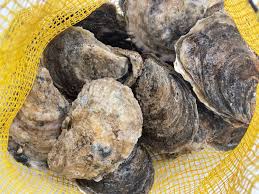
Live (In-Shell): The industry standard for fine dining. These oysters are harvested and kept in temperature-controlled environments to remain alive until the moment of consumption.
Shucked (Fresh): Meat is removed from the shell and packed in brine. This format is primarily used for the foodservice and catering industries, providing convenience for large-volume preparations like stews or fried oysters.
Frozen (IQF/Half-Shell): Modern technology allows for oysters to be shucked and flash-frozen on the half-shell. This format provides long-term shelf stability while maintaining the presentation required for high-end hospitality.
Industrial Specification Matrix
The oyster industry is governed by some of the most rigorous biosecurity standards in the seafood world, as the product is frequently consumed raw.
Specification Parameter
Targeted Industrial Baseline
Verification Methodology
Microbiological Limit
$< 230 text{ FC/100g}$ (Fecal Coliforms)
MPN (Most Probable Number) Test
Vibrio spp. Control
Non-detectable (Seasonal limit)
PCR / Selective Agar Testing
Meat Content (Yield)
$10% – 15%$ (Species dependent)
Gravimetric Analysis
Shell Integrity
100% Closed (Live requirement)
Manual/Mechanical Inspection
Depuration Time
48 – 72 hours (In clean water)
Continuous Water Quality Monitoring
Storage Temperature
$2^circtext{C}$ to $6^circtext{C}$
Thermocouple Data Logging
Industrial Applications and Food Systems
Oysters serve distinct roles in the global food supply, ranging from raw luxury to processed ingredients.
Premium Hospitality: Oysters are the cornerstone of raw bars and high-end dining. The industry focuses on logistics—ensuring that live product is transported from coastal farms to urban centers globally within 24–48 hours.
The Foodservice “Fried/Stewed” Market: For large-volume foodservice, shucked oyster meat is a shelf-stable (under refrigeration) ingredient used for breading, frying, and incorporating into classic culinary dishes where live presentation is not required.
The Flavoring Industry: Oyster extract—a concentrated liquid obtained from the shucking process—is a fundamental component in the production of oyster sauce. This is a massive global commodity, providing deep umami flavor to a wide variety of sauces and marinades in East and Southeast Asian culinary traditions.
Environmental Remediation: Increasingly, oyster farming is being integrated into “blue economy” projects where the primary industrial goal is not just the meat, but the sequestration of carbon and the removal of excess nitrogen from coastal waters.
The Engineering of Safety: Depuration
Because oysters are filter feeders, they concentrate whatever is in the water around them, including bacteria and viruses. Industrial safety relies on a process called Depuration.
The Depuration Cycle:
Oysters are placed in controlled, sterile tanks with high-quality, ultraviolet (UV)-treated circulating seawater. For 48 to 72 hours, the oysters are allowed to filter this clean water, naturally “flushing” their systems of any accumulated pathogens. This process is monitored with extreme precision; if the water temperature or flow rate drops, the oyster stops feeding, rendering the process ineffective.
High-Pressure Shucking:
To improve yield and hygiene, the industry uses High-Pressure Processing (HPP). By applying brief, extreme pressure to the oyster, the adductor muscle (which holds the shell closed) is relaxed, causing the shell to pop open. This removes the need for manual knives, eliminates the risk of shell fragments in the meat, and inactivates surface pathogens, significantly improving the safety profile of shucked product.
Sustainability and Environmental Stewardship
Oyster farming is arguably the most sustainable form of animal protein production on the planet.
Carbon Sequestration: The shells of oysters are made of calcium carbonate. As the oysters grow, they sequester carbon, and the shells can be recycled to build new reefs.
Nitrogen Removal: Oysters act as natural water filters. A single adult oyster can filter up to 50 gallons of water per day, removing excess nitrogen and preventing harmful algal blooms that would otherwise destroy marine ecosystems.
Traceability: Modern oyster farms utilize digital “tags” on every sack. By scanning a tag at a retail location, the consumer can access the exact farm, the harvest date, and the most recent water-quality test results for that specific batch, ensuring total safety and supply-chain transparency.
Conclusion
The oyster is a pillar of both gourmet cuisine and marine ecology. Its industrial journey—from a cage in a clean estuary to a tightly controlled depuration tank and, finally, to the end consumer—is a process defined by a singular focus on food safety. As the demand for sustainable, low-impact protein continues to rise, the oyster industry is uniquely positioned as a solution that nourishes the consumer while simultaneously healing the ocean. By combining traditional farming techniques with advanced HPP technology and rigorous water-quality monitoring, the oyster industry remains a vital and expanding participant in the global food system.