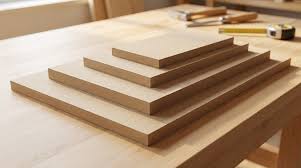
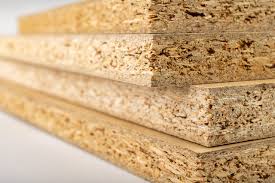
Particle boards, also known as chipboards, are engineered wood products made by compressing wood particles such as sawdust, wood chips, and wood shavings with synthetic resin binders under high temperature and pressure. They are widely used in furniture manufacturing, interior decoration, cabinetry, shelving, packaging, and general construction applications.
Particle boards are valued for their affordability, smooth surface (when laminated), and efficient use of wood waste materials. Unlike solid wood, particle boards are manufactured from reconstituted wood particles, making them a cost-effective and resource-efficient alternative in modern woodworking industries.
Due to their lightweight structure and ease of production, particle boards are commonly used in low to medium-load applications, especially in interior environments where moisture exposure is limited.
Definition of Particle Boards
Particle board is an engineered wood panel product made by bonding small wood particles with synthetic adhesives and compressing them into flat sheets under controlled heat and pressure.
Common raw material sources include:
Pinus radiata Eucalyptus globulus Pinus taeda
These fast-growing species are commonly used due to their high yield of wood residues suitable for panel production.
Types of Particle Boards
1. Single-Layer Particle Board
Uniform particle distribution throughout the board
Used in low-cost furniture and interior applications
2. Three-Layer Particle Board
Fine particles on outer layers and coarse particles in the core
Provides improved strength and surface quality
3. Moisture-Resistant Particle Board (MR Board)
Treated with water-resistant resins
Suitable for kitchens and humid environments
4. High-Density Particle Board
Stronger and more durable version
Used in heavy-duty furniture and flooring bases
5. Laminated Particle Board
Pre-coated with decorative laminate surfaces
Used in ready-made furniture and cabinetry
Physical Characteristics of Particle Boards
Particle boards have distinct physical properties:
Uniform but coarse internal structure
Smooth surface when laminated
Low to medium density
Lightweight compared to hardwood and plywood
Easy to cut and shape
Less natural wood grain visibility
They are designed primarily for functional rather than structural applications.
Manufacturing Process of Particle Boards
The production of particle boards involves several key steps:
1. Raw Material Collection
Wood waste such as chips, sawdust, and shavings are collected.
2. Drying
Particles are dried to a controlled moisture level.
3. Resin Application
Synthetic adhesives such as urea-formaldehyde or melamine resins are added.
4. Mat Formation
Particles are spread evenly to form a uniform mat.
5. Hot Pressing
The mat is compressed under heat and pressure to form solid boards.
6. Cooling
Boards are cooled to stabilize structure.
7. Trimming and Sanding
Edges are cut and surfaces are smoothed.
8. Lamination (Optional)
Decorative layers may be added for aesthetics and protection.
Tabulated Specification of Particle Boards
Specification
Details
Product Name
Particle Boards (Chipboards)
Raw Materials
Pinus radiata, Eucalyptus globulus
Product Type
Engineered wood panel
Structure
Compressed wood particles and resin binder
Density Range
Low to medium density
Thickness Range
Typically 9 mm – 25 mm
Surface Finish
Raw, laminated, or veneered
Moisture Resistance
Standard or moisture-resistant (MR boards)
Workability
Easy to cut, drill, and laminate
Main Applications
Furniture, cabinetry, interior partitions
Durability
Moderate (not suitable for heavy structural use)
Storage Conditions
Dry and moisture-free environment
Packaging
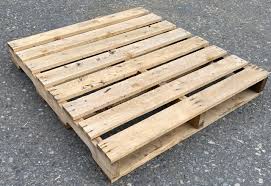
Flat panels on pallets
Traceability
Manufacturing and material sourcing records
Uses of Particle Boards
Particle boards are widely used in many industries:
1. Furniture Manufacturing
Used for:
Cabinets
Wardrobes
Tables
Office desks
Shelving units
2. Interior Decoration
Applied in:
Wall panels
Decorative partitions
False ceilings
Interior fittings
3. Kitchen Furniture
Used in:
Modular kitchen cabinets
Storage units
Shelving systems
4. Office Furniture
Common in:
Workstations
Filing cabinets
Conference tables
5. Packaging Industry
Used for:
Lightweight crates
Temporary packaging structures
6. Low-Cost Construction Applications
Used for:
Temporary partitions
Non-load-bearing structures
Advantages of Particle Boards
1. Cost-Effective
One of the most affordable engineered wood products.
2. Efficient Use of Wood Waste
Manufactured from recycled wood particles.
3. Smooth Surface (When Laminated)
Ideal for decorative finishes.
4. Easy Workability
Can be easily cut, drilled, and assembled.
5. Lightweight
Simplifies transportation and installation.
Limitations of Particle Boards
Lower strength compared to plywood and hardwood
Poor resistance to moisture unless treated
Not suitable for heavy structural applications
Can swell when exposed to water
Lower durability compared to MDF or solid wood
Economic Importance
Particle boards contribute significantly to global industries by:
Supporting low-cost furniture production
Reducing wood waste through recycling
Providing affordable building materials
Creating employment in panel manufacturing industries
Supporting mass housing and interior solutions
They are essential in budget-friendly construction and furniture markets.
Environmental Considerations
Sustainable particle board production involves:
Recycling wood residues and sawmill waste
Reducing deforestation pressure
Using plantation-grown timber sources
Improving adhesive technology for lower emissions
Supporting circular wood economy practices
Particle boards help maximize resource efficiency in the timber industry.
Storage and Handling Guidelines
To maintain quality:
Store in dry, covered environments
Avoid exposure to moisture and humidity
Keep panels flat to prevent bending
Protect edges from impact damage
Handle carefully during transport
Proper storage prevents swelling and structural weakening.
Quality Control Standards
High-quality particle boards must meet:
Density uniformity requirements
Moisture content control standards
Surface smoothness specifications
Strength and bonding tests
Formaldehyde emission regulations
Industrial performance certifications
Conclusion
Particle boards are widely used engineered wood panels valued for their affordability, efficiency, and versatility in furniture manufacturing, interior decoration, and light construction applications. Produced from wood residues such as those derived from Pinus radiata, Eucalyptus globulus, and Pinus taeda, particle boards provide a cost-effective solution for modern woodworking needs.
Although they are less durable than plywood or solid wood, their smooth surface, ease of use, and low production cost make them highly valuable in mass furniture production and interior design industries. As demand for affordable housing and sustainable resource use increases, particle boards continue to play an important role in global wood-based manufacturing.
In essence, particle boards are not just compressed wood waste—they are practical, economical, and resource-efficient materials that support modern furniture production, interior design, and sustainable timber utilization worldwide.