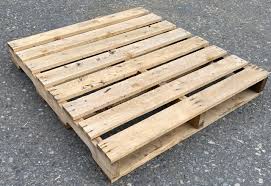
Wooden pallets are flat transport structures made from timber and designed to support goods in a stable manner during storage, handling, and transportation. They form the backbone of modern logistics and supply chain operations, enabling easy movement of products using forklifts, pallet jacks, and automated warehouse systems.
Wooden pallets are widely used across industries such as agriculture, manufacturing, retail, warehousing, export logistics, and shipping. Their strength, reusability, and cost-effectiveness make them one of the most important materials in global freight and distribution systems.
Typically constructed from softwood or hardwood lumber, wooden pallets are engineered to carry heavy loads while maintaining structural integrity. They are available in standardized and custom sizes depending on industry requirements and export regulations.
Definition of Wooden Pallets
Wooden pallets are flat transport platforms made from timber components assembled into a rigid structure used for stacking, storing, and transporting goods efficiently.
Common timber sources used in pallet production include:
Pinus radiata Eucalyptus globulus Populus deltoides
These species are preferred due to their availability, strength-to-weight ratio, and cost efficiency.
Types of Wooden Pallets
1. Stringer Pallets
Built using parallel wooden boards (stringers)
Common in North American logistics systems
Can be two-way or four-way entry
2. Block Pallets
Constructed with blocks between top and bottom decks
Stronger and more durable
Allows forklift access from all sides
3. Double-Face Pallets
Have both top and bottom decks
Provide better load stability
Suitable for heavy goods
4. Single-Face Pallets
Only one deck surface
Lightweight and cost-effective
Used for light cargo
5. Reversible Pallets
Both sides can carry loads
Increases usability and lifespan
6. Heat-Treated Export Pallets
Treated to meet international phytosanitary standards (ISPM 15)
Required for international shipping
Physical Characteristics of Wooden Pallets
Wooden pallets exhibit the following features:
Strong load-bearing capacity
Rectangular flat structure
Made from rough or planed timber
Lightweight to medium-heavy depending on design
Natural wood color (light brown to dark brown)
Nail-assembled or fastened construction
Reusable and repairable
Their structural design allows safe stacking and movement of goods.
Manufacturing Process of Wooden Pallets
The production of wooden pallets involves several stages:
1. Timber Selection
High-quality logs are selected from softwood or hardwood sources.
2. Sawing and Cutting
Logs are processed into boards, stringers, and deck boards.
3. Drying
Timber is air-dried or kiln-dried to reduce moisture content and prevent decay.
4. Assembly
Boards are assembled into pallet structures using nails, screws, or staples.
5. Heat Treatment
Pallets are heat-treated to eliminate pests and comply with export regulations.
6. Finishing and Inspection
Pallets are checked for strength, dimensions, and safety compliance.
7. Stamping and Certification
Export pallets are marked with ISPM 15 certification stamps.
Tabulated Specification of Wooden Pallets
Specification
Details
Product Name
Wooden Pallets
Common Species
Pinus radiata, Eucalyptus globulus
Product Type
Timber logistics and transport structure
Structure
Deck boards, stringers, or blocks
Load Capacity
Light to heavy duty (varies by design)
Dimensions
Standard and custom sizes (e.g., 1200×1000 mm, 1200×800 mm)
Surface Finish
Rough sawn or planed
Entry Type
Two-way or four-way forklift access
Treatment
Heat-treated (ISPM 15), fumigated, or untreated
Durability
Moderate to high depending on wood type
Reusability
High (repairable and recyclable)
Main Applications
Warehousing, shipping, storage, logistics
Storage Conditions
Dry, stacked, and ventilated
Packaging
Bundled pallets or stacked units
Traceability
Forestry and logistics compliance records
Uses of Wooden Pallets
Wooden pallets are essential in global supply chains:
1. Logistics and Transportation
Used for:
Shipping goods internationally
Loading containers
Freight handling
2. Warehousing
Used for:
Organizing stored goods
Easy forklift movement
Inventory management systems
3. Manufacturing Industry
Used for:
Moving raw materials
Transporting finished goods
Assembly line logistics
4. Agriculture Sector
Used for:
Transporting fruits and vegetables
Storing packaged farm products
Exporting agricultural goods
5. Retail and Distribution
Used for:
Bulk product display
Stock handling in supermarkets
Distribution center operations
6. Export Packaging
Heat-treated pallets are required for:
International shipping containers
Customs-compliant logistics operations
Advantages of Wooden Pallets
1. Cost-Effective
Cheaper than plastic or metal alternatives.
2. Strong Load Capacity
Can support heavy industrial goods.
3. Easy Repair and Recycling
Damaged pallets can be repaired or reused.
4. Widely Available
Produced globally from common timber species.
5. Eco-Friendly
Made from renewable wood resources.
6. Customizable Design
Can be produced in different sizes and strengths.
Economic Importance
Wooden pallets play a major role in global trade and logistics by:
Supporting international supply chains
Enhancing efficiency in warehousing systems
Reducing transportation costs
Creating jobs in timber processing and logistics industries
Enabling large-scale export of goods
They are a critical component of modern commerce infrastructure.
Environmental Considerations
Sustainable wooden pallet production includes:
Use of plantation-grown timber
Recycling and reuse of pallets
Reduction of plastic packaging dependence
Efficient use of wood waste
Compliance with international forestry standards
Wooden pallets contribute to circular economy practices in logistics.
Storage and Handling Guidelines
To maintain pallet quality:
Store in dry and ventilated areas
Avoid prolonged exposure to moisture
Stack evenly to prevent deformation
Inspect regularly for damage or broken boards
Repair damaged sections promptly
Proper handling ensures safety and longevity.
Quality Control Standards
High-quality wooden pallets must meet:
Load-bearing strength requirements
Dimensional accuracy standards
Moisture content control
Nail and joint integrity tests
ISPM 15 export certification (when required)
Safety and durability compliance
Conclusion
Wooden pallets are essential logistics and storage structures widely used in transportation, warehousing, manufacturing, agriculture, and global trade. Manufactured from timber species such as Pinus radiata, Eucalyptus globulus, and Populus deltoides, they provide a strong, reusable, and cost-effective solution for handling goods efficiently.
Their durability, repairability, and adaptability make them indispensable in modern supply chains. As global trade continues to expand, wooden pallets remain a foundational element of logistics systems worldwide.
In essence, wooden pallets are not just simple timber platforms—they are critical infrastructure tools that support efficient movement, storage, and distribution of goods across global markets.