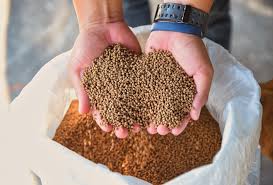
Within the global functional food, high-end cosmetic, and nutraceutical sectors, royal jelly represents the absolute pinnacle of biological complexity and value-added apiary products. Unlike honey (which is processed plant nectar) or propolis (which is modified plant resin), royal jelly is a true animal secretion. It is biosynthesized directly by the hypopharyngeal and mandibular glands of young nurse honey bees (Apis mellifera).
Every bee inside a hive starts life genetically identical. However, if a larva is fed a continuous, exclusive diet of royal jelly, it undergoes profound epigenetic changes. These changes activate its reproductive organs, accelerate its growth, and extend its lifespan from a few weeks to several years—transforming a standard worker larva into a highly fertile queen bee.
The industrial processing, preservation, and quality control of royal jelly is one of the most demanding branches of bioprocess engineering. Royal jelly is highly unstable; it is loaded with fragile proteins and moisture, making it highly prone to rapid heat damage, browning, and structural breakdown if left at room temperature.
To preserve its sensitive biochemicals, processing plants must enforce an absolute, unbroken sub-zero cold chain and utilize advanced freeze-drying (lyophilization) technology. This precision processing converts a delicate, highly perishable cream into a shelf-stable powder, allowing global health and skincare brands to integrate its unique proteins and fatty acids cleanly into automated production lines.
Technical Specifications
To meet strict international trade benchmarks (such as ISO 12824:2016), pass global authenticity checks, and prove the product has not broken down due to poor temperature control, commercial royal jelly must hit rigid analytical markers.
Analytical Parameter
Fresh Liquid Baseline
Lyophilized Powder Baseline
Verification Methodology
Moisture Content
60.0% to 70.0%
Maximum $leq 5.0%$
Karl Fischer Titration / Vacuum Oven
10-HDA Concentration
Minimum $geq 1.4%$
Minimum $geq 4.0%$ to $6.0%$
High-Performance Liquid Chromatography
Crude Protein Mass
11.0% to 18.0%
34.0% to 50.0%
Kjeldahl Nitrogen Combustion Assay
Total Carbohydrates
7.0% to 18.0%
21.0% to 40.0%
High-Performance Liquid Chromatography
Fructose & Glucose (Sum)
$geq 90%$ of total sugars
$geq 90%$ of total sugars
HPLC Sugar-Profile Analysis
Total Acidity Index
30 to 53 mL 1M NaOH/100g
90 to 140 mL 1M NaOH/100g
Potentiometric Titration to pH 8.3
Furfural / Browning Index
Absent / Low Absorbance
Absent / Low Absorbance
UV-Vis Spectrophotometric Assay
Aerobic Plate Count
$< 1,000 text{ CFU/g}$
Less than $1,000 text{ CFU/g}$
Standard Selective Agar Culturing
The Biophysical Chemistry of Royal Jelly
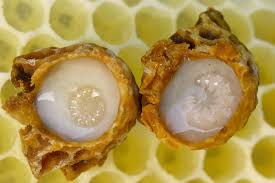
Royal jelly is an opaque, milky-white to pale-yellow viscous paste featuring a sharp, pungent, sour odor and a highly distinct acidic taste. It is an intricate biochemical matrix organized into three core structural phases:
                  ┌──► Major Royal Jelly Proteins (MRJPs: 80% of protein mass; drives epigenetics)
                  ├──► Royalisin & Apisimin (Antimicrobial peptide shields)
[Royal Jelly] ────┼──► 10-Hydroxy-2-Decenoic Acid (10-HDA: The unique marker lipid)
                  └──► Moisture, Minerals, and Adenosine Derivatives
1. The Protein Matrix (The Epigenetic Key)
Proteins and amino acids make up roughly 50% of royal jelly’s dry weight. This protein phase is heavily dominated by a family of nine specific glycoproteins known as Major Royal Jelly Proteins (MRJPs 1 through 9). MRJP1 (also called royalactin) is the primary compound responsible for triggering the physiological changes that turn a standard larva into a queen bee.
Because these macro-proteins are highly sensitive to heat, exposing fresh royal jelly to temperatures above 15°C causes the proteins to break down and link up with local sugars (the Maillard browning reaction). This reaction destroys the product’s biological activity and turns the creamy paste a dark brown.
2. The Lipid Phase and the 10-HDA Quality Anchor
The fatty acid profile of royal jelly is completely unique in the biological world; it consists of short-chain, hydroxylated, or dicarboxylic fatty acids rather than the typical long-chain triglycerides found in animal fats.
The undisputed anchor of this lipid phase is 10-Hydroxy-2-Decenoic Acid (10-HDA).
$$text{Chemical Formula for 10-HDA: } text{HO}─text{CH}_2─(text{CH}_2)_6─text{CH}═text{CH}─text{COOH}$$
10-HDA is a strong unsaturated fatty acid that exhibits potent natural antibacterial and skin-barrier-protecting properties. Because 10-HDA is highly stable and is produced exclusively by honey bees, regulatory laboratories use its concentration as the definitive chemical fingerprint to identify real royal jelly and uncover batches diluted with cheap corn syrups or water.
The Chemical Engineering of Freeze-Drying (Lyophilization)
Because fresh liquid royal jelly degrades rapidly at room temperature, converting it into a shelf-stable powder requires Lyophilization (Freeze-Drying). This advanced process removes water from the delicate cream through sublimation—converting ice directly into gas without letting it melt into liquid water first, which completely bypasses thermal heat damage.
The Blast-Freezing Stage: Fresh, filtered liquid royal jelly is spread across stainless steel trays and loaded into a cryogenic blast freezer. The temperature is dropped rapidly to $-40^circtext{C}$ to $-50^circtext{C}$, locking the water molecules into solid ice crystals within minutes. This fast freeze prevents large ice shards from forming, protecting the delicate structures of the MRJP proteins.
The Deep Vacuum (Primary Drying): The frozen trays move inside a sealed freeze-drying chamber. Heavy-duty vacuum pumps pull the air pressure down below 0.1 millibars. Radiate heating plates then apply a gentle, carefully controlled touch of warmth to the trays. Because the vacuum pressure is so incredibly low, the ice crystals sublime directly into water vapor, leaving the fragile protein scaffolding completely intact without melting.
Desorption (Secondary Drying): Once the loose ice is cleared away, the chamber temperature is raised slightly while maintaining the deep vacuum. This extra energy pulls out any tightly bound water molecules locked inside the protein cells, safely driving the moisture content down below 5% to yield a completely shelf-stable dry powder.
Industrial Manufacturing and Cryogenic Supply Chain Flow
Transforming raw royal jelly from the hive into a standardized, premium ingredient requires a continuous, strictly monitored cold chain paired with clean-room isolation.
1.Cryogenic Harvest and Deep Freeze Logistics:Intake Gate.
Beekeepers hand-harvest raw royal jelly from artificial queen-cell cups using sterile suction needles. The fresh cream is immediately packed into sealed, light-blocking food-grade containers and flash-frozen at $-20^circtext{C}$ right at the apiary to completely halt enzyme decay.
2.Cold Filtration and Homogenization:Debris Screen.
The frozen royal jelly is moved to the processing plant under continuous refrigeration. It is thawed slightly to a workable 4°C inside a clean room and run through pressurized stainless steel micron sieves (0.1mm mesh) to cleanly filter out micro-wax flakes and larval skins.
3.Tray Loading and Cryogenic Blast Freezing:Ice Lock.
The clear, clean cream is spread into thin layers across sanitized stainless steel lyophilization trays. The trays are rolled directly into a cryogenic blast freezer, plunging the matrix down to $-40^circtext{C}$ to lock the water into a solid ice grid.
The frozen trays are transferred into the freeze-drying chamber. Under a deep vacuum ($<0.1text{ mbar}$), the ice crystals sublime into vapor over a 24 to 48-hour cycle, safely pulling out the water without exposing the sensitive MRJP glycoproteins to heat.
Because authentic royal jelly requires painstaking hand-labor to harvest, it commands an exceptionally high market price. This premium makes it a prime target for international food fraud.
The two most common methods of counterfeiting royal jelly are:
The Starch and Sugar Dilution: Fraudulent packers blend pure royal jelly with cheap corn syrup, water, and industrial starches to inflate the batch weight. To catch this, testing labs run HPLC Sugar-Profile Assays. Real royal jelly features an exclusive mix of fructose and glucose that accounts for over 90% of its total sugar mass, with almost zero sucrose. The appearance of unusual maltose or heavy sucrose signatures instantly exposes the presence of industrial fillers.
The Freeze-Drying Burn Check (HMF Monitoring): If a packer attempts to speed up the freeze-drying process by turning the tray heat up too high, the delicate sugars burn, generating a toxic chemical compound called Hydroxymethylfurfural (HMF). A high HMF reading, combined with a dropped 10-HDA count, alerts regulatory inspectors that the batch has been overheated or cut with cooked sugar syrups, violating international safety standards.
Conclusion
Royal jelly processing represents a true pinnacle of modern bioprocess engineering and cold-chain logistics. By rejecting aggressive high-heat sterilization and instead combining strict sub-zero temperature locks with advanced vacuum freeze-drying, processors successfully safeguard the highly fragile matrix of epigenetic glycoproteins and unique 10-HDA lipids.
Through an automated manufacturing sequence that thoroughly filters out microscopic hive debris and uses nitrogen-flushed barrier packaging, processing plants deliver a highly stable, uniform ingredient to global markets. As international skincare, pharmaceutical, and functional food brands prioritize clinically validated, pure, and bio-compatible compounds, advanced royal jelly engineering remains a critical anchor driving product safety and natural health innovation.