

Fast delivery within 72 Hours

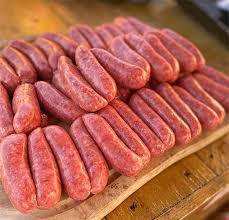
Beef sausages
Contact Supplier
Supplier: crazylion603Phone: +756473546567
Email: bosito3848@ezimb.com
Address: 7780 Roscommon Road
Visit Supplier Store

Black Friday Blowout!
Description
Introduction
Among the diverse array of products within the processed meat landscape, the beef sausage stands out as a triumph of culinary engineering and cross-cultural appeal. Originating thousands of years ago as a primitive method to preserve highly perishable trimmings, the sausage has evolved into a highly sophisticated, multi-billion-dollar global category.
In today’s fast-paced food economy, fresh beef trimmings present immediate processing challenges: they possess variable fat-to-lean ratios, oxidize quickly, and have a short microbiological shelf life. Beef sausages solve these industrial pain points. By combining mechanical reduction, targeted spice profiles, and precise thermal or biochemical structural binding, manufacturers convert variable raw materials into uniform, highly stable, and portion-controlled products.
Whether configured as a smoky, snap-cased frankfurter for a fast-casual menu, a robust breakfast link, or a deeply spiced, dry-cured salami, the beef sausage provides a dense source of protein designed to survive modern logistics while delivering an intense savory experience for consumers worldwide.
Defining Beef Sausages
Commercially and scientifically, a beef sausage is defined as a formulated food product consisting of comminuted (ground, chopped, or flaked) beef muscle tissue mixed with animal fat, sodium chloride, water, seasonings, and specific functional ingredients, which is then stuffed into a cylindrical casing.
To carry the designation of a true beef sausage in most regulatory jurisdictions, the meat formulation must rely entirely on bovine skeletal muscle as its primary protein source, excluding poultry or porcine fillers unless explicitly stated on the labeling.
The core objectives of beef sausage manufacturing are:
-
Protein Emulsification: Transforming lean muscle, water, and fat into a stable matrix that does not separate during cooking.
-
Total Resource Utilization: Upcycling highly nutritious but anatomically tough primal cuts and trimmings (such as the flank, chuck, and plate) into a premium, high-margin consumer product.
-
Portion Uniformity: Delivering identical weight, geometry, and cooking performance across every single production run.
Beef sausages are structurally diverse and are generally categorized into four primary processing classes:
-
Fresh Beef Sausages: Uncooked, un-cured mixtures of ground beef, fat, and spices. These require continuous refrigeration and must be fully cooked by the consumer before eating (e.g., fresh beef links or breakfast sliders).
-
Cooked & Smoked Sausages: Emulsified or finely ground mixtures that are cured, stuffed, thermally processed, and naturally smoked. They are fully pasteurized and ready-to-eat right out of the package (e.g., beef hot dogs, smoked kielbasa, or knackwurst).
-
Dry and Semi-Dry (Fermented) Sausages: Complex, shelf-stable products where preservation is driven by lactic acid fermentation and controlled dehydration rather than heavy cooking (e.g., beef salami or summer sausage).
-
Pre-Cooked Crumbles: Coarsely ground, seasoned beef sausage meat cooked in bulk, frozen individually (IQF), and utilized primarily as a component topping by industrial food manufacturers.
Technical Specifications
For food service procurement, industrial buyers, and strict quality assurance frameworks, beef sausages must adhere to measurable biochemical and microbiological standards. The table below represents the industrial benchmark for a premium, fully cooked and smoked beef sausage line.
| Specification Parameter | Targeted Standard Baseline | Testing / Compliance Method |
| Meat Content (Bovine Only) | Minimum 75% Total Batch Weight | Lean Meat Chemical Analysis |
| Fat Content | Maximum 30% (Standard regulatory ceiling) | Soxhlet Extraction Method |
| Added Water | Maximum 10% by weight in finished product | AOAC Moisture/Protein Calculations |
| Binder / Extenders (Optional) | Maximum 3.5% (e.g., potato starch or soy isolate) | Mass Balance Ingredient Audit |
| Salt ($NaCl$) Concentration | 1.5% to 2.2% | Ion Chromatography / Volhard Titration |
| Casing Material | Natural Bovine Collagen or Cellulose (Peelable) | Visual & Mechanical Tensile Testing |
| Internal pH (Fermented Types) | 4.6 to 5.2 (Fresh/Cooked types: 5.8 to 6.2) | Direct Insertion Digital pH Probe |
| Total Aerobic Count | Less than $5.0 times 10^3 text{ CFU/g}$ | Standard Plate Count (SPC) Isolation |
| E. coli / Coliforms | Absent / Zero Tolerance | Petrifilm Enumeration Method |
| Finished Texture / Snap | Firm, elastic, no visible fat-pockets or rendering | Texture Profile Analysis (TPA) |
Comprehensive Functional Uses
The culinary adaptability and structural stability of beef sausages make them indispensable across multiple tiers of the global food market.
1. The Commercial Foodservice Landscape
For high-volume restaurants, stadiums, and amusement venues, beef sausages offer excellent operational advantages.
-
Rapid Throughput: Because cooked beef sausages are fully pre-pasteurized, kitchen staff only need to reheat the product to serving temperature. This minimizes ticket times during high-traffic rushes.
-
No Mechanical Shrinkage: The internal emulsion prevents the sausage from shriveling or losing its volume when grilled, steamed, or broiled. This ensures excellent plate presentation and predictable portion yields.
2. Retail, Home Cooking, and CPG
For the grocery consumer, beef sausages balance the desire for gourmet, savory meals with the realities of modern time constraints.
-
Versatile Meal Centers: From backyard barbecues to quick weeknight stir-fries, pasta dishes, and breakfast scrambles, sausages provide built-in seasoning, fat, and protein, eliminating the need for complex spice additions or long marination steps.
-
Convenient Portioning: Individual sausage links can be easily divided, frozen, or cooked as needed, reducing domestic food waste.
3. Industrial Food Manufacturing Components
Large-scale frozen pizza manufacturers, soup canneries, and prepared meal companies rely heavily on processed beef sausage components.
-
Double-Cook Stability: When sliced or crumbled onto a frozen pizza, the sausage must survive industrial freezing, storage, and the final consumer’s oven without drying out, scorching, or releasing excess oils that would soften the pizza dough.
The Science of Sausage Emulsification and Physics
Creating a high-quality beef sausage requires deep knowledge of meat biochemistry. A successful sausage is essentially a finely balanced, meat-based emulsion.
Protein Extraction and the Fat-Binding Matrix
Unlike a simple hamburger patty where ground meat merely clings together, a cooked beef sausage relies on the extraction of salt-soluble proteins—predominantly myosin and actin.
When lean beef is chopped at high speeds in the presence of salt ($NaCl$) and ice water, these muscle proteins dissolve into a sticky fluid. This fluid coats the finely chopped fat droplets, turning them into a stable emulsion.
During the cooking stage, this extracted protein network hardens into a firm, three-dimensional gel. This gel traps both the moisture and the liquefied fat within its cellular walls. If this matrix is weak—either due to insufficient chopping, low salt levels, or overheating the meat paste past 15°C during production—the emulsion will break. This failure causes the fat and water to leak out during cooking, leaving behind a rubbery, dry, and unpalatable sausage.
Casing Physics: The “Snap”
The satisfying structural “snap” that occurs when biting into a premium beef sausage is a deliberate mechanical result of the casing choice.
-
Collagen Casings: Made from processed bovine hide collagen, these offer absolute uniformity in diameter and wall thickness, making them ideal for automated high-speed twisting and packaging lines.
-
Natural Casings: Sourced from the cleaned intestinal tracts of livestock, these stretch naturally with the expanding meat during cooking, creating an artisanal look and a delicate, tender bite.
Industrial Production Flow
Manufacturing high-quality beef sausages combines automated heavy machinery with continuous quality gates.
[Lean Beef + Fat Sourcing] ➔ [Coarse First-Stage Grinding] ➔ [High-Speed Bowl Cutting / Emulsification]
                                                                                │
[Vacuum Thermal Sealing] ◀ [Twisting & Linking] ◀ [Automated Piston Stuffing] ◀ [Vacuum Deaeration]
          │
          ▼
[Continuous Smokehouse (Steam + Wood Smoke)] ➔ [Brine Chilling] ➔ [Peeling & Slicing] ➔ [MAP Packaging]
-
Grinding and Temperature Control: Raw lean beef and solid fat blocks are ground separately through large plates. Temperature control is critical here; ice or chilled water is constantly added to the mix to prevent the heat from friction from melting the fat prematurely.
-
Vacuum Mixing and Blending: The ground meat, fat, spices (such as white pepper, coriander, nutmeg, garlic, and mustard flour), salt, and sodium nitrite are transferred to a vacuum mixer. Pulling a vacuum removes any trapped air pockets, which prevents the fat from breaking down down the line and ensures a dense, smooth final texture.
-
Stuffing and Linking: The meat mixture is transferred to automated continuous vacuum stuffers. The paste is pumped into the chosen casing at high pressures, and linking horns automatically twist the casing at exact intervals to create uniform links.
-
Thermal Processing and Cold Stabilization: The linked sausages are hung on racks and rolled into computerized smokehouses. They go through a multi-stage program of drying, natural hardwood smoking, and final steam cooking until the core reaches 72°C. Once cooked, they are hit with a cold brine spray to stop the cooking process instantly, ensuring the casing locks tight around the plump meat.
Packaging, Cold Chain, and Preservation
To protect beef sausages from spoilage, moisture loss, and off-flavors caused by light exposure, they must be housed in high-performance packaging environments.
-
Vacuum Skin Packaging (VSP): This method molds a highly flexible film tightly around the sausage, removing all oxygen. It is the gold standard for fresh or sliced dry sausages, as it eliminates any surface wrinkling and prevents moisture from escaping.
-
Modified Atmosphere Packaging (MAP): Frequently used for multi-packs of sausages, the oxygen is completely flushed from the tray and replaced with a blend of 70% Nitrogen ($N_2$) and 30% Carbon Dioxide ($CO_2$). The carbon dioxide dissolves into the moisture on the meat’s surface, lowering the pH slightly to naturally slow down the growth of common spoilage bacteria.
The entire supply chain—from the smokehouse door to the retail display case—must maintain a strict temperature range between 0°C and 4°C. Any break in this cold chain can cause condensation to form inside the package, damaging the sausage’s texture and drastically shortening its shelf life.
Conclusion
The beef sausage represents a perfect blend of time-honored culinary tradition and modern industrial food science. By turning variable raw materials into a highly stable, uniform, and delicious emulsified protein, sausage manufacturing maximizes the value of agricultural livestock.
With its excellent operational efficiencies for food service businesses, long-term stability for industrial manufacturers, and exceptional convenience for home cooks, the beef sausage remains an essential anchor of the global processed meat sector. As formulation technologies advance to offer lower-sodium variations and cleaner ingredient profiles, the beef sausage will continue to adapt, meeting the rigorous performance and sensory demands of the modern food industry.