While fluid and powdered milk serve as foundational nutritional anchors, they remain structurally limited by their susceptibility to spoilage and their high concentrations of native lactose. To extend the shelf-life of fluid dairy and enhance its digestibility, agricultural food chains rely on bioconversion. At the absolute center of this fermented dairy market is yogurt (also spelled yoghourt or yoghurt).
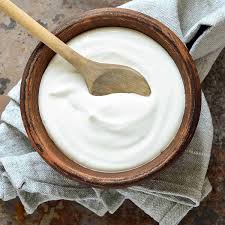
Yogurt represents a highly successful marriage of industrial dairy processing and targeted microbiology. By introducing specific, live cultures of lactic acid bacteria to pasteurized milk, processors intentionally trigger a controlled fermentation. This biological shift transforms a simple liquid into a thick, cohesive, and tangy food matrix.
In the modern global food economy, yogurt functions as a high-margin, value-added commodity. It transforms highly perishable raw dairy into a shelf-stable, structurally versatile product that satisfies contemporary consumer demands for gut-health optimization, clean-label protein concentration, and functional snack portability.
Defining Yogurt and Commercial Typologies
From a regulatory standpoint (governed by the FDA, Codex Alimentarius, and the European Food Safety Authority), yogurt is a fermented milk product obtained through the symbiotic action of two specific bacterial strains: Streptococcus thermophilus and Lactobacillus delbrueckii subsp. bulgaricus.
For a product to be legally marketed as “yogurt,” these starter cultures must remain live, active, and abundant throughout the entire shelf life of the commodity.
The commercial dairy market categorizes yogurt into four primary operational structural profiles:
Set Yogurt: The milk and bacterial starter mix is pumped directly into the final retail container and incubated immediately. It cools and sets in place, creating a firm, delicate, custard-like gel structure that breaks cleanly when spooned.
Stirred Yogurt: The milk is fermented in large industrial batch tanks. Once the desired acid level is reached, the gel structure is gently broken up by mechanical agitators before being pumped into retail tubs. This produces a smooth, creamy, and pourable texture.
Greek / Strained Yogurt: Fermented yogurt that runs through centrifugal separators or ultrafiltration membranes to press out the watery whey serum. This concentrates the remaining solids, yielding an ultra-thick, velvety texture with double the protein density of standard stirred yogurt.
Drinking Yogurt: A low-viscosity, fluid variation where the stirred yogurt base undergoes high-shear homogenization to shatter the protein aggregates into tiny, easily drinkable particles, often blended with fruit juices or stabilizing hydrocolloids.
Technical Specifications
To manage international distribution networks, secure food safety clearances, and guarantee sensory uniformity, commercial yogurt batches must strictly adhere to specific biochemical targets.
Specification Parameter
Targeted Industrial Baseline
Testing / Verification Method
Live Viable Cultures
Minimum $geq 1.0 times 10^7 text{ CFU/g}$ at expiry
Selective Agar Colony Count Incubation
Titratable Acidity
Minimum $geq 0.70%$ (Expressed as lactic acid)
Sodium Hydroxide ($NaOH$) Titration
Target Packaging pH
4.2 to 4.5 (Ensures safety from pathogens)
Calibrated Glass-Electrode pH Meter
Total Milk Solids-Not-Fat
Minimum $geq 8.25%$ by weight
Refractometric / Oven Dry Gravimetric Test
Crude Protein Content
Standard: 3.5%–5.0% / Strained Grade: 9.0%–11.0%
Kjeldahl Nitrogen Combustion Analysis
Syneresis (Whey Separation)
0% Surface free-pool volume (Via stabilizers)
Centrifugal Separation Stability Index
Yeasts and Molds Spoilage
Less than $10 text{ CFU/g}$ (Strict limit)
Chloramphenicol Glucose Agar Culturing
Cold Chain Distribution
Continuous 2°C to 4°C (36°F to 39°F)
Automated RFID Transit Temperature Logs
The Biophysical Chemistry of Fermentation and Gelation
The transformation of fluid milk from a sweet liquid into a thick, sour gel is driven by the laws of microbial biochemistry and colloid physics.
1. The Lactic Acid Pathways
When the starter cultures are introduced to warm milk ($40^circtext{C}$ to $43^circtext{C}$), they consume the milk’s native sugar, lactose. The bacteria metabolize the lactose via homofermentative pathways, producing lactic acid as their primary waste byproduct.
As lactic acid accumulates in the liquid serum, it releases free hydrogen ions ($H^+$), causing the milk’s pH to drop sharply from its neutral starting baseline of 6.7 down toward 4.0.
2. Acid Casein Gelation (The Isoelectric Point)
As detailed in fluid dairy science, milk’s casein proteins float freely in liquid because they carry a net negative electrical charge that forces them to push away from each other.
As the bacterial cultures pump lactic acid into the milk, these negative charges are slowly neutralized by the rising tide of positive hydrogen ions. When the milk’s pH reaches exactly 4.6, the casein proteins hit their isoelectric point. At this specific chemical marker, the electrical charges on the proteins drop to absolute zero.
With no electrical forces left to push them apart, the casein micelles collapse and fuse together into a three-dimensional, interlocking protein network. This porous grid traps the remaining water, milk fat droplets, and whey serum within its walls, turning the fluid milk into a solid, cohesive yogurt gel.
3. The Development of Volatile Flavor
While lactic acid provides the sharp, sour baseline note, the characteristic aroma of authentic yogurt is driven by acetaldehyde. During fermentation, L. bulgaricus synthesizes acetaldehyde from amino acids. This volatile organic compound gives yogurt its refreshing, green-apple-like aromatic finish, balancing out the heavy creaminess of the milk fat.
Industrial Manufacturing and Packaging Flow
Manufacturing high-quality, stable commercial yogurt requires precise temperature manipulation and strict sanitation steps to prevent cross-contamination from ambient yeasts and molds.
1.Milk Formulation and Solid Fortification:Standardization Step.
Raw fluid milk is tested for purity and standardized to specific fat levels. To ensure a thick, firm final gel, processors blend extra skim milk powder or whey protein concentrates into the liquid, boosting the total milk solids-not-fat profile to over 11%.
2.High-Heat Thermal Processing:Denaturing Phase.
The formulated milk is heated to 85°C for 30 minutes or 95°C for 5 minutes. Beyond standard pasteurization, this high heat deliberately alters (denatures) the structure of the lactoglobulin whey proteins, forcing them to bind directly to the casein micelles, which helps prevent water from leaking out of the final yogurt.
The hot milk passes through mechanical homogenization valves at 2,500 psi. This step shatters the milk fat into tiny, sub-micron droplets and coats them with the newly denatured whey proteins, ensuring a glossy sheen and a rich, uniform texture.
4.Cooling and Starter Culture Inoculation:Inoculation Gate.
The milk is cooled down to the bacteria’s optimal growth temperature of 42°C to 43°C. Freeze-dried concentrated starter cultures (S. thermophilus and L. bulgaricus) are precisely metered into the closed system, blending the bacteria evenly throughout the batch.
5.Incubation and Structural Setting:The Fermentation Window.
For Set Yogurt, the warm mix is bottled immediately. For Stirred Yogurt, it rests inside insulated batch tanks for 4 to 6 hours. The bacteria grow rapidly, churning out lactic acid until the pH drops to 4.5, triggering the caseins to gel into a solid matrix.
6.Cooling, Blending, and Aseptic Packaging:Cold Shock Stabilization.
Once the target acid level is reached, the yogurt is cooled down to 15°C to slow the bacteria’s activity. Fruit preparations or sweeteners are mixed into stirred batches before the product is packed into plastic tubs using sterile, airtight filling machines, then chilled down to 4°C for shipping.
Nutritional Performance and Human Digestibility
Yogurt delivers several health advantages that make it highly competitive against fresh, fluid dairy products.
Enhanced Lactose Tolerance: Many consumers suffer from lactose intolerance due to a lack of the natural enzyme lactase needed to digest milk sugars. During yogurt fermentation, the starter cultures break down a significant portion of the native lactose into easily digestible glucose and galactose, allowing lactose-sensitive individuals to consume dairy without discomfort.
Bioavailable Proteolysis: The fermentation process breaks down complex, long-chain milk proteins into smaller, easily absorbable peptides and free amino acids, making yogurt highly digestible for young children and elderly demographics.
Conclusion
Yogurt represents a flawless integration of dairy engineering and targeted microbial biotechnology. By harnessing the natural ability of lactic acid bacteria to alter milk proteins at their isoelectric point, the dairy industry successfully converts a highly perishable liquid into a stable, thick, and highly nutritious commodity.
Through a strictly monitored industrial pipeline that utilizes high-heat denaturation to prevent water loss and a continuous cold chain to preserve live cultures, yogurt can be reliably distributed worldwide. As global food systems prioritize gut health, functional protein density, and clean preservation models, yogurt will remain a primary anchor commodity driving agricultural value and cross-cultural nutritional security.