Wooden crates are sturdy, box-like containers made from timber and designed for the safe packaging, storage, and transportation of goods. They are widely used in agriculture, manufacturing, shipping, logistics, export trade, and warehousing due to their strength, durability, and ability to protect goods from damage during handling and transit.
Unlike simple cartons or lightweight packaging materials, wooden crates provide rigid structural protection, making them ideal for heavy, fragile, or high-value products. They are commonly used for exporting machinery, fruits, vegetables, glass products, industrial equipment, and delicate goods that require strong external protection.
Wooden crates are available in different designs, sizes, and load capacities depending on the type of goods being transported and the handling requirements.
Definition of Wooden Crates
Wooden crates are rigid packaging structures made from timber boards assembled into a framed or fully enclosed box used for storing and transporting goods securely.
Common timber sources used in crate production include:
Pinus radiata Eucalyptus globulus Populus deltoides
These species are selected due to their availability, strength, and ease of processing.
Types of Wooden Crates
1. Fully Enclosed Wooden Crates
Completely covered on all sides
Maximum protection for fragile or high-value goods
Used for export machinery and sensitive equipment
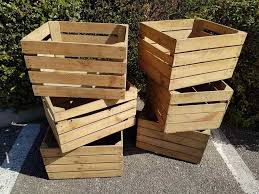
2. Open Slatted Crates
Built with spaced wooden slats
Allows airflow and visibility
Common in agricultural transport
3. Heavy-Duty Industrial Crates
Reinforced structure for very heavy goods
Used for engines, machines, and industrial equipment
4. Export Crates (ISPM 15 Certified)
Heat-treated to meet international shipping standards
Required for cross-border trade
5. Foldable Wooden Crates
Designed for easy storage when not in use
Used in return logistics systems
6. Custom-Built Crates
Made according to specific product dimensions
Used for specialized cargo protection
Physical Characteristics of Wooden Crates
Wooden crates typically have the following characteristics:
Strong rectangular or cubic structure
Made from sawn timber boards and frames
Nail or screw-assembled joints
Medium to heavy weight depending on size
Natural wood appearance (light to dark brown tones)
High load-bearing capacity
Ventilated or fully enclosed design options
Their rigid structure ensures maximum protection during transport.
Manufacturing Process of Wooden Crates
The production of wooden crates involves several steps:
1. Timber Selection
High-quality softwood or hardwood is selected for strength and durability.
2. Cutting and Preparation
Timber is cut into required sizes for frames, panels, and supports.
3. Drying
Wood is dried to reduce moisture content and prevent warping.
4. Assembly
Boards are nailed or screwed together to form crate structures.
5. Reinforcement
Additional supports are added for heavy-duty crates.
6. Heat Treatment
Crates intended for export are heat-treated to comply with ISPM 15 standards.
7. Finishing and Inspection
Crates are checked for strength, safety, and dimensional accuracy.
Tabulated Specification of Wooden Crates
Specification
Details
Product Name
Wooden Crates
Common Species
Pinus radiata, Eucalyptus globulus
Product Type
Timber packaging container
Structure
Wooden frame with boards or slats
Load Capacity
Light to very heavy-duty (depends on design)
Design Types
Enclosed, slatted, reinforced, foldable
Surface Finish
Rough sawn or planed timber
Treatment
Heat-treated (export grade), untreated, or fumigated
Durability
Moderate to high
Ventilation Options
Available (slatted designs)
Main Applications
Packaging, shipping, storage, export logistics
Storage Conditions
Dry, ventilated, and stacked properly
Packaging
Individual or bundled crates
Traceability
Forestry and export compliance records
Uses of Wooden Crates
Wooden crates are widely used across industries:
1. Export and International Shipping
Used for:
Machinery export
Industrial equipment transport
Fragile goods shipment
2. Agriculture Sector
Used for:
Fruits and vegetable transport
Farm produce storage
Fresh produce export
3. Manufacturing Industry
Used for:
Transporting machine parts
Protecting finished goods
Industrial supply chain logistics
4. Warehousing and Storage
Used for:
Long-term storage of goods
Organizing bulk materials
Safe stacking of products
5. Fragile Goods Packaging
Used for:
Glass products
Ceramics
Electronic equipment
6. Heavy Equipment Transport
Used for:
Engines
Industrial machines
Construction equipment
Advantages of Wooden Crates
1. High Protection Level
Provides strong physical protection against impact and damage.
2. Durable and Strong
Can withstand heavy loads and rough handling.
3. Customizable Design
Can be built to match product dimensions.
4. Cost-Effective
More affordable than metal or plastic crates for many applications.
5. Repairable and Reusable
Damaged crates can be repaired and reused.
6. Eco-Friendly
Made from renewable timber resources.
Economic Importance
Wooden crates contribute significantly to global trade by:
Supporting international export industries
Reducing product damage during transportation
Improving supply chain efficiency
Creating employment in woodworking and logistics sectors
Enhancing packaging solutions for agriculture and manufacturing
They are essential in global freight and logistics systems.
Environmental Considerations
Sustainable wooden crate production involves:
Use of plantation-grown timber
Recycling and reuse of crates
Reduction of plastic packaging materials
Efficient use of wood resources
Compliance with international forestry regulations
Wooden crates support environmentally responsible packaging systems.
Storage and Handling Guidelines
To maintain quality and safety:
Store in dry, covered areas
Avoid prolonged moisture exposure
Stack evenly to prevent deformation
Inspect regularly for cracks or broken boards
Handle carefully during lifting and transport
Proper handling ensures long service life.
Quality Control Standards
High-quality wooden crates must meet:
Load-bearing strength requirements
Structural integrity tests
Moisture content control standards
Nail and joint durability checks
ISPM 15 export certification (if applicable)
Safety and handling compliance
Conclusion
Wooden crates are essential packaging and transport solutions widely used in logistics, agriculture, manufacturing, warehousing, and export industries. Made from timber species such as Pinus radiata, Eucalyptus globulus, and Populus deltoides, they provide strong, durable, and customizable protection for a wide range of goods.
Their strength, reusability, and adaptability make them a key component of global supply chains. As international trade continues to expand, wooden crates remain a reliable and essential packaging solution for safe and efficient goods movement.
In essence, wooden crates are not just timber containers—they are critical protective structures that ensure safety, stability, and efficiency in global storage and transportation systems.