Bauxite is the primary ore used for producing aluminum, one of the most important metals in modern industry. It is a naturally occurring sedimentary rock rich in aluminum-bearing minerals and is widely mined across tropical and subtropical regions.
Bauxite is essential in the production of aluminum for construction, transportation, packaging, electrical systems, and aerospace industries due to aluminum’s lightweight, corrosion resistance, and strength.
Definition of Bauxite
Bauxite is an aluminum-rich ore composed mainly of hydrated aluminum oxides and hydroxides. It is the principal source of alumina (Al₂O₃), which is refined and then used to produce aluminum metal.
It typically forms in laterite soils through intense weathering of aluminum-rich rocks in warm, humid climates.
Main Minerals in Bauxite
Bauxite is not a single mineral but a mixture of several aluminum compounds, mainly:
Gibbsite (Al(OH)₃)
Boehmite (γ-AlO(OH))
Diaspore (α-AlO(OH))
It also contains impurities such as:
Iron oxides (Fe₂O₃)
Silica (SiO₂)
Titanium dioxide (TiO₂)
Types of Bauxite
1. Lateritic Bauxite
Formed in tropical regions through intense weathering
Most common type globally
2. Karst Bauxite
Found in limestone regions
High purity aluminum content
3. High-Grade Bauxite
High alumina content, low impurities
Ideal for aluminum production
4. Low-Grade Bauxite
Higher impurities
Used in cement and chemical industries
Physical and Chemical Characteristics of Bauxite
Bauxite typically has:
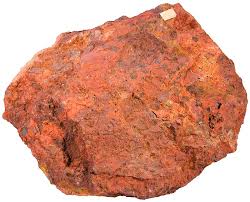
Reddish-brown, white, or yellowish color
Earthy and porous texture
Moderate hardness
High aluminum oxide content (Al₂O₃)
Low density compared to many metal ores
Presence of iron oxides giving red coloration
Insoluble in water
Formation of Bauxite
Bauxite forms through a process called lateritization:
1. Weathering of Aluminum-Rich Rocks
Rocks like granite break down in tropical climates.
2. Leaching
Rainwater removes silica and other soluble minerals.
3. Concentration of Aluminum
Aluminum compounds remain and accumulate in soil.
4. Long-Term Deposition
Over millions of years, thick bauxite layers form.
Extraction and Processing of Bauxite
1. Mining
Bauxite is extracted using open-pit mining methods.
2. Crushing and Washing
Removes clay and impurities.
3. Refining (Bayer Process)
Bauxite is processed into alumina (Al₂O₃) using caustic soda.
4. Smelting (Hall-Héroult Process)
Alumina is reduced to pure aluminum metal.
5. Transport and Export
Refined products are shipped for industrial use.
Tabulated Specification of Bauxite
Specification
Details
Product Name
Bauxite
Primary Composition
Aluminum oxides & hydroxides
Main Minerals
Gibbsite, Boehmite, Diaspore
Color
Reddish-brown, yellow, white
Hardness
Moderate
Density
Low to medium
Solubility
Insoluble in water
Main Output
Alumina (Al₂O₃), aluminum metal
Processing Methods
Mining, refining (Bayer process), smelting
Main Applications
Aluminum production, cement, chemicals
Uses of Bauxite
1. Aluminum Production (Primary Use)
Used to produce lightweight aluminum metal
Used in aircraft, vehicles, and construction
2. Construction Industry
Aluminum frames, roofing, and structural components
3. Packaging Industry
Aluminum foil, cans, and containers
4. Electrical Industry
Power transmission lines and cables
5. Transportation
Aircraft, automobiles, trains, and marine vessels
6. Cement and Chemical Industry
Used in refractory materials and chemical production
Advantages of Bauxite
1. Main Source of Aluminum
Essential raw material for global aluminum production.
2. High Industrial Demand
Used in multiple key industries.
3. Lightweight End Products
Supports energy-efficient transport and construction.
4. Abundant Natural Resource
Found in many tropical regions.
5. Versatile Applications
Supports manufacturing, packaging, and infrastructure.
Economic Importance
Bauxite plays a major role in global economies by:
Supporting aluminum production industries
Driving exports in mining countries
Creating jobs in mining and refining sectors
Supporting infrastructure and transportation industries
Contributing to global manufacturing supply chains
It is a strategic mineral in modern industrial economies.
Environmental Considerations
Bauxite mining may involve:
Land clearing and deforestation
Soil erosion and habitat disruption
Red mud waste from refining (environmental concern)
Mitigation measures include:
Land rehabilitation after mining
Recycling aluminum products
Improved waste management systems
Sustainable mining practices
Storage and Handling Guidelines
To maintain quality:
Store in dry conditions to prevent contamination
Keep separated from other minerals
Use proper bulk handling equipment
Control dust during transport and processing
Maintain grade separation for industrial use
Quality Control Standards
High-quality bauxite is evaluated based on:
Alumina (Al₂O₃) content
Silica and iron impurity levels
Moisture content
Grain size distribution
Suitability for alumina refining
Conclusion
Bauxite is the most important aluminum ore, composed of aluminum hydroxide minerals such as gibbsite, boehmite, and diaspore. Formed through intense tropical weathering processes, it is the foundation of the global aluminum industry.
From aircraft and automobiles to packaging and electrical systems, bauxite supports industries that rely on lightweight, strong, and corrosion-resistant materials.
In essence, bauxite is not just an ore—it is a strategic industrial resource that powers modern transportation, construction, and global manufacturing systems.