
Fast delivery within 72 Hours

Frozen seafood
Contact Supplier
Supplier: purplewolf201Phone: +6165252643
Email: jexifec738@ezimb.com
Address: 160 Hunters Creek Dr Cairns, Australia
Visit Supplier Store

Black Friday Blowout!
Description
Frozen Seafood – Detailed Product Description
Introduction
Frozen seafood is a premium food product category that includes a wide range of fish, shellfish, crustaceans, mollusks, and other marine species that have been carefully processed and preserved through freezing technology. As one of the most important sources of high-quality protein and essential nutrients worldwide, seafood plays a significant role in both household consumption and commercial food preparation. Freezing enables seafood to maintain its freshness, flavor, texture, and nutritional value while extending its shelf life and ensuring year-round availability.
The global demand for frozen seafood has increased considerably due to changing consumer lifestyles, advancements in cold chain logistics, and growing awareness of the health benefits associated with seafood consumption. Consumers today seek convenient, nutritious, and versatile food products that can be stored for extended periods without compromising quality. Frozen seafood effectively meets these requirements by offering a reliable solution for households, restaurants, hotels, catering companies, supermarkets, and food processing industries.
Modern freezing technologies such as blast freezing and individual quick freezing (IQF) allow seafood to be preserved shortly after harvesting, minimizing quality deterioration and maintaining its natural characteristics. As a result, frozen seafood has become an essential component of the global food industry, providing consumers with access to a diverse range of seafood products regardless of geographic location or seasonal availability.
Product Definition
Frozen seafood refers to fish and other aquatic food products that have been harvested, processed, cleaned, and rapidly frozen at controlled temperatures, typically below -18°C (0°F), to preserve their freshness, safety, texture, flavor, and nutritional quality. The freezing process significantly slows microbial growth and enzymatic activity, extending the product’s shelf life while maintaining its original characteristics.
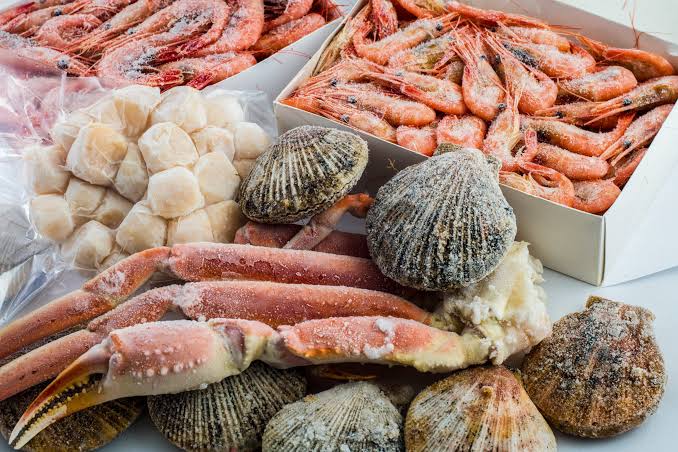
Frozen seafood encompasses a broad range of products, including fish fillets, whole fish, shrimp, prawns, squid, octopus, mussels, clams, scallops, crab, lobster, and mixed seafood combinations. Depending on market requirements, products may be sold raw, cooked, peeled, deveined, breaded, marinated, or value-added for specific culinary applications.
These products are manufactured and distributed under strict food safety regulations to ensure quality, hygiene, and consumer protection throughout the supply chain.
Product Specifications
| Parameter | Specification |
|---|---|
| Product Name | Frozen Seafood |
| Product Type | Frozen Marine Food Product |
| Physical Form | Whole, Fillets, Portions, Shell-On, Shell-Off, Cooked or Raw |
| Color | Natural Color Varies by Species |
| Taste | Fresh, Mild to Rich Seafood Flavor |
| Aroma | Characteristic Fresh Marine Aroma |
| Main Ingredients | Fish, Shrimp, Crab, Lobster, Mollusks, Shellfish |
| Processing Method | Cleaning, Sorting, Freezing, Packaging |
| Freezing Temperature | Typically Below -18°C |
| Shelf Life | 12–24 Months Depending on Product Type |
| Packaging Type | Vacuum Packs, Poly Bags, Cartons, Bulk Packaging |
| Storage Condition | Keep Frozen at or Below -18°C |
| Protein Content | High Protein Source |
| Fat Content | Varies by Species |
| Nutritional Components | Omega-3 Fatty Acids, Vitamins, Minerals |
| Quality Grade | Commercial, Premium, Export Grade |
| Target Consumers | Households, Restaurants, Hotels, Food Manufacturers |
| Food Safety Compliance | HACCP, GMP, and Applicable Food Standards |
| Availability | Retail, Wholesale, Food Service, Export Markets |
Key Features of Frozen Seafood
1. Extended Shelf Life
One of the primary advantages of frozen seafood is its ability to remain safe and high-quality for extended periods when stored under proper frozen conditions. Freezing preserves seafood while reducing spoilage and waste.
2. Nutritional Preservation
Modern freezing methods help retain essential nutrients such as protein, omega-3 fatty acids, vitamins, and minerals. This ensures consumers receive significant nutritional benefits comparable to fresh seafood.
3. Year-Round Availability
Frozen seafood makes seasonal and geographically limited species available throughout the year, allowing consumers access to a wide variety of seafood products regardless of location.
4. Convenience
Frozen seafood is cleaned, processed, and often portioned before packaging, reducing preparation time and simplifying meal planning for consumers and food service operators.
5. Product Variety
Frozen seafood products are available in numerous forms, including:
- Whole Fish
- Fish Fillets
- Fish Steaks
- Shrimp
- Prawns
- Crab
- Lobster
- Squid
- Octopus
- Mussels
- Clams
- Scallops
- Seafood Mixes
- Breaded Seafood Products
6. Consistent Quality
Advanced processing and freezing technologies help maintain uniform quality, appearance, flavor, and texture across product batches.
Production and Processing Process
The production of frozen seafood follows strict quality control procedures to ensure safety and freshness.
Harvesting
Seafood is sourced from approved fisheries, aquaculture farms, and marine harvesting operations that adhere to sustainable and responsible fishing practices.
Sorting and Grading
Freshly harvested seafood is sorted according to species, size, quality, and market requirements.
Cleaning and Preparation
Products undergo cleaning, washing, trimming, peeling, filleting, or shell removal depending on the intended final product.
Quality Inspection
Each batch is inspected to ensure compliance with food safety regulations and quality standards.
Rapid Freezing
Seafood is rapidly frozen using technologies such as:
- Blast Freezing
- Individual Quick Freezing (IQF)
- Plate Freezing
- Tunnel Freezing
These methods help preserve texture and minimize cellular damage.
Packaging
Frozen seafood is packaged using food-grade materials that prevent contamination, moisture loss, and freezer burn.
Cold Storage and Distribution
Products are stored in temperature-controlled facilities and transported through refrigerated supply chains to maintain quality until consumption.
Nutritional Value of Frozen Seafood
Frozen seafood is highly regarded for its nutritional profile and health benefits.
High-Quality Protein
Seafood provides complete protein containing all essential amino acids required for muscle growth, tissue repair, and overall body function.
Omega-3 Fatty Acids
Many fish species are rich in omega-3 fatty acids, which support heart health, brain function, and overall wellness.
Vitamins
Frozen seafood contains important vitamins such as:
- Vitamin D
- Vitamin B12
- Vitamin A
- Vitamin E
Essential Minerals
Seafood is a valuable source of:
- Selenium
- Zinc
- Iodine
- Phosphorus
- Magnesium
- Iron
These nutrients contribute to immune support, bone health, metabolism, and cognitive function.
Uses of Frozen Seafood
Household Consumption
Frozen seafood is widely used in home kitchens because it provides convenience, nutritional benefits, and flexibility in meal preparation.
Restaurants and Hotels
Hospitality businesses rely on frozen seafood to ensure consistent supply, quality, and menu availability throughout the year.
Catering Services
Catering companies utilize frozen seafood for large-scale food preparation due to its predictable quality and extended storage life.
Food Processing Industry
Frozen seafood serves as a key ingredient in various processed food products such as:
- Ready Meals
- Seafood Soups
- Seafood Pasta Dishes
- Frozen Entrées
- Seafood Snacks
- Seafood Salads
Institutional Food Services
Hospitals, schools, universities, and corporate cafeterias use frozen seafood as part of balanced meal programs.
International Trade
Frozen seafood is one of the most significant categories in global food exports due to its transportability and shelf stability.
Culinary Applications
Frozen seafood is highly versatile and can be prepared using numerous cooking methods.
Grilling
Fish fillets, shrimp, lobster tails, and squid are frequently grilled to enhance flavor and texture.
Baking
Baking provides a healthy cooking option while preserving moisture and nutritional value.
Frying
Many seafood products are breaded or battered and fried to create popular commercial and household dishes.
Steaming
Steaming helps preserve the natural flavor and nutrients of seafood.
Boiling
Shellfish and crustaceans are commonly boiled for soups, stews, and seafood platters.
Stir-Frying
Seafood is frequently incorporated into stir-fried dishes alongside vegetables and sauces.
Soups and Chowders
Frozen seafood serves as a key ingredient in various soups, chowders, and seafood-based broths.
Benefits of Frozen Seafood
Improved Food Security
The extended shelf life of frozen seafood supports stable food supplies and reduces dependency on seasonal harvests.
Reduced Waste
Freezing minimizes spoilage throughout the supply chain, contributing to better resource utilization.
Cost Efficiency
Bulk purchasing and long-term storage capabilities often provide economic advantages for consumers and businesses.
Enhanced Accessibility
Frozen seafood allows consumers worldwide to enjoy species that may not be locally available.
Convenience and Time Savings
Pre-cleaned and portioned products significantly reduce preparation time.
Consistent Availability
Food service operators can maintain menu consistency without concerns about seasonal fluctuations.
Packaging and Storage
Frozen seafood is packaged using specialized materials designed to maintain quality and protect against environmental factors.
Common packaging formats include:
- Vacuum-Sealed Pouches
- Polyethylene Bags
- Retail Cartons
- Bulk Food Service Packaging
- Shrink-Wrapped Trays
Proper storage conditions include:
- Maintaining temperatures at or below -18°C
- Preventing repeated thawing and refreezing
- Protecting products from moisture exposure
- Following recommended shelf-life guidelines
Maintaining an uninterrupted cold chain is essential for preserving product quality and food safety.
Market Demand and Consumer Appeal
The global frozen seafood market continues to expand due to increasing demand for healthy, convenient, and protein-rich foods. Consumers are becoming more health-conscious and are seeking alternatives to red meat that offer valuable nutritional benefits.
Rising urbanization, busy lifestyles, and advancements in refrigeration and transportation technologies have further strengthened market growth. Additionally, the increasing popularity of international cuisines has created greater demand for a diverse range of seafood products.
Food service providers value frozen seafood for its reliability, inventory management advantages, and ability to provide premium menu offerings throughout the year. Meanwhile, retail consumers appreciate its convenience, nutritional value, and extended shelf life.
Conclusion
Frozen seafood is a versatile, nutritious, and highly valuable food product that combines convenience, quality, and long-term storage capability. Through advanced freezing and processing technologies, seafood can retain its freshness, flavor, texture, and nutritional properties while remaining available year-round. Its wide variety of product forms, extensive culinary applications, and significant health benefits make it an essential ingredient for households, restaurants, catering companies, food manufacturers, and institutional food service providers. As consumer demand for healthy and convenient food solutions continues to grow, frozen seafood remains a dependable and sustainable choice in the global food industry.