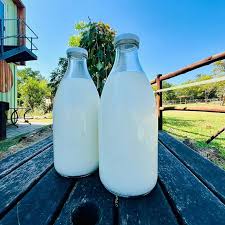
Within global agricultural systems, fresh milk is one of the most chemically complex, highly perishable, and nutrient-dense liquid commodities in existence. Functioning as a foundational dietary staple across nearly every continent, fresh milk provides a highly bioavailable source of essential macromolecules, calcium, and vitamins.
The fluid dairy market relies on ultra-efficient, uninterrupted cold-chain logistics. Unlike hardier commodities that tolerate extended storage, raw milk is a highly sensitive biological fluid. From the moment it leaves a cow’s udder, it enters a critical race against microscopic spoilage organisms and biochemical degradation.
By applying advanced dairy engineering—such as thermal pasteurization and mechanical homogenization—the modern agricultural sector transforms raw, vulnerable milk into a clean, long-lasting retail product. This industrial pipeline allows commercial farms to satisfy large-scale consumer demand while strictly enforcing global food safety standards.
Defining Fresh Milk and Retail Classifications
Culinarily and scientifically, fresh milk is a complex liquid secretion produced by the mammary glands of female mammals—most commonly dairy cows (Bos taurus).
In modern commercial processing, fluid milk is standardized into clear retail categories based on its final lipid (fat) percentages:
Whole Milk: Milk that retains its natural fat composition, standardized by law to contain a minimum of 3.25% milkfat. It features a rich mouthfeel and contains the highest concentration of fat-soluble vitamins (A, D, E, and K).
Reduced-Fat / Low-Fat Milk: Fluid milk that runs through centrifugal separators to strip away a portion of the fat phase. It is universally marketed as either 2% fat or 1% fat milk.
Skim Milk (Non-Fat): Fluid dairy processed to contain less than 0.5% milkfat. It is highly liquid and translucent, offering a low-calorie profile favored by specific health-conscious demographics.
Technical Specifications
To move from the commercial dairy parlor to regional supermarket shelves, fresh fluid milk must adhere to rigid chemical, thermal, and microflora baselines.
Specification Parameter
Targeted Commercial Standard
Verification Methodology
Somatic Cell Count (SCC)
Less than 200,000 cells/mL (Indicates prime herd health)
Automated Fluorescent Opto-Electronic Counter
Standard Plate Count (SPC)
Less than 10,000 CFU/mL (Post-pasteurization)
Standard Plate Agar Incubation
Freezing Point Depression
-0.525°C to -0.545°C (Verifies zero added water)
Cryoscope Thermistor Method
Titratable Acidity
0.14% to 0.16% (Expressed as lactic acid)
Sodium Hydroxide ($NaOH$) Titration
Alkaline Phosphatase (ALP)
Negative (Confirms 100% pasteurization success)
Fluorometric Enzymatic Assay
Antibiotic Residues
0.0% / Absolute Negative (Zero Tolerance)
Beta-lactam Receptor Binding Test
Post-Processing pH
6.6 to 6.8 (Slightly acidic to neutral equilibrium)
Calibrated Digital pH Electrode
Cold Chain Transport
Steady 0°C to 4°C (32°F to 39°F)
Continuous Transit RFID Data Loggers
The Biophysical Science of Fluid Dairy
The white, uniform appearance of fresh milk masks a complex, dynamic solution operating under delicate laws of physical chemistry.
1. The Natural Oil-in-Water Emulsion
Fresh milk is not a simple clear liquid; it is a permanent oil-in-water emulsion. Liquid milk fat droplets are suspended within a watery serum containing dissolved sugars and minerals.
In un-homogenized raw milk, these fat droplets have a lower density than the surrounding water, causing them to float to the top over time to form a distinct layer of cream. To prevent this separation in commercial retail bottles, dairy processors use mechanical homogenization.
This process forces the warm milk through microscopic valves under extreme pressure (up to 2,000 psi). The intense shear force shatters the large fat globules into tiny, uniform droplets (under 1 micron in diameter). These miniature droplets remain permanently suspended throughout the liquid, giving the milk a smooth, consistent appearance that never separates on the retail shelf.
2. The Casein Micelle Suspension
The white color of milk is a visual effect caused by the scattering of light off suspended proteins known as caseins. Casein molecules do not dissolve completely in water; instead, they cluster into tiny spherical bundles called micelles.
These micelles are held together by tiny mineral bridges of calcium phosphate. Under normal conditions, negative electrical charges on the surface of the micelles push them apart, keeping them floating freely in the liquid.
However, if the milk becomes acidic (either due to spoilage bacteria creating lactic acid, or a cheesemaker adding acid directly), the pH drops toward 4.6. At this point, the electrical charges neutralize, causing the casein bundles to clump together and precipitate out of solution, transforming the liquid milk into solid curds.
Industrial Cold Chain and Processing Flow
Delivering safe, un-spoiled fresh milk to modern urban markets requires a continuous, highly automated cold chain pipeline.
1.Automated Milking and Rapid Chilling:0 to 2 Hours Post-Milking.
Raw milk is mechanically harvested from the dairy herd inside sanitized milking parlors. The milk leaves the cow at body temperature (~38°C) and passes through plate heat exchangers that drop its temperature to below 4°C within seconds, stopping bacterial growth before it moves into stainless-steel bulk holding tanks.
2.Biosecurity Screening and Tanker Transit:Daily Collection.
Insulated transport trucks pump the chilled raw milk out of farm bulk tanks. Before the truck unloads at the central processing plant, technicians pull samples from the tank to test for antibiotic residues and high bacterial counts; any contaminated batches are discarded immediately.
3.Centrifugal Standardization:Processing Intake.
The raw milk enters high-speed centrifugal separators. The machine spins the liquid to split it into two components: skim milk and heavy cream. Processors then blend precise amounts of cream back into the skim base to create exact whole (3.25%), 2%, or 1% fat batches.
4.HTST Pasteurization:Thermal Elimination.
The standardized milk runs through a High-Temperature Short-Time (HTST) pasteurizer. The liquid is heated to exactly 72°C (161°F) for 15 seconds before being chilled back down to 4°C. This brief heat treatment destroys all dangerous pathogens (such as Coxiella burnetii and Listeria) while preserving the natural flavor of the milk.
5.High-Pressure Homogenization:Emulsion Lock.
While still warm from the pasteurizer, the milk is pumped through mechanical homogenization valves. The extreme pressure pulverizes the native fat globules into tiny, sub-micron particles, ensuring the cream layer can never separate out of the liquid during its retail shelf life.
6.Aseptic Bottling and Cold Distribution:Final Pack.
The pasteurized, homogenized milk is filled into high-density polyethylene (HDPE) jugs or paperboard cartons using automated, sterile filling machinery. The sealed containers are packed into crates and moved into refrigerated warehouses at 2°C, ready for immediate delivery to regional grocery networks.
Nutritional Architecture
Fresh whole milk serves as an excellent dietary resource, delivering a well-balanced distribution of macros and micronutrients.
High-Biological-Value Protein: Milk protein is split into 80% casein and 20% whey. Both fractions supply a complete profile of essential amino acids required for human muscle tissue repair and immune function.
Micronutrient Transport: Milk fat acts as a natural carrier for fat-soluble vitamins. In many global markets, commercial dairies fortify fresh milk with extra Vitamin D3 and Vitamin A to improve bone development and support vision health across consumer populations.
Conclusion
Fresh milk represents an exceptional achievement in modern food engineering and agricultural safety. By mastering the physics of oil-in-water emulsions and applying strict thermal controls through pasteurization, the dairy industry can successfully deliver a highly perishable biological liquid across vast urban distribution networks.
Through a continuous cold chain that prevents bacterial growth from farm to table, fluid milk remains an essential, safe, and highly nutritious anchor commodity. As global agricultural technologies advance, the dairy sector continues to improve processing efficiencies, supporting sustainable production models that guarantee food security and high-quality nutrition for consumers worldwide.