



Fast delivery within 72 Hours

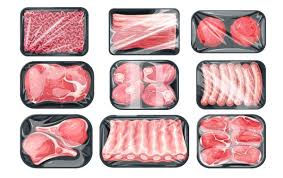
Frozen beef products
Contact Supplier
Supplier: MedicinePhone: 0675955186
Email: wisdomworld920@yahoo.com
Address: Mile4
Visit Supplier Store

Black Friday Blowout!
Description
Introduction
The international trade of animal protein relies on cold-chain preservation to balance geographical disparities in cattle production and consumer demand. At the absolute center of this cross-border supply chain are frozen beef products. Bovine meat is inherently dynamic, containing highly sensitive myofibrillar proteins, polyunsaturated fats, and a high moisture content that makes fresh storage past a few weeks virtually impossible without severe degradation.
Historically, freezing meat was viewed as a lower-tier preservation backup that ruined the texture and juiciness of steaks. However, modern refrigeration engineering has completely redefined the category. By deploying rapid cryogenic and blast-freezing technologies, food processors bypass the structural cellular damage associated with slow freezing. This industrial evolution allows premium cuts, ground fractions, and fully prepared beef meals to be locked in a state of suspended animation—preserving chemical freshness, nutritional density, and sensory profile for up to twelve months.
From portion-controlled raw burger patties built for the quick-service restaurant industry to bulk primal subprimitives exported across oceans, frozen beef products are an indispensable global economic anchor.
Defining Frozen Beef Products
Through a technical and industrial lens, frozen beef products encompass any bovine skeletal muscle or processed meat compound that has been intentionally subjected to deep thermal reduction until its core internal temperature reaches or drops below $-18^circtext{C}$ ($0^circtext{F}$).
The fundamental purpose of freezing beef goes beyond simple cooling; it is a physical process that immobilizes the unbound water inside the muscle tissue, converting it into solid ice crystals. Because microorganisms (like Listeria, Salmonella, and spoilage bacteria) require liquid water to feed and reproduce, freezing completely halts microbial growth. It also dramatically slows down the enzyme actions responsible for lipid oxidation and discoloration.
The critical objectives of manufacturing frozen beef products include:
-
Ice Crystal Size Control: Freezing the beef fast enough to prevent the formation of large, jagged ice crystals that pierce the meat’s cellular walls, which causes a loss of natural juices upon thawing.
-
Inventory and Price Stabilization: Allowing producers to safely store surplus beef during periods of peak cattle slaughter, avoiding market crashes and ensuring a steady supply year-round.
-
Ready-to-Use Portions: Pre-shaping, pre-marinating, or pre-cooking beef components so they can move directly from commercial freezers to cooking equipment without requiring skilled butcher prep.
Frozen beef products are broadly categorized into three distinct market tiers:
-
Frozen Primal and Subprimal Cuts: Whole muscle sections (such as ribeyes, strip loins, or chuck rolls) vacuum sealed and blast-frozen. These are primarily utilized by international wholesalers, distributors, and commercial processing facilities for local portion slicing.
-
Formed and Ground Raw Products: Items like individually quick-frozen (IQF) burger patties, slider portions, and uncooked meatball mixes. These feature precise fat-to-lean ratios and are engineered specifically for high-speed cooking lines.
-
Value-Added Frozen Entrées: Fully cooked or partially cooked convenience items, including frozen beef burritos, lasagna layers, Salisbury steaks, and pre-seared stir-fry strips containing built-in marinades and stabilizers.
Technical Specifications
To manage international trade clearances, quality grading, and food safety compliance, frozen beef products must align with strict, measurable biochemical standards. The table below represents the industrial specification matrix for a premium commercial shipment of blast-frozen ground beef patties.
| Specification Parameter | Targeted Standard Baseline | Testing / Compliance Method |
| Product Target Core Temp | $-18^circtext{C}$ ($0^circtext{F}$) or lower | Penetration Probe / Digital Infrared Scan |
| Lean-to-Fat Ratio | 80/20 Standard (Customizable from 75/25 to 90/10) | AOAC Official Method 991.36 (FOSS analyzer) |
| Freezer Burn Surface Area | 0% (Absolute zero surface dehydration allowed) | Visual Inspect / Lux Meter Contrast |
| Purge Loss (On Thawing) | Maximum 3.5% total weight loss | Gravimetric Drip Loss Analysis |
| Water Activity ($a_w$) | $< 0.60$ (Immobilized state via freezing) | Chilled Mirror Dew Point Method |
| Peroxide Value (PV) | Maximum $2.0 text{ meq/kg}$ fat (Indicates low oxidation) | Titrimetric Lipid Extraction |
| Total Plate Count (TPC) | Less than $5.0 times 10^4 text{ CFU/g}$ | Cultured Agar Plate Incubation |
| Escherichia coli O157:H7 | Negative / Absent in 375 grams | DNA Amplification / Real-Time PCR |
| Primary Packaging Film | Co-extruded High-Barrier PE/EVOH Anti-Fog Film | Oxygen Transmission Rate (OTR) Test |
| Commercial Shelf Life | 12 Months at continuous $-18^circtext{C}$ | Sensory & Biochemical Accelerated Stability |
Comprehensive Functional Uses
The absolute consistency and extended shelf-life of frozen beef products make them highly valued across several competitive sectors of the global food industry.
1. High-Volume Fast-Casual and Institutional Foodservice
For multi-unit restaurant chains, schools, military installations, and stadiums, frozen beef products remove operational variables that threaten profits.
-
Identical Cooking Profiles: Frozen burger patties are engineered to exact thicknesses and diameters. This precision allows commercial kitchens to use automated clam-shell grills or conveyor ovens, cooking the meat to perfect food-safety standards in an identical number of seconds without human guesswork.
-
Zero Storage Waste: Fresh beef must be thrown out if not sold within days, causing significant financial losses. Frozen products allow operators to pull only the exact number of portions needed for a single meal service, keeping the rest safely preserved.
2. Retail Consumer Packaged Goods (CPG)
For the modern supermarket shopper, frozen beef options offer affordable, convenient access to high-quality protein.
-
Bulk Pack Savings: Large family packs of frozen beef patties or pre-sliced stir-fry strips allow budget-conscious shoppers to purchase protein in bulk, storing it safely at home without fear of immediate spoilage.
-
Emergency Meal Foundations: IQF ground beef crumbles can be poured straight out of a resealable bag into a skillet to make taco meat or pasta sauce in minutes, skipping the time-consuming step of thawing a solid block of meat.
3. Cross-Border International Commodity Trading
Frozen beef is a vital global trade commodity that connects livestock-rich nations with dense urban import markets.
-
Oceanic Logistics Stability: Transporting fresh beef via ocean containers is highly risky due to shelf-life limits. Blast-frozen subprimals can sit securely inside refrigerated cargo ships for months, navigating international customs holding periods and long shipping lanes without any loss in product quality.
The Biophysical Science of Cryogenic Crystallization
The success of a frozen beef product is determined by how fast it transitions from a liquid state to a solid state. This process is governed by the laws of thermodynamics and cell biology.
Slow Freezing vs. Blast Freezing: The Drip Loss Mechanism
Muscle tissue is roughly 75% water, held securely inside long cellular tubes called muscle fibers.
-
-
The Danger of Slow Freezing: When beef is placed in a standard static freezer (like a home unit), the temperature drops slowly. Water molecules naturally migrate together to form large, jagged ice crystals. These large crystals grow so big that they rupture the delicate sarcolemma (the membrane surrounding muscle fibers). When the beef is eventually thawed, these broken membranes can no longer hold the internal juices. The water escapes as an abundance of red fluid known as purge loss or drip loss, carrying away vital water-soluble B-vitamins, minerals, and flavor compounds, leaving the cooked meat dry and stringy.
-
The Power of Ultra-Fast Blast Freezing: Industrial processors pass beef through flash-freezers operating at temperatures between $-35^circtext{C}$ and $-45^circtext{C}$, coupled with high-velocity air currents. This rapid drop in temperature forces the water to freeze instantly in place, creating millions of tiny, rounded microscopic ice crystals. Because these crystals are so small, they leave the cellular membranes completely intact. Upon thawing, the muscle fibers reabsorb the moisture perfectly, ensuring the beef retains its natural juiciness and tender bite.
-
Freezer Burn Chemistry
If frozen beef is exposed to moving air without a proper protective barrier, it suffers from a defect known as freezer burn. This is a physical process called sublimation, where ice turns directly into water vapor without melting into liquid first.
As water molecules escape from the surface of the meat into the dry freezer air, they leave behind microscopic air pockets. These pockets expose the open meat tissue to oxygen, causing rapid lipid oxidation that turns the fat rancid and turns the beef a dull, unappetizing grey-brown color.
Industrial Manufacturing and Freezing Processes
The production of premium frozen beef products requires an uninterrupted cold chain and highly automated processing steps designed to maximize biosecurity.
Raw beef trimmings and primal cuts are thoroughly inspected for temperature, lean accuracy, and microbiological cleanliness. The meat is held inside a climate-controlled room at 2°C to prevent any early fat softening or bacterial growth.
The chilled beef is fed through industrial grinders to achieve the required particle sizing. For burger patties, the ground meat moves into high-speed forming machines that use gentle pneumatic pressure to shape the patties, interleaving wax paper between them to prevent them from sticking together down the line.
The formed raw patties or cut meat portions move directly onto a stainless steel conveyor belt that enters a multi-zone blast-freezing tunnel. High-speed fans blast the meat with ultra-cold air at $-40^circtext{C}$. Within 10 to 15 minutes, the product passes through the critical zone of ice crystallization, locking its core temperature safely at $-18^circtext{C}$.
As the rock-hard frozen beef portions exit the tunnel, they pass through automated check-weighers and high-sensitivity industrial metal detectors to screen out any accidental machinery fragments before final packaging.
The frozen portions are quickly packed into high-barrier polyethylene bags or placed into boxes lined with EVOH film. Automated machines seal the packaging under a partial vacuum or flush it with protective nitrogen gas to eliminate any oxygen that could cause surface sublimation or freezer burn.
The sealed master cases are stacked on pallets and transferred to sub-zero holding warehouses maintained at a constant $-22^circtext{C}$ to $-25^circtext{C}$. The pallets are loaded directly into refrigerated shipping containers equipped with continuous digital data loggers to verify that the cold chain remains perfectly unbroken all the way to its destination.
Cold-Chain Integrity and Quality Control
Maintaining a flawless cold chain is the single most important factor governing the safety and commercial value of frozen beef products.
If the ambient temperature fluctuates during transport and rises up to $-5^circtext{C}$, the tiny microscopic ice crystals inside the beef will melt slightly. If the temperature drops back down to $-18^circtext{C}$, that melted water will refreeze onto the remaining ice crystals, causing them to grow into large, jagged formations over time—a destructive process known as ice recrystallization.
To prevent this quality loss, modern logistics networks rely on automated warehousing systems and real-time smart tracking sensors. These tools instantly alert operators if a refrigerated container encounters a power failure or a temperature spike, ensuring the frozen beef never compromises on safety or structural integrity.
Conclusion
Frozen beef products represent a vital fusion of advanced mechanical engineering and muscle biochemistry, serving as a dependable pillar of the global protein economy. By utilizing ultra-fast blast freezing to create tiny, non-destructive ice crystals, food processors can successfully halt microbial spoilage and lock in natural freshness without damaging the delicate cell walls of the meat.
With its excellent portion control for food service businesses, long-term inventory stability for international trade networks, and exceptional convenience for home cooks, the frozen beef category continues to expand globally. As packaging technologies advance to offer better oxygen barriers and smart temperature tracking, frozen beef will remain an essential anchor of global food systems, delivering safe, highly nutritious, and delicious protein options across the globe.






