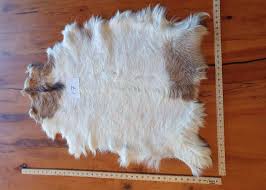
Within the international leather and textile industries, goat skin (commercially processed into goatskin leather or kidskin) stands as one of the most resilient, pliable, and structurally unique natural membranes available. While cowhide provides heavy structural volume and sheepskin offers delicate softness, goatskin strikes a perfect balance. It delivers exceptional tensile strength—the resistance of a material to breaking under tension—within a remarkably thin, lightweight profile.
Goats (Capra hircus) have been prized for centuries because their skins adapt beautifully to the tanning process. This adaptability is due to a dense network of interlocking collagen fibers that give the hide natural water-resistant properties and a distinct, pebbled grain texture.
From specialized luxury bookbindings and supple garment leathers to high-performance military pilot gloves and traditional acoustic drumheads, goat skin is a highly versatile byproduct of the global livestock economy. It allows agricultural systems to fully utilize the animal while providing manufacturers with a premium material for both historical crafts and modern luxury goods.
Defining Goat Skin and Its Commercial Formats
In global trade, goat skins are classified based on the maturity of the animal, the method of preservation, and the stage of processing.
Unlike bovine hides which are frequently split into multiple layers (split leather), goat skins are almost always processed intact as a full-grain material to preserve their tight structural surface.
The industry categorizes the material into three core development stages:
Kidskin: Derived from young, immature goats. This is the softest, most flexible grade of caprine leather, featuring a microscopic grain pattern. It is highly sought after by luxury fashion houses for fine evening gloves, premium footwear linings, and high-end wallets.
Goatskin: Harvested from mature animals. It features a more pronounced, pebbled texture and a thicker profile. This grade is utilized for rugged outerwear, bookbinding, upholstery, and goods requiring long-term abrasion resistance.
Morocco Leather: Historically, this term referred to goatskin tanned using traditional vegetable methods (traditionally sumac leaves) in North Africa. It is famous for its bright dyed colors, deeply pebbled grain texture, and its extensive use in luxury bookbinding and gold-embossed desk inlays.
Technical Specifications
For leather tanneries, luxury goods manufacturers, and quality assurance labs, processed goatskin must meet strict physical and chemical metrics to guarantee performance. The table below represents the commercial baseline for a premium batch of chrome-tanned, drum-dyed goatskin garment leather.
The biological composition of goat skin makes it exceptionally functional across completely different industries, from high-end fashion to acoustic engineering.
1. Luxury Fashion, Performance Gloves, and Footwear
Because goatskin contains natural lanolin oils and a tightly woven fiber structure, it produces incredibly supple, durable leather.
Tactile Performance Gloves: Military pilots, tactical law enforcement teams, and professional motorcycle racers heavily utilize goatskin gloves. The thin leather provides maximum tactile sensitivity (allowing handlers to feel small switches and controls) while offering superior abrasion and tear resistance if scraped against concrete or metal.
High-Flex Footwear and Linings: Goatskin contours quickly to the shape of the human foot without stretching out of shape permanently. This memory retention makes it a premier material for fine dress shoes, luxury boots, and soft interior shoe linings that manage friction and heat.
2. Traditional Acoustics and Percussion Membranes
When goat skin is scraped, cleaned, and dried without undergoing chemical tanning, it retains its raw, un-tanned state known as parchment or rawhide.
World Percussion Drumheads: Raw goat skin is the global industry standard for the heads of traditional acoustic drums, including West African djembes, Middle Eastern darbukas, and Celtic bodhráns. The natural skin reacts dynamically to tension, delivering sharp, bright highs and deep, warm bass tones that synthetic plastic drumheads struggle to replicate accurately.
The Biophysical Science of Caprine Hide
The superior strength of goatskin leather lies directly in its unique microscopic architecture, which sets it apart from cattle and sheep hides.
Interlocking Collagen Fiber Networks
Under an electron microscope, a goat skin reveals an incredibly dense arrangement of collagen fibers within the corium (the deep structural layer of the skin).
In cowhides, these fibers tend to run parallel to one another in straight layers. In contrast, caprine collagen fibers weave together in a highly randomized, three-dimensional interlocking matrix. This natural weaving pattern acts like a built-in ripstop mesh; when stress or tension is applied to any single point on the skin, the force is distributed evenly across the entire fiber network, preventing tears or puncture paths from expanding.
The Presence of Natural Lanolin
Goat skins naturally contain a higher concentration of lanolin—a waxy lipid secreted by the animal’s sebaceous glands—than bovine hides.
During processing, this natural oil distribution helps keep the leather fibers soft and lubricated over decades of use. It prevents the material from drying out or becoming brittle, while giving the surface a natural degree of water resistance.
The Industrial Tanning and Manufacturing Pipeline
Transforming a raw, perishable goat hide into a stable, rot-resistant, and beautifully dyed piece of leather requires a highly technical chemical sequence.
1.Curing and Desalting:Preservation Lock.
Raw skins collected from processing facilities are immediately salted with coarse sodium chloride or soaked in brine blocks to extract moisture and stop microbial decay. At the tannery, these skins are desalted and soaked in water to restore natural moisture to the fibers.
2.Liming and Unhairing:Epidermal Stripping.
The soaked hides are placed into large rotating drums filled with an alkaline solution of calcium hydroxide (lime) and sodium sulfide. This chemical bath breaks down hair roots and dissolves unwanted surface proteins, leaving a completely clean skin blank.
3.Deliming and Bating:pH Rebalancing.
The skins are treated with ammonium salts to drop their high pH level down to an optimal neutral zone. Next, specialized enzymes (bating) are introduced to digest remaining non-structured proteins, making the skin remarkably soft, clean, and receptive to tanning agents.
4.Pickling and Tanning:Protein Stabilization.
Skins are placed in an acid bath (pickling) to prepare them for tanning. In chrome tanning, chromium sulfate salts penetrate the hide, binding directly with the collagen chains to create a stable, rot-proof material known as “Wet Blue.” Alternatively, vegetable extracts are used for traditional firm leathers.
5.Splitting and Shaving:Thickness Tuning.
The tanned skins are passed through high-precision industrial shaving machines equipped with helical blades. This step trims the flesh side of the hide down to a perfectly uniform thickness across the entire sheet (e.g., exactly 0.8 mm for garment assembly).
6.Drum Dyeing, Fatliquoring, and Staking:Aesthetic Finish.
The shaved leather is placed back into drums with aniline dyes for full color penetration, alongside fatliquors (oils) to restore suppleness. After drying, the skins are mechanically massaged (staked) to soften the fiber networks, revealing the signature pebbled goatskin grain.
Conclusion
Goat skin represents an exceptional combination of natural toughness, flexibility, and lightweight utility within the global materials market. By utilizing its unique three-dimensional collagen network, industries can produce ultra-strong leathers and highly resonant acoustic membranes that outperform many synthetic alternatives.
Through a highly controlled tanning process that preserves its natural grain and relies on precise chemical balance, goatskin can be reliably tailored for luxury, industrial, or artistic applications. As sustainable manufacturing practices prioritize the complete utilization of livestock byproducts, goat skin remains a highly valuable, durable commodity driving international trade, artisanal crafts, and modern technical wear.