
Fast delivery within 72 Hours

Industrial lighting
Contact Supplier
Supplier: ticklishmouse583Phone: +3110986585
Email: lecavoy411@fisedo.com
Address: 8648 De Veldse Hengelo Gld, Netherlands
Visit Supplier Store

Black Friday Blowout!
Description
Industrial Lighting: Comprehensive Product Description
Introduction
Lighting is a critical component of every industrial facility, playing a significant role in productivity, workplace safety, operational efficiency, and employee well-being. In industrial environments such as factories, warehouses, manufacturing plants, processing facilities, mining operations, and logistics centers, adequate illumination is essential for ensuring smooth operations and minimizing workplace hazards. Industrial lighting systems are specifically designed to meet the demanding requirements of these environments, providing reliable, durable, and energy-efficient illumination under challenging operating conditions.
Industrial lighting differs significantly from conventional residential and commercial lighting. It is engineered to withstand harsh environments that may involve dust, moisture, vibration, extreme temperatures, chemicals, and continuous operation. Modern industrial lighting solutions incorporate advanced technologies such as LED illumination, intelligent controls, motion sensors, daylight harvesting systems, and energy management capabilities to maximize performance while reducing energy consumption and maintenance costs.
As industries increasingly prioritize sustainability, safety, and operational efficiency, industrial lighting systems have evolved to deliver higher illumination quality, longer service life, and lower environmental impact. These lighting solutions support a wide range of industrial activities by improving visibility, reducing accidents, enhancing worker productivity, and ensuring compliance with occupational safety standards.
This comprehensive product description explores the definition, specifications, features, applications, advantages, and importance of industrial lighting in modern industrial environments.
Product Definition
Industrial lighting refers to specialized lighting systems designed for use in industrial and heavy-duty environments where reliable, high-performance illumination is required. These lighting systems provide adequate brightness for manufacturing processes, equipment operation, maintenance activities, storage facilities, and workplace safety while operating efficiently under demanding environmental conditions.
Industrial lighting fixtures are typically constructed using durable materials and advanced lighting technologies such as LED, fluorescent, metal halide, or high-pressure sodium lamps. They are designed to provide consistent illumination, energy efficiency, resistance to environmental factors, and long operational life.
These systems are commonly installed in factories, warehouses, production facilities, power plants, mining operations, transportation hubs, and other industrial settings where standard lighting solutions may not be suitable.
Product Specifications
The following table outlines the typical specifications of modern industrial lighting systems. Actual specifications may vary depending on the fixture type, application, and manufacturer.
| Specification | Description |
|---|---|
| Product Name | Industrial Lighting System |
| Function | High-performance industrial illumination |
| Light Source | LED, Fluorescent, Metal Halide, HPS |
| Power Consumption | 20W – 1000W+ |
| Input Voltage | 110V, 220V, 240V, 380V, 415V |
| Frequency | 50 Hz / 60 Hz |
| Luminous Output | 2,000 – 150,000 lumens |
| Color Temperature | 3000K – 6500K |
| Color Rendering Index (CRI) | 70 – 95+ |
| Beam Angle | Narrow, Medium, Wide Distribution |
| Housing Material | Aluminum, Steel, Polycarbonate |
| Protection Rating | IP65, IP66, IP67, IP68 |
| Impact Resistance | IK Rated Protection |
| Operating Temperature | -40°C to +60°C or higher |
| Mounting Options | Ceiling, Wall, Pole, Suspended |
| Lifespan | Up to 100,000 hours |
| Control Options | Manual, Sensor-Based, Smart Controls |
| Energy Efficiency | High-Efficiency LED Technology |
| Standards Compliance | IEC, ISO, OSHA, ANSI |
| Application Areas | Industrial, Commercial, Utility Facilities |
Key Features
1. High Illumination Performance
Industrial lighting systems provide powerful illumination to ensure excellent visibility in large and demanding work environments.
2. Energy Efficiency
Modern LED industrial lighting significantly reduces energy consumption compared to traditional lighting technologies, lowering operational costs.
3. Long Service Life
Industrial lighting fixtures are designed for extended operation, often lasting tens of thousands of hours with minimal maintenance.
4. Durable Construction
Built with rugged materials, industrial lighting systems withstand harsh environmental conditions including dust, moisture, vibration, and impact.
5. Enhanced Workplace Safety
Proper illumination reduces accidents, improves visibility, and supports compliance with workplace safety regulations.
6. Low Maintenance Requirements
Advanced lighting technologies minimize the need for frequent lamp replacement and maintenance interventions.
7. Environmental Resistance
Industrial fixtures are designed to resist corrosion, chemicals, humidity, and extreme temperatures.
8. Smart Lighting Integration
Many modern systems support intelligent controls, occupancy sensors, daylight harvesting, and remote monitoring capabilities.
9. Flexible Installation Options
Various mounting configurations allow installation in warehouses, production lines, outdoor facilities, and confined spaces.
10. Improved Light Quality
High color rendering and uniform illumination improve visibility, precision, and worker comfort.
Types of Industrial Lighting
LED High Bay Lighting
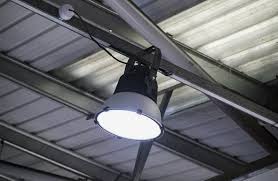
High bay lights are designed for facilities with high ceilings and large open spaces.
Characteristics:
- High lumen output
- Excellent energy efficiency
- Long operational life
Applications:
- Warehouses
- Manufacturing plants
- Distribution centers
Low Bay Lighting
Low bay fixtures are suitable for facilities with lower ceiling heights.
Characteristics:
- Uniform illumination
- Compact design
- Energy-efficient operation
Applications:
- Workshops
- Assembly areas
- Storage facilities
Flood Lighting
Industrial floodlights provide broad-area illumination for indoor and outdoor environments.
Characteristics:
- Wide beam coverage
- High brightness
- Durable construction
Applications:
- Industrial yards
- Loading docks
- Construction sites
Explosion-Proof Lighting
These fixtures are designed for hazardous environments where flammable gases, vapors, or dust may be present.
Characteristics:
- Certified safety protection
- Sealed construction
- High reliability
Applications:
- Oil and gas facilities
- Chemical plants
- Mining operations
Emergency Lighting
Emergency lighting systems provide illumination during power failures and emergency situations.
Characteristics:
- Battery backup systems
- Automatic activation
- Reliable operation
Applications:
- Industrial facilities
- Hospitals
- Commercial buildings
Task Lighting
Task lighting provides focused illumination for specific work areas requiring precision.
Characteristics:
- Directed light output
- Adjustable positioning
- Enhanced visibility
Applications:
- Inspection stations
- Assembly lines
- Maintenance workshops
Applications of Industrial Lighting
Manufacturing Facilities
Industrial lighting supports production processes by providing clear visibility for equipment operation and quality control.
Applications:
- Production lines
- Assembly areas
- Inspection stations
- Packaging facilities
Warehouses and Distribution Centers
Proper lighting improves inventory management, worker safety, and operational efficiency.
Uses:
- Storage aisles
- Loading docks
- Sorting facilities
- Logistics centers
Mining Operations
Mining environments require robust lighting capable of operating under harsh conditions.
Applications:
- Underground tunnels
- Processing plants
- Extraction sites
- Maintenance workshops
Power Generation Facilities
Industrial lighting supports safe operation and maintenance of power generation equipment.
Applications:
- Turbine halls
- Control rooms
- Maintenance areas
- Outdoor substations
Oil and Gas Facilities
Lighting systems provide reliable illumination in hazardous environments.
Applications:
- Refineries
- Offshore platforms
- Processing plants
- Storage terminals
Transportation Infrastructure
Industrial lighting contributes to safe and efficient transportation operations.
Applications:
- Airports
- Railway stations
- Seaports
- Maintenance depots
Food and Beverage Processing
Proper illumination supports hygiene standards, quality control, and operational efficiency.
Applications:
- Production areas
- Packaging lines
- Storage facilities
Commercial and Utility Facilities
Large facilities require industrial-grade lighting solutions for reliable operation.
Applications:
- Utility plants
- Data centers
- Large commercial buildings
- Public infrastructure
Benefits of Industrial Lighting
Improved Workplace Safety
Proper illumination reduces accidents, injuries, and operational risks.
Increased Productivity
Workers perform tasks more efficiently and accurately in well-lit environments.
Reduced Energy Costs
Energy-efficient technologies lower electricity consumption and operating expenses.
Enhanced Equipment Visibility
Improved lighting supports equipment operation, maintenance, and inspection activities.
Lower Maintenance Costs
Long-lasting fixtures reduce replacement frequency and maintenance requirements.
Regulatory Compliance
Industrial lighting helps organizations comply with occupational health and safety standards.
Environmental Sustainability
Energy-efficient lighting contributes to reduced carbon emissions and environmental impact.
Long-Term Reliability
Durable industrial fixtures provide dependable performance over extended periods.
Maintenance Requirements
Regular maintenance ensures optimal lighting performance and longevity.
Recommended Maintenance Activities
- Cleaning lenses and fixtures
- Inspecting electrical connections
- Checking mounting hardware
- Monitoring light output levels
- Replacing damaged components
- Testing emergency lighting systems
- Verifying sensor operation
- Conducting periodic safety inspections
Routine maintenance maximizes system efficiency and reliability.
Environmental Considerations
Modern industrial lighting solutions support sustainability through:
- High energy efficiency
- Reduced carbon emissions
- Long service life
- Recyclable materials
- Reduced waste generation
- Smart energy management systems
These advancements help industries achieve environmental and energy-saving objectives.
Conclusion
Industrial lighting is a vital component of modern industrial infrastructure, providing the illumination necessary for safe, efficient, and productive operations. Designed to withstand demanding environments, industrial lighting systems offer superior performance, durability, energy efficiency, and reliability across a wide range of applications.
From manufacturing plants and warehouses to mining operations, power facilities, transportation hubs, and hazardous environments, industrial lighting enhances workplace safety, improves operational efficiency, and supports regulatory compliance. Modern LED technologies and intelligent control systems further increase energy savings while reducing maintenance requirements and environmental impact.
As industries continue to prioritize sustainability, productivity, and worker safety, industrial lighting will remain an essential investment for organizations seeking dependable, high-performance illumination solutions. By delivering consistent visibility, long-term reliability, and cost-effective operation, industrial lighting contributes significantly to the success and efficiency of modern industrial operations.