Leather shoes are footwear made primarily from animal hide, most commonly cowhide, which has been treated, tanned, and processed to create a durable, flexible, and long-lasting material. These shoes are designed to protect the feet while providing comfort, style, and support in various environments.
Leather shoes can be used in formal, casual, industrial, and fashion settings depending on their design and finishing. They are known for their strength, breathability, and ability to mold to the shape of the wearer’s feet over time.
—
2. INTRODUCTION TO LEATHER SHOES
Leather shoes have been an essential part of human footwear for centuries. Early civilizations used animal hides to protect their feet from rough terrain, heat, and cold conditions. Over time, leather craftsmanship evolved into a refined trade, producing structured footwear with improved comfort and aesthetics.
In modern times, leather shoes are widely regarded as a symbol of professionalism, elegance, and durability. They are commonly worn in offices, formal events, ceremonies, and sometimes in everyday casual fashion.
The leather footwear industry has expanded globally, offering a wide variety of designs ranging from classic Oxford shoes to modern loafers, boots, brogues, and casual leather sneakers.
—
3. TABULATED SPECIFICATION OF LEATHER SHOES
| SPECIFICATION CATEGORY | DETAILS |
|————————|———|
| Product Type | Footwear |
| Primary Material | Genuine leather or synthetic leather |
| Leather Types | Full-grain, top-grain, split leather, bonded leather |
| Sole Material | Rubber, leather, polyurethane (PU) |
| Closure Types | Lace-up, slip-on, buckle, zipper |
| Shoe Styles | Oxford, Derby, loafers, boots, brogues |
| Durability | High (especially full-grain leather) |
| Breathability | Medium to high (natural leather fibers) |
| Comfort Level | High after break-in period |
| Water Resistance | Moderate (can be treated for protection) |
| Maintenance | Polishing, conditioning, and cleaning required |
| Usage Occasions | Formal, casual, business, ceremonial |
—
4. TYPES OF LEATHER SHOES
4.1 OXFORD SHOES
Oxford shoes are formal lace-up shoes with a closed lacing system. They are commonly worn in business and official settings.
4.2 DERBY SHOES
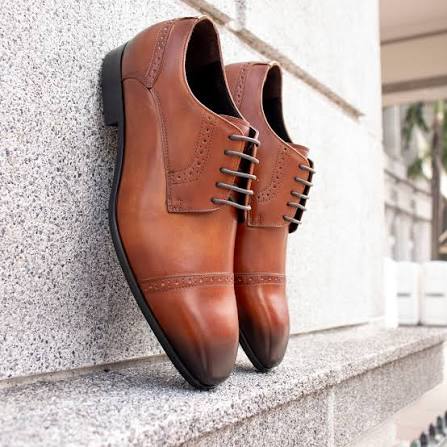
Derby shoes have an open lacing system, making them slightly more relaxed and comfortable than Oxfords.
4.3 LOAFERS
Loafers are slip-on leather shoes that combine comfort and style, suitable for business casual and smart casual wear.
4.4 BROGUES
Brogues are characterized by decorative perforations and are available in both formal and casual designs.
4.5 LEATHER BOOTS
Boots provide ankle or calf coverage and are used for fashion, work environments, and outdoor activities.
4.6 CASUAL LEATHER SHOES
These include modern leather sneakers or relaxed designs used for everyday wear.
—
5. MATERIALS USED IN LEATHER SHOES
– Genuine leather (cowhide, goatskin, sheepskin)
– Synthetic leather (PU leather)
– Rubber (outsoles for grip and flexibility)
– Foam or EVA (for cushioning and comfort)
– Fabric lining (for inner comfort and moisture control)
– Metal accessories (buckles, eyelets in some designs)
The quality of leather greatly affects durability, comfort, and overall appearance.
—
6. MANUFACTURING PROCESS OF LEATHER SHOES
1. Selection of raw leather hides
2. Tanning process to preserve and soften leather
3. Cutting leather into shoe pattern components
4. Stitching upper parts together
5. Attaching inner lining and cushioning
6. Sole attachment using adhesives or stitching
7. Shaping and molding the shoe form
8. Polishing, finishing, and quality inspection
Each step requires precision to ensure durability, comfort, and aesthetic quality.
—
7. USES OF LEATHER SHOES
7.1 FORMAL WEAR
Leather shoes are essential in offices, business meetings, and formal events.
7.2 CASUAL WEAR
Modern designs allow leather shoes to be worn casually with jeans or chinos.
7.3 WORK AND INDUSTRIAL USE
Certain leather boots are designed for protection in construction and industrial environments.
7.4 CEREMONIAL OCCASIONS
Used in weddings, graduations, and cultural ceremonies.
7.5 FASHION AND STYLE
Leather shoes are a key element in fashion styling and personal appearance.
—
8. ADVANTAGES OF LEATHER SHOES
– Highly durable and long-lasting
– Comfortable after proper wear-in period
– Suitable for multiple occasions
– Breathable natural material
– Stylish and professional appearance
– Can be repaired and maintained easily
—
9. LIMITATIONS OF LEATHER SHOES
– Can be expensive compared to synthetic footwear
– Requires regular maintenance (polishing and conditioning)
– May feel stiff initially before breaking in
– Sensitive to water if not treated
– Quality varies depending on leather grade
—
10. CONCLUSION
Leather shoes are a timeless and essential category of footwear that combine durability, comfort, and elegance. Their long history and continued evolution make them a key part of both traditional and modern fashion systems.
From formal office wear to casual and industrial use, leather shoes offer versatility and reliability. Their natural material provides strength and breathability, while craftsmanship ensures style and sophistication.
Overall, leather shoes remain a global standard in footwear, representing quality, professionalism, and lasting value in both fashion and function.