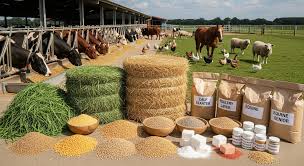
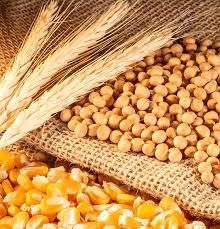
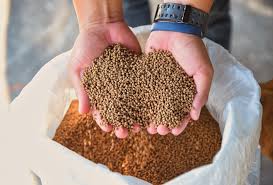
Within global agricultural systems and animal husbandry networks, mineral supplements represent the high-precision chemical micro-anchors required to maintain homeostatic cellular function, structural integrity, and metabolic efficiency across all livestock species. While macronutrient components (such as corn and soybean meal) satisfy the baseline caloric and amino acid requirements of a herd, native agricultural soils and crops are frequently deficient in key inorganic elements.
The industrial manufacturing of animal mineral supplements bridges inorganic chemistry, veterinary pathology, and process engineering. It shifts production away from crude geological rocks toward highly bioavailable, chemically synthesized complexes.
By designing targeted mineral matrices tailored to regional soil profiles, the animal nutrition sector prevents devastating metabolic diseases, boosts reproductive fertility, and enhances immune defense. This micro-ingredient optimization allows the global agricultural market to maximize meat, milk, and egg yields while minimizing resource waste and environmental mineral runoff.
Defining Mineral Supplements and Classifications
From an analytical and physiological perspective, mineral supplements are divided into two primary structural categories based on the exact concentration required within the daily dry matter intake of the animal:
These minerals function as the foundational building blocks for skeletal structures, eggshell formation, and cellular fluid balance.
Calcium ($text{Ca}$): Sourced primarily from ground limestone ($text{CaCO}_3$). Essential for bone mineralization, muscle contraction, and eggshell synthesis in layers.
Phosphorus ($text{P}$): Sourced from monocalcium/dicalcium phosphate [$text{CaH}_4(text{PO}_4)_2 cdot text{H}_2text{O}$]. Crucial for cellular energy transfer via ATP molecules.
Sodium ($text{Na}$) & Chloride ($text{Cl}$): Supplied via feed-grade salt ($text{NaCl}$) to regulate osmotic pressure and maintain correct blood volume.
Magnesium ($text{Mg}$): Supplied via magnesium oxide ($text{MgO}$) to prevent metabolic issues like grass tetany in grazing beef and dairy cattle.
2. Trace Minerals / Micro-Minerals (Required in Milligram or $text{ppm}$ Quantities)
These minerals act as the vital spark plugs inside complex enzymatic networks, hormone pathways, and immune system cells.
Zinc ($text{Zn}$): Drives protein synthesis, skin integrity, hoof health, and rapid wound healing.
Copper ($text{Cu}$): Vital for hemoglobin synthesis, iron transport, and building strong connective tissues.
Manganese ($text{Mn}$): Essential for structural bone matrix development and reproductive fertility cycles.
Selenium ($text{Se}$): Works alongside Vitamin E as a powerful internal antioxidant to protect cell walls from oxidative damage.
Technical Specifications
To clear strict international biosecurity clearances, pass safety inspections for heavy metal limits, and blend uniformly into automated mill systems, commercial mineral batches must adhere to tight baselines.
Specification Parameter
Targeted Industrial Baseline
Verification Methodology
Particle Size Uniformity
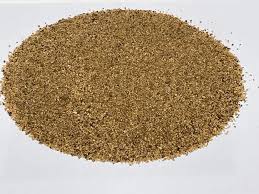
95% between 150 and 400 microns (Prevents sorting)
Sieve Shaker Mechanical Analysis
Moisture Content
Maximum $leq 1.5%$ to $2.0%$ (Prevents caking)
AOAC 930.15 Gravimetric Oven Drying
Arsenic ($text{As}$) Contamination
Maximum $leq 10 text{ ppm}$ (Strict biosecurity ceiling)
Inductively Coupled Plasma Mass Spec (ICP-MS)
Lead ($text{Pb}$) Contamination
Maximum $leq 30 text{ ppm}$
Inductively Coupled Plasma Mass Spec (ICP-MS)
Cadmium ($text{Cd}$) Contamination
Maximum $leq 10 text{ ppm}$
Inductively Coupled Plasma Mass Spec (ICP-MS)
Dioxins / PCBs
Less than 1.0 ng WHO-TEQ/kg (Absolute safety lock)
Gas Chromatography-High Res Mass Spec
Bulk Density Range
0.90 to 1.30 $text{g/cm}^3$ (Matches grain carrier mass)
Tapped Volumetric Cylinder Displacement
Free-Flowing Index
100% Flowability via anti-caking additives
Carr Index / Angle of Repose Funnel Assay
The Biophysical Chemistry of Mineral Absorption
The single most critical factor governing the performance of a mineral supplement is its bioavailability—the percentage of the ingested mineral that successfully crosses the intestinal wall into the animal’s bloodstream, rather than passing straight out as waste.
Traditional supplements utilize inorganic mineral salts mined from geological deposits. While cost-effective, their absorption rates can be highly unpredictable.
For instance, oxides ($text{ZnO}$, $text{CuO}$) possess low water solubility and are highly stable in storage, but have poor bioavailability inside the animal’s gut. Sulfates ($text{ZnSO}_4 cdot 7text{H}_2text{O}$) dissolve easily in water and are absorbed more efficiently, but their free ions can react prematurely with vitamins in the feed, oxidizing them and destroying their nutritional value.
2. Organic Chelated Minerals (The Bioavailability Shield)
To overcome the absorption limits of inorganic salts, modern animal nutrition relies heavily on chelation technology.
An organic chelated mineral is created by chemically binding a trace mineral ion (like $text{Zn}^{2+}$ or $text{Cu}^{2+}$) at multiple points to an organic molecule, typically an amino acid like glycine or a short-chain peptide.
    O ═ C ─── O ─────── O ─── C ═ O
        │               │     │
       CH₂ ── NH₂ ──► Zn ◄── NH₂ ─ CH₂
This chemical bond wraps the mineral inside a protective, electrically neutral ring. This shield yields two major performance advantages:
Antagonist Protection: It prevents the mineral from binding prematurely to masking compounds in the gut (like phytic acid or excess sulfur), which would normally lock the mineral away and make it undigestible.
Alternative Transport: Because the chelate resembles a normal protein fragment, the animal’s intestine absorbs it through highly efficient amino acid transport pathways, completely bypassing the crowded, easily overloaded inorganic mineral channels. This mechanism results in significantly higher absorption rates into tissues and bones.
Industrial Manufacturing and Premix Blending Flow
Because trace minerals are added to feed in tiny amounts (frequently parts-per-million), they cannot be thrown directly into a massive grain silo without clumping. They must pass through a strict, multi-stage industrial micro-blending pipeline.
1.Geological Sourcing and Heavy Metal Decontamination:Intake Gate.
Raw mineral compounds (mined limestone, calcium phosphates, zinc sulfates) are received at the processing plant. Every batch is quarantined and run through automated ICP-MS screening to verify that heavy metals (like lead and cadmium) fall safely below international toxic ceilings.
2.Precision Air-Jet Milling:Sizing Phase.
The approved mineral crystals are funneled into high-speed air-jet pulverizers. The particles are driven into one another by high-pressure air streams, shattering them down to a uniform size between 150 and 300 microns to match the particle size of the final feed grains.
3.Diluent Conditioning and Carrier Selection:Carrier Setup.
An organic or inorganic carrier substance—such as processed rice hulls, wheat middlings, or fine limestone dust—is loaded into the blending vat. This carrier acts as a physical anchor, providing a sticky surface area for the ultra-fine trace mineral powders to cling to.
4.Micro-Dosing and High-Shear Blending:Precision Blend.
Pure trace minerals and chelated complexes are precisely weighed out via automated micro-dispensers. The ingredients are dropped into a high-shear ribbon or plow-matrix mixer alongside the carrier, spinning rapidly to distribute the micro-nutrients evenly within 3 minutes.
5.Liquid Stabilization and Dedusting:Anti-Caking Add.
A small amount of food-grade mineral oil or liquid surfactant (0.5% by weight) is sprayed into the tumbling dry mix. This liquid barrier prevents fine mineral dust from blowing into the mill air, while coating the grains to stop moisture absorption and clumping during silo storage.
6.Step-Up Dilution and Moisture-Proof Bagging:Sealed Exit.
The highly concentrated premix is funneled into automated packaging machinery. It is packed into specialized, multi-wall paper bags lined with high-density poly moisture barriers, heat-sealed, and shipped to commercial feed mills for final blending into complete livestock feeds.
Critical Mineral Imbalances and Herd Pathology
Slight errors in a herd’s mineral formulation can trigger swift metabolic collapse, emphasizing the need for precision engineering in mineral manufacturing.
Milk Fever (Parturient Paresis): Occurs in high-producing dairy cows right at calving. If the mineral mix fails to provide correct, bioavailable calcium and magnesium levels, the sudden demand for milk production completely drains the cow’s blood calcium reserves. This deficit stops muscle function, causing the animal to collapse into paralysis until injected with calcium gluconate.
Anemia and Piglet Mortality: Newborn piglets are born with exceptionally low iron reserves. If their feed lacks highly bioavailable iron supplements (such as ferrous sulfate), they develop severe nutritional anemia, leading to weakened immune responses and high mortality rates across the litter.
Conclusion
Animal mineral supplements represent a primary pillar of precision livestock nutrition and chemical process engineering. By utilizing advanced amino acid chelation techniques and strict micro-step blending sequences, the supplement industry successfully converts raw geological materials into highly bioavailable, safe, and free-flowing nutritional matrices.
Through an automated manufacturing network that thoroughly screens for toxic heavy metals and locks down particle size uniformity to prevent separation, commercial premix plants protect herd health worldwide. As international livestock farming shifts toward maximizing feed conversion ratios while tightening environmental runoff boundaries, advanced mineral supplement engineering will remain an essential driver of global agricultural development and long-term food security.