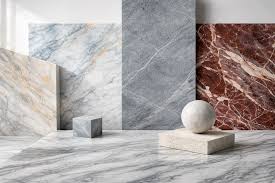
Marble is a natural metamorphic rock widely valued for its elegance, smooth texture, and decorative appeal. It is one of the most important natural stones used in architecture, sculpture, and interior design due to its ability to be polished into a high-gloss, luxurious finish.
Formed from limestone subjected to intense heat and pressure over millions of years, marble is associated with luxury buildings, monuments, temples, and high-end interior surfaces.
Definition of Marble
Marble is a metamorphic rock formed when limestone is transformed under high temperature and pressure, causing recrystallization of calcium carbonate into a dense, interlocking crystalline structure.
It is typically composed mainly of calcite (CaCO₃), with variations depending on mineral impurities that create different colors and patterns.
Types of Marble
1. White Marble
Pure calcite composition
Classic and highly valued for sculpture and luxury interiors
2. Colored Marble
Contains mineral impurities
Shades include green, pink, yellow, and red
3. Statuario Marble
Premium white marble with gray veining
Used in luxury architecture
4. Carrara Marble
Famous Italian marble
Light gray-white appearance
5. Onyx Marble
Translucent and decorative
Often used for lighting and luxury design
6. Brecciated Marble
Fragmented appearance due to geological pressure
Decorative and artistic use
Physical Characteristics of Marble
Marble is known for:
Smooth and fine crystalline texture
Ability to be polished to a glossy finish
Soft to medium hardness compared to granite
Attractive natural veining patterns
High compressive strength
Moderate resistance to weathering
Reacts with acids due to calcium carbonate content
Formation of Marble
Marble forms through metamorphism:
1. Limestone Formation
Sedimentary limestone accumulates in marine environments.
2. Burial and Pressure
Limestone is buried under layers of rock.
3. Heat and Pressure
Tectonic forces expose limestone to high heat and pressure.
4. Recrystallization
Calcite crystals reorganize into a dense crystalline structure, forming marble.
Extraction and Processing of Marble
1. Quarrying
Marble blocks are extracted from natural rock deposits.
2. Block Cutting
Large stone blocks are cut using diamond wire saws.
3. Slab Formation
Blocks are sliced into slabs of required thickness.
4. Polishing
Surfaces are polished to enhance shine and pattern visibility.
5. Finishing
Different finishes are applied:
Polished (glossy)
Honed (matte)
Brushed or antique
6. Grading and Packaging
Slabs are sorted by quality and prepared for transport.
Tabulated Specification of Marble
Specification
Details
Product Name
Marble
Rock Type
Metamorphic rock
Main Composition
Calcite (CaCO₃)
Color Range
White, gray, green, pink, black, yellow
Texture
Fine to medium crystalline structure
Hardness
Moderate (Mohs ~3–4)
Polishability
High (excellent shine)
Porosity
Moderate
Acid Reaction
Reacts with acids (fizzing)
Main Applications
Flooring, countertops, sculptures, decoration
Finishing Options
Polished, honed, brushed
Durability
Moderate to high depending on environment
Uses of Marble
1. Construction and Architecture
Flooring and wall cladding
Building facades
Decorative columns
2. Interior Design
Luxury countertops
Bathroom tiles
Staircases and decorative panels
3. Sculpture and Art
Statues and monuments
Religious carvings
Artistic installations
4. Monuments and Heritage Buildings
Historical buildings
Memorial structures
5. Furniture and Decorative Items
Tabletops
Luxury furniture surfaces
Advantages of Marble
1. Elegant Appearance
Natural veining and shine create luxury aesthetics.
2. Workability
Easy to cut, shape, and polish.
3. Heat Resistance
Suitable for indoor architectural applications.
4. Versatility
Used in construction, art, and decoration.
5. Long-Lasting Beauty
Retains appearance when properly maintained.
Economic Importance
Marble contributes significantly to economies by:
Supporting quarrying and stone processing industries
Driving construction and luxury real estate markets
Creating employment in mining and craftsmanship
Supporting export trade in decorative stones
Enhancing tourism through architectural heritage
It is a major high-value natural stone in global markets.
Environmental Considerations
Marble extraction may involve:
Quarrying-related land disturbance
Dust and noise pollution
Energy use in cutting and polishing
However, sustainable practices include:
Controlled quarrying operations
Waste recycling in construction
Land restoration after extraction
Marble itself is a natural and non-toxic building material.
Storage and Handling Guidelines
To preserve quality:
Store slabs vertically with proper support
Avoid heavy impact and scratches
Protect polished surfaces with padding
Keep in dry, clean environments
Handle using lifting equipment due to weight
Quality Control Standards
High-quality marble is evaluated based on:
Color uniformity and veining pattern
Surface finish quality
Strength and density
Crack and defect inspection
Water absorption rate
Polish consistency
Conclusion
Marble is a beautiful and versatile metamorphic rock formed from limestone under intense geological pressure and heat. Known for its smooth texture, elegant patterns, and ability to achieve a high-gloss finish, it is widely used in architecture, sculpture, and interior decoration.
From luxury flooring and countertops to historic monuments and artistic sculptures, marble remains a symbol of beauty, refinement, and cultural heritage.
In essence, marble is not just a building stone—it is a timeless natural material that brings elegance, durability, and artistic value to human structures and design.