The Versatile Titan of Aquaculture: A Comprehensive Guide to Tilapia
Introduction
In the expansive landscape of global food security, few commodities have achieved the meteoric rise and structural significance of Tilapia. Often referred to as “aquatic chicken” due to its remarkably consistent texture, mild flavor profile, and adaptive agricultural scalability, Tilapia is not merely a fish; it is a bio-engineered agricultural solution to the burgeoning demand for high-quality animal protein.
Belonging to the Cichlidae family, primarily represented by the Oreochromis niloticus (Nile Tilapia) species, this fish has transitioned from a localized African food source to a globally traded, industrial-grade commodity. The success of Tilapia is rooted in its unique physiological resilience. Capable of thriving in diverse water qualities, exhibiting rapid growth rates on plant-based dietary inputs, and maintaining reproductive efficiency in high-density environments, Tilapia represents the pinnacle of modern aquaculture engineering.
As global agricultural systems pivot toward lowering carbon footprints and increasing production efficiency, Tilapia provides a unique value proposition. Unlike carnivorous species that require intensive oceanic forage fish harvesting, Tilapia allows for a closed-loop, sustainable production model that utilizes cereal grains and agro-industrial byproducts. This description explores the technical, nutritional, and industrial dimensions of Tilapia, defining why it serves as the foundational anchor for the international aquaculture trade.
Defining the Product
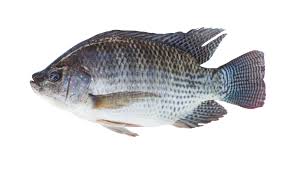
Tilapia is an extensively farmed, freshwater, or brackish-water finfish known for its morphological uniformity and culinary versatility. Industrially, the product is characterized by its deep-bodied, laterally compressed structure and white, flakey, lean meat.
The product exists in three primary commercial stages:
Whole Round: Freshly harvested, gutted, and often flash-chilled fish, utilized heavily in regional markets where traditional preparation is preferred.
Skinless, Boneless Fillets: The industrial gold standard. These are produced through automated filleting lines, meticulously trimmed to remove the red muscle line (which can contain higher lipid concentrations) to ensure a perfectly white, neutral-tasting product.
Value-Added Formats: Highly processed versions including seasoned/marinated fillets, breaded goujons, or fish-based convenience items (sausages and patties) designed for quick-service restaurants and institutional feeding.
The product’s defining characteristic—its “neutral palate”—is both its greatest industrial advantage and its primary challenge. Because Tilapia lacks the pronounced “fishy” odor or intense fatty flavor of species like salmon or mackerel, it functions as a blank canvas for chefs and food manufacturers, absorbing marinades, sauces, and spices with predictable chemical absorption rates.
Industrial Specification Matrix
To participate in global retail and foodservice supply chains, Tilapia must meet rigorous technical benchmarks. These standards ensure shelf stability, safety, and consistent performance in automated kitchens.
Specification Parameter
Targeted Industrial Baseline
Verification Methodology
Moisture Content
$leq 80.0%$ (Non-injected)
Forced-Air Oven Gravimetric Drying
Crude Protein
Minimum $18% – 21%$ per 100g
Kjeldahl Nitrogen Combustion Analysis
Total Lipid (Fat)
$1.0% – 3.0%$ (Lean grade)
Soxhlet Ether Extraction
Standard Fillet Size
3–5 oz, 5–7 oz, 7–9 oz
Automated Optical Sizing (Laser)
Bacterial Load (APC)
$< 100,000 text{ CFU/g}$
Selective Agar Plate Incubation
Salmonella / Listeria
Zero tolerance in 25g sample
Real-Time PCR Pathogen Assay
Glazing Percentage
5% to 15% (Protective ice coating)
Gravimetric Weighing (Frozen vs. Thawed)
Storage Temperature
$leq -18^circtext{C}$ (Deep frozen)
Continuous Digital Data Logging
Industrial Uses and Culinary Applications
The utility of Tilapia extends far beyond simple domestic pan-frying. Its industrial application is categorized by its performance within specific food systems.
1. High-Volume Foodservice and Institutional Catering
Because of its affordability and high protein-to-cost ratio, Tilapia is the primary finfish choice for universities, hospitals, and military catering. Its structural integrity allows it to be baked in massive convection ovens without disintegrating, provided the internal temperature is managed to prevent over-drying.
2. Ready-to-Cook (RTC) Retail Innovation
The “blank slate” nature of Tilapia makes it the target of intense innovation in the frozen food aisle. Processors utilize vacuum-infusion technology to force lemon-herb, blackened cajun, or coconut-curry marinades deep into the muscle fiber of the fillets. This allows the product to move directly from the freezer to the oven, simplifying the consumer experience while elevating the final product’s sensory profile.
3. Nutritional Ingredient Manufacturing
In emerging food technologies, Tilapia muscle protein is increasingly being harvested for the production of fish-protein isolates. These are dried, deodorized, and added to snacks, protein bars, and health-focused food supplements to provide highly bioavailable, complete amino acid profiles without the strong sensory impact of traditional fish proteins.
4. Cultural and Traditional Markets
In many regions, whole round Tilapia remains the standard. The industrial processing for these markets focuses on biosecurity—ensuring the fish are purged in clean water for 48–72 hours prior to harvest to eliminate any “off-flavor” compounds (such as geosmin, which can give fish a muddy taste).
The Bio-Engineering of Tilapia Quality
To produce a consistently premium product, the Tilapia industry employs advanced environmental management and nutritional science.
Water Quality Control:
The taste of Tilapia is a direct reflection of its environment. In modern industrial farms, real-time IoT sensors monitor water chemistry, specifically targeting ammonia, pH, and dissolved oxygen. By maintaining these parameters, producers prevent the development of off-flavors, ensuring the consumer receives a clean, sweet-tasting product.
Nutritional Optimization:
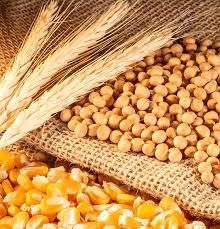
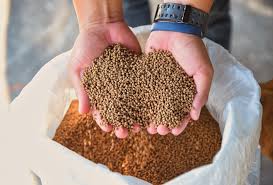
The growth of Tilapia is not left to chance. Feed formulas are designed based on the “Ideal Amino Acid Profile” for the fish, utilizing soybean meal and distillers’ grains. By precisely balancing these feeds, producers achieve a Feed Conversion Ratio (FCR) of approximately 1.2:1—meaning it takes only 1.2 kilograms of feed to produce 1 kilogram of Tilapia. This is an incredible feat of biological efficiency, far outpacing the efficiency of beef or pork.
Humane Harvest and Processing:
Modern processors prioritize animal welfare, which directly correlates to meat quality. Through the use of electrical stunning, the fish are rendered unconscious before processing. This prevents the buildup of lactic acid in the muscle tissue, which would otherwise toughen the meat and lead to rapid post-mortem pH drops, resulting in soft or “gaping” fillets.
Sustainability and Environmental Stewardship
No discussion of Tilapia is complete without addressing its role in sustainable food systems. As the world faces the “protein gap”—the need to feed an estimated 10 billion people by 2050—Tilapia offers a path forward that avoids the catastrophic destruction of wild fish stocks.
The industry is moving toward Recirculating Aquaculture Systems (RAS). These are sophisticated, closed-loop facilities where 95% of the water is filtered and reused. This eliminates the risk of farm runoff affecting local ecosystems, prevents the spread of diseases from wild to farmed populations, and allows Tilapia to be produced in arid regions or urban centers far from traditional coastal waters.
Furthermore, the “waste” of the Tilapia industry—bones, scales, and viscera—is being valorized. Bio-refineries are processing these byproducts into fish oil, gelatin for pharmaceutical capsules, and collagen for the beauty industry, effectively achieving a zero-waste production model.
Conclusion
Tilapia stands as a testament to the power of human ingenuity applied to biological systems. By bridging the gap between wild-capture limitations and the need for scalable, affordable, and nutrient-dense protein, Tilapia has secured its place as a pillar of the global food supply chain.
Its journey from a tropical pond to a vacuum-sealed fillet in a supermarket freezer is a multi-stage industrial process defined by precision, biosecurity, and continuous innovation. While its mild flavor makes it accessible to the masses, the engineering behind its production—from the specific amino acid balancing in its feed to the laser-guided automated filleting lines—is anything but simple.
As we look to the future of food, the role of Tilapia is poised to expand. With ongoing improvements in feed sustainability, waste valorization, and water-recirculation technology, Tilapia will continue to provide a sustainable protein solution that satisfies the growing global demand for high-quality food, all while minimizing the footprint left upon our planet’s land and water resources. Whether utilized as a simple dinner staple or a sophisticated ingredient in emerging health-food technologies, Tilapia remains the quiet, efficient titan of modern aquaculture.