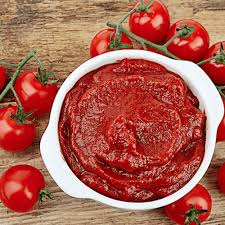
Tomato paste is a thick, concentrated food product made by cooking fresh tomatoes for an extended period, straining them to remove skins and seeds, and then reducing the liquid through evaporation until a dense, rich paste is formed. It is widely used as a base ingredient in cooking to enhance color, flavor, and thickness in a variety of dishes.
Tomato paste is known for its deep red color, intense tomato flavor, and smooth consistency. It is commonly packaged in cans, jars, sachets, or tubes and serves as a key ingredient in both home cooking and industrial food preparation.
Introduction
Tomato paste is an essential culinary ingredient used globally in households, restaurants, and food manufacturing industries. It plays a vital role in adding richness, color, and depth of flavor to a wide range of recipes, including soups, sauces, stews, curries, and gravies.
The production of tomato paste begins with the selection of ripe, high-quality tomatoes. These tomatoes are washed, crushed, and cooked at controlled temperatures to break down fibers and release natural juices. The pulp is then strained to remove unwanted solids such as seeds and skins. Finally, the remaining liquid is further concentrated through evaporation until it reaches a thick, paste-like consistency.
Tomato paste is highly valued for its long shelf life, convenience, and ability to enhance the taste of both simple and complex dishes. It allows cooks to achieve a strong tomato flavor without using large quantities of fresh tomatoes, making it cost-effective and practical.
In modern food systems, tomato paste is available in various concentration levels, commonly measured as double or triple concentrate, depending on how much water has been removed during processing. It is also used as a foundational ingredient in processed foods such as ketchup, sauces, ready meals, and packaged foods.
Due to its versatility and nutritional content, tomato paste remains one of the most important preserved food products in global cuisine.
Store in a cool, dry place; refrigerate after opening
Nutritional Value
Rich in lycopene, vitamins A and C, antioxidants
Consumption Method
Used as cooking ingredient (not usually eaten alone)
Target Consumers
Households, restaurants, food processors
Quality Standards
Produced under food safety and hygiene regulations
Market Availability
Supermarkets, grocery stores, wholesale markets
Features of Tomato Paste
1. Rich Tomato Flavor
Tomato paste provides a concentrated and intense tomato taste that enhances various dishes.
2. Thick Consistency
Its dense texture helps improve the body and thickness of sauces and soups.
3. Long Shelf Life
Properly processed and sealed tomato paste can last for months or even years.
4. Versatile Ingredient
It is used in a wide range of cuisines including African, Asian, European, and American dishes.
5. Nutritional Value
Tomato paste contains antioxidants such as lycopene, which supports general health.
6. Easy to Use
It can be added directly to cooking without preparation or additional processing.
7. Cost-Effective
A small quantity provides strong flavor, making it economical for cooking.
Manufacturing Process
The production of tomato paste involves several controlled stages:
1. Tomato Selection
Ripe, high-quality tomatoes are selected to ensure good flavor and color.
2. Washing and Cleaning
Tomatoes are thoroughly washed to remove dirt, pesticides, and impurities.
3. Crushing and Pulping
Tomatoes are crushed into pulp to extract juice and flesh.
4. Heating and Cooking
The pulp is heated to break down fibers and reduce moisture content.
5. Straining
Seeds and skins are removed to produce a smooth tomato base.
6. Concentration
The tomato liquid is evaporated until it becomes a thick paste.
7. Pasteurization
Heat treatment is applied to kill microorganisms and extend shelf life.
8. Packaging
The paste is packed into sterile containers such as cans, jars, or sachets.
9. Sealing and Storage
Products are sealed tightly and stored under controlled conditions.
Types of Tomato Paste
1. Single Concentrate Paste
Lightly reduced tomato paste with moderate thickness.
2. Double Concentrate Paste
Thicker and more flavorful due to higher water removal.
3. Triple Concentrate Paste
Highly concentrated paste with intense flavor and color.
4. Organic Tomato Paste
Made from organically grown tomatoes without synthetic chemicals.
5. Salted Tomato Paste
Contains added salt for preservation and enhanced taste.
6. No-Additive Tomato Paste
Pure tomato paste without preservatives or additives.
Uses of Tomato Paste
1. Cooking Base
Used as a foundation for soups, stews, and sauces.
2. Sauce Preparation
Essential ingredient in pasta, pizza, and curry sauces.
3. Food Manufacturing
Used in processed foods such as ketchup, ready meals, and canned foods.
4. Flavor Enhancement
Adds depth, color, and richness to dishes.
5. Marinades and Seasoning
Used in meat and vegetable marinades.
6. Hospitality Industry
Widely used in hotels, restaurants, and catering services.
7. Household Cooking
A staple ingredient in everyday home cooking.
Advantages of Tomato Paste
Strong Flavor Concentration
Provides rich tomato taste in small quantities.
Long Storage Life
Can be stored for long periods without spoilage.
Easy to Use
Ready-to-use ingredient for cooking.
Nutritional Benefits
Contains antioxidants and essential vitamins.
Versatile Application
Suitable for many types of cuisines and recipes.
Cost Efficiency
Reduces the need for large quantities of fresh tomatoes.
Quality Considerations
To ensure high-quality tomato paste, manufacturers focus on:
Selection of ripe, fresh tomatoes
Hygienic processing conditions
Proper concentration control
Effective pasteurization
Airtight packaging
Consistency in texture and flavor
Shelf-life stability testing
Compliance with food safety standards
Market Demand and Consumer Trends
The global tomato paste market continues to grow due to rising demand for convenient cooking ingredients. Key trends include:
Organic and natural tomato paste products
No-preservative formulations
Bulk packaging for food service industries
Premium double and triple concentrates
Sustainable packaging solutions
Ready-to-use cooking bases
Consumers and food industries increasingly prefer tomato paste due to its convenience, long shelf life, and strong flavor contribution in cooking.
Conclusion
Tomato paste is a highly versatile and essential cooking ingredient made from concentrated tomatoes. Its rich flavor, thick texture, and long shelf life make it indispensable in both home kitchens and industrial food production.
Used in sauces, soups, stews, and countless recipes worldwide, tomato paste enhances taste, color, and nutritional value. Its convenience and cost-effectiveness further increase its importance in modern cooking.
As global demand for processed and convenient food ingredients continues to rise, tomato paste remains a staple product in the food industry with strong and sustained market relevance.